



Rice Paper Packaging: Sizes, Packing and Export Checks
Compare rice paper packaging sizes, pack weights, shelf life, quality checks, lead time and export options for global retail and foodservice buyers.
Rice paper packaging protects sheets during transport, supports shelf display, and gives buyers the format they need for retail or foodservice. For a reliable order, check the sheet size, ingredients, pack weight, shelf life, sealing format, documents, and shipment plan before production starts.
Key takeaways
- Tanisa rice paper comes in six listed sheet sizes and three shapes.
- Available pack weights run from 300 g retail-style packs to 5 kg bulk packs.
- The stated shelf life is two years.
- Factory lead time is 20–30 days, with MOQ confirmed per order.
- Buyers should confirm destination-country label and import requirements with their supplier.
What to look for in rice paper packaging

Good rice paper packaging matches the product to its use, sales channel, and shipping plan. Retail buyers usually need a clear, shelf-ready pack, while foodservice buyers often need a larger format that reduces handling and replenishment work.
Rice paper is a thin wrapper made from rice flour and other starch-based ingredients. Tanisa's standard white rice paper uses rice flour, tapioca starch, and salt. It is available for fresh rolls and deep-fried spring rolls, so the pack should make the intended use clear.
Start with the sheet size and shape. Tanisa offers round, square, and triangle sheets in sizes from 16 cm to 32 cm. A buyer choosing packaging should match the wrapper to the menu, serving size, and storage space rather than selecting a pack only by weight.
Packaging also needs to protect the sheets after opening. Our retail rice paper comes in a resealable zip bag with 38 sheets per retail pack. For product details and current formats, buyers can review our Vietnam rice paper range.
Specifications and packing options

Tanisa supplies standard white rice paper in six listed sizes and several pack weights. This gives importers a starting point for retail, restaurant, and distributor programs without changing the wrapper format for every channel.
| Specification | Available details | Why it matters |
|---|---|---|
| Ingredients | Rice flour, tapioca starch, salt | Supports clear product and label planning |
| Shapes | Round, square, triangle | Matches different menu and presentation needs |
| Sheet sizes | 16 cm, 18 cm, 22 cm, 28 cm, 31 cm, 32 cm | Helps buyers select portions and pack dimensions |
| Pack weights | 300 g, 340 g, 500 g, 1 kg, 5 kg bulk | Supports retail and foodservice purchasing |
| Shelf life | Two years | Gives distributors a defined planning period |
| Product characteristics | Gluten-free, non-GMO, no cholesterol, plant-based | Provides useful information for product positioning |
Packaging can be adapted for the target channel. Tanisa supports custom sizes, ingredients, and packing formats, plus private label and OEM projects depending on the market. Buyers comparing options can also see our Vietnamese rice paper products before requesting a specification review.
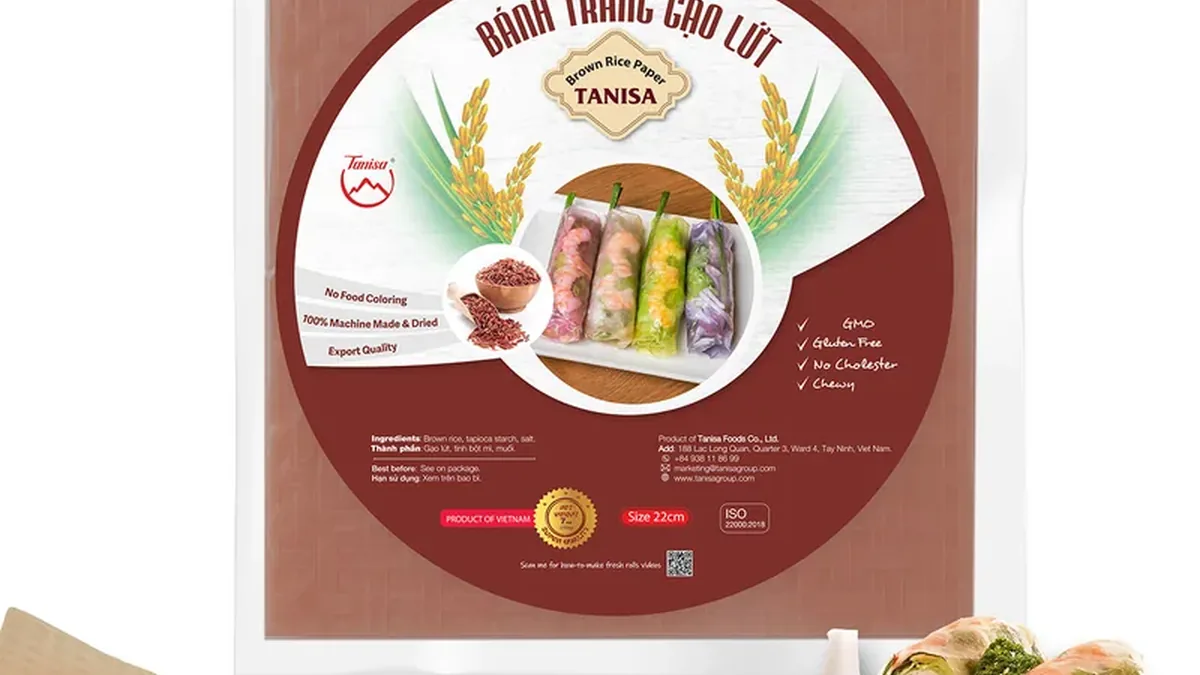
For a different product profile, Tanisa also makes brown rice paper. Review the brown rice paper option when a buyer needs to compare product positioning and packaging requirements.
Quality checks before you order
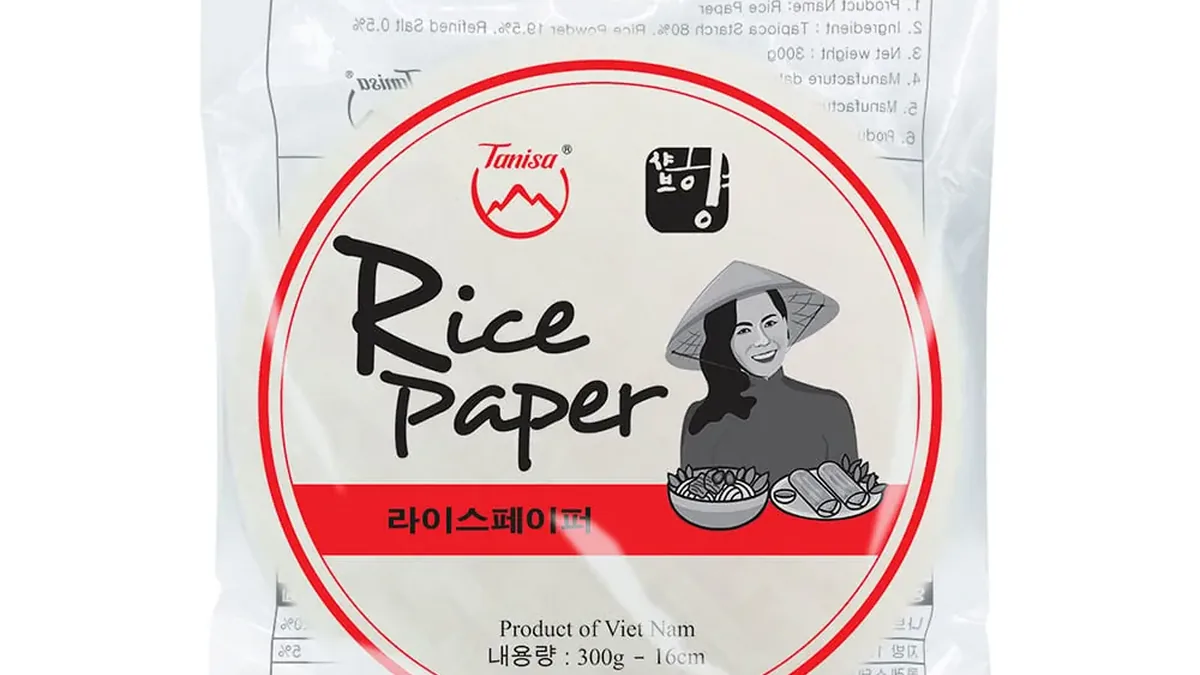
Before approving rice paper packaging, request a product sample, written specification, and pack mock-up. Check that the sheet size, shape, ingredients, pack weight, label text, and intended use match the purchase order.
Tanisa makes and dries rice paper 100% by machine and applies final quality control. The company profile also records consistent quality assurance and batch traceability. For a buyer, these process details support more consistent checks between lots and make it easier to investigate a shipment question.
Test the sheets in the real preparation method. Fresh-roll wrappers should stay flexible after soaking and remain easy to roll. Deep-fried wrappers should produce a crispy, non-sticky result. Handle the sample as a restaurant team or consumer would, because soaking too long or using the wrong handling method can cause tearing.
Ask for the documents needed for the destination market. Tanisa can provide a certificate of origin and health certificate, while buyers should confirm current label and import requirements with their supplier or customs broker.
Lead times, MOQ and shipping
We stated lead time is 20–30 days. MOQ is flexible for SMEs and larger distributors, but the export team confirms the amount per order because the final requirement depends on the product and packaging plan.
Tanisa has rice paper production capacity of 120–150 tons per month and offers factory-direct supply. That capacity gives larger buyers a useful point for supply planning, while the order discussion still needs to cover the chosen size, shape, pack weight, label, and destination.
Available export terms include FOB, EXW, CIF, and DDP. Ask the export team to match the quotation format to your purchasing process. Confirm carton details, pallet planning, documents, and the final packaging artwork before shipment booking.
For global orders, requirements differ by destination. Importers should check current requirements with the relevant authority or their customs broker, especially for labels, certificates, and food imports. Tanisa has supplied retail and e-commerce partners including H-Mart in the USA, Amazon US, Coupang in Korea, and Don Quijote in Japan.
Frequently asked questions
How is Vietnamese rice paper made?
Tanisa rice paper is made from rice flour, tapioca starch, and salt for the standard white type. Tanisa makes and dries the product 100% by machine, then applies final quality control. The finished range includes round, square, and triangle sheets in six listed sizes for fresh and fried uses.
Does rice paper go bad after opening?
We list a two-year shelf life for its standard rice paper. After opening, keep the pack closed and protect the sheets from moisture and damage. Buyers should follow the storage directions on the final pack, because storage instructions can vary by packaging format and destination-market label.
Do you refrigerate rice paper after opening?
Rice paper does not have a stated refrigeration requirement in the supplied product specification. Keep the opened pack sealed and dry, then follow the storage directions printed on the approved packaging. Importers should confirm the final label wording with Tanisa before production, especially when using private label packaging.
Are Vietnamese rice paper rolls healthy?
Tanisa standard rice paper is listed as gluten-free, non-GMO, plant-based, and free from cholesterol. The wrapper is only one part of a meal, so the filling and dipping sauce also affect the final nutrition. Buyers should use the approved nutrition information for their specific product and market.
Request rice paper samples or a quotation from Tanisa at our contact page. You can also email marketing@tanisagroup.com with your target size, pack weight, quantity, label needs, and destination.
TANISA FOODS JSC, a strong brand in the market for the production and distribution of specialty products (rice paper, rice noodles...) and spices (seasoning) which exported to some countries such as USA, France, South Korea, Japan, Russia, Brunei...
TANISA FOODS JSC
Factory add 1: 188 Lac Long Quan Street, Quarter 3, Tan Ninh Ward, Tay Ninh Province, Vietnam
Factory add 2: Phu Hoa Dong, Cu Chi, Ho Chi Minh City, Viet Nam
Office in HCMC: 18th Floor, Vincom Building, 72 Le Thanh Ton Street, District 1, Ho Chi Minh City, Vietnam
Warehouse in HCMC: 2/3 Binh Gia, Tan Binh District, Ho Chi Minh City, Vietnam
Hotline: +84 938 118 699 (WhatsApp/WeChat), +84 938 198 299 (Zalo)




Email: marketing@tanisagroup.com
Website: www.tanisagroup.com
Facebook: Tanisa Foods JSC
Instagram: @tanisa_foods
Youtube: Tanisa Kitchen

Xem thêm