



Green Tea Rice Paper: Uses, Ingredients and Storage Tips
Learn what Green tea rice paper contains, how to soften or fry it, and how to store the sheets after opening for fresh rolls and snacks.
Green tea rice paper is a Vietnamese rice paper made with green tea powder, rice flour, tapioca starch and salt. Use it as a wrapper for fresh rolls, fried spring rolls or other light dishes, then store the unopened or opened pack in a cool, dry place.
Key takeaways
- Tanisa Green tea rice paper contains green tea powder, rice flour, tapioca starch and salt.
- The product is available in a 200 g format.
- Rice paper softens in warm water for fresh rolls and becomes crisp when fried.
- Keep the pack dry and close it well after opening.
What is Green tea rice paper?
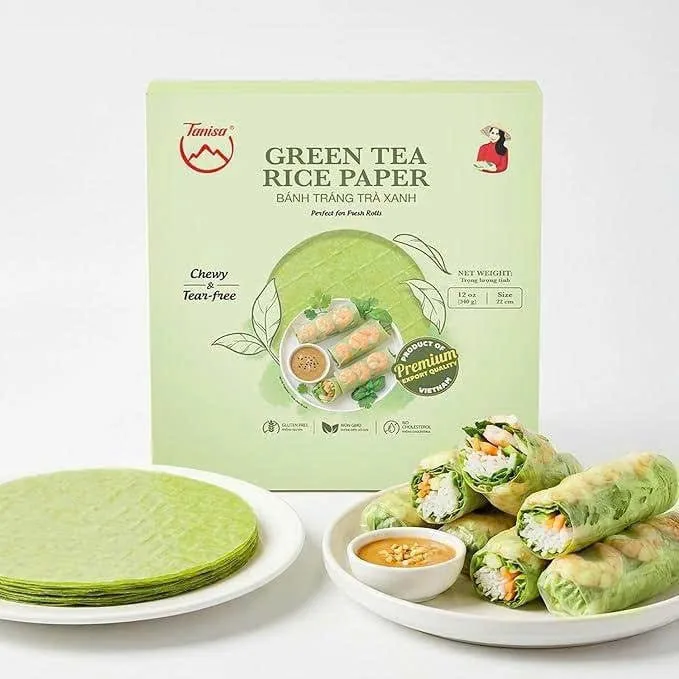
Green tea rice paper is a vegetable-coloured wrapper made for Vietnamese-style rolls and creative meals. At Tanisa, the 200 g product combines green tea powder with rice flour, tapioca starch and salt, giving cooks an alternative to standard white rice paper. Green tea rice paper works well when you want a coloured wrapper without changing the basic rolling method.
Rice paper has a mild flavour and can pair with vegetables, meat, seafood, fruit and Asian or Western sauces. Its texture changes with preparation: warm water makes it flexible for fresh rolls, while frying creates a crisp wrapper. These two uses make it practical for both everyday meals and fusion recipes.
Tanisa's green tea product is part of its vegetable-coloured rice paper range. The range uses rice flour, tapioca starch, natural vegetable powder and salt, with 22 cm square or round options listed for vegetable-coloured products. For the green tea product specifically, the approved product information confirms the green tea powder formula and 200 g format.
The product is also plant-based, gluten-free and non-GMO according to our team's product information. These details describe the wrapper itself; the finished meal still depends on the fillings, sauces and cooking method.
How is Green tea rice paper made and used?
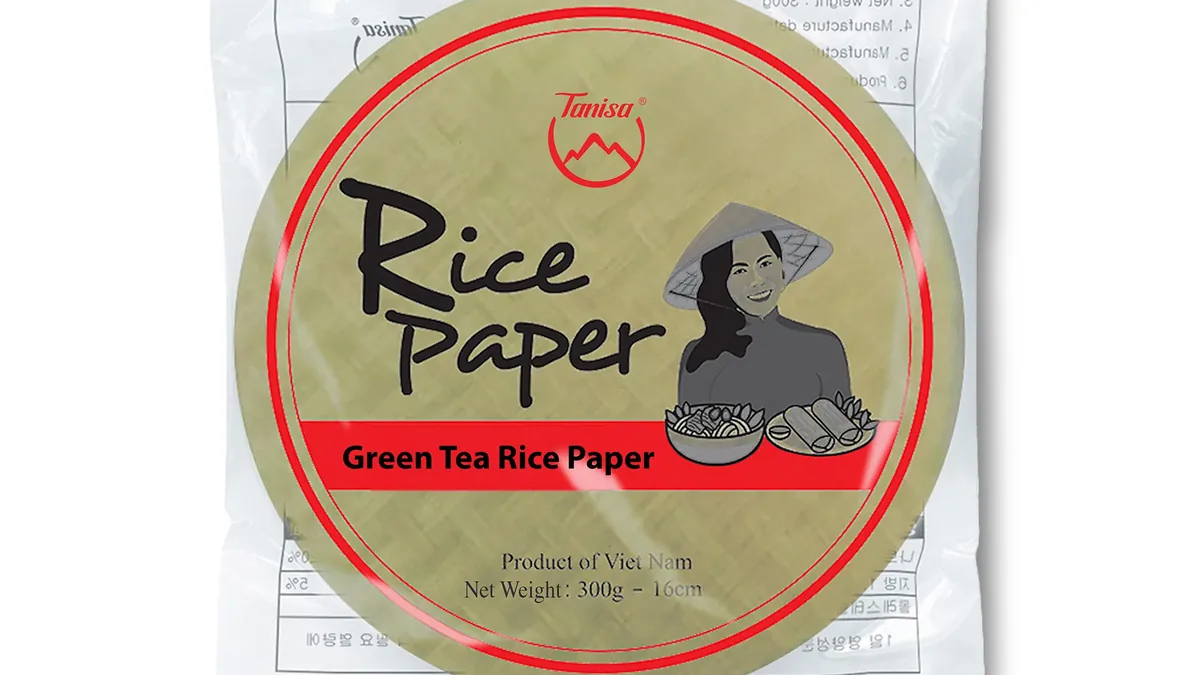
Tanisa makes and dries its rice paper 100% by machine in a modern factory. The factory also carries out final quality control, helping the production team manage consistency before packing. For a home cook, this means the wrapper arrives ready to soften or fry rather than requiring preparation from raw rice.
How to use it for fresh rolls
Place one sheet in warm water for about 10–20 seconds. Lift it out while it is still slightly firm, then put it on a clean board. The sheet continues to soften as you add fillings, so soaking it until fully soft can make it harder to handle.
- Prepare cooked vegetables, herbs, noodles or another filling.
- Soften one sheet in warm water for about 5–10 seconds.
- Lay the sheet flat and place the filling slightly below the centre.
- Fold the bottom edge over the filling, tuck in the sides and roll firmly.
- Serve the fresh roll soon after assembling, or keep filled rolls chilled and eat them the same day.
For a product made specifically for fresh rolls, see Vietnamese green tea rice paper for fresh rolls. Use cooked shrimp rather than raw shrimp, and cook meat, poultry, seafood and eggs through before filling the rolls. Common allergens may include peanuts, shellfish, fish sauce, soy and sesame, depending on the recipe.
How to use it for crispy rolls
Rice paper can also be fried for a crisp shell. Keep the filling modest, roll tightly and seal the edge with water. Pat the outside dry before frying, and heat the oil until it is hot enough for frying. Never leave hot oil unattended. A finished roll should look crisp and lightly browned, with the filling hot throughout.
Green tea rice paper can also suit creative wraps, snacks and fusion dishes. However, do not treat the wrapper as a direct replacement for every tortilla or pastry application. Its best uses are fresh rolls, fried rolls and recipes where a thin, crisp wrapper is useful.
For more background on the product and its place in modern cooking, read Tanisa Green tea rice paper and global food ideas.
Kitchen notes
- Prep time: about 20 minutes for a small batch of fresh rolls.
- Cook time: about 10–20 minutes if fillings are already cooked; frying takes only a few minutes per batch.
- Soak time: about 10–20 seconds in warm water, then allow the sheet to soften on the board.
- Servings: plan one to two fresh rolls per person, depending on the filling and meal.
- Keep the filling away from the sheet's edges so the roll seals cleanly.
- Do not stack soaked sheets because they may stick together.
What should you check when choosing and storing it?
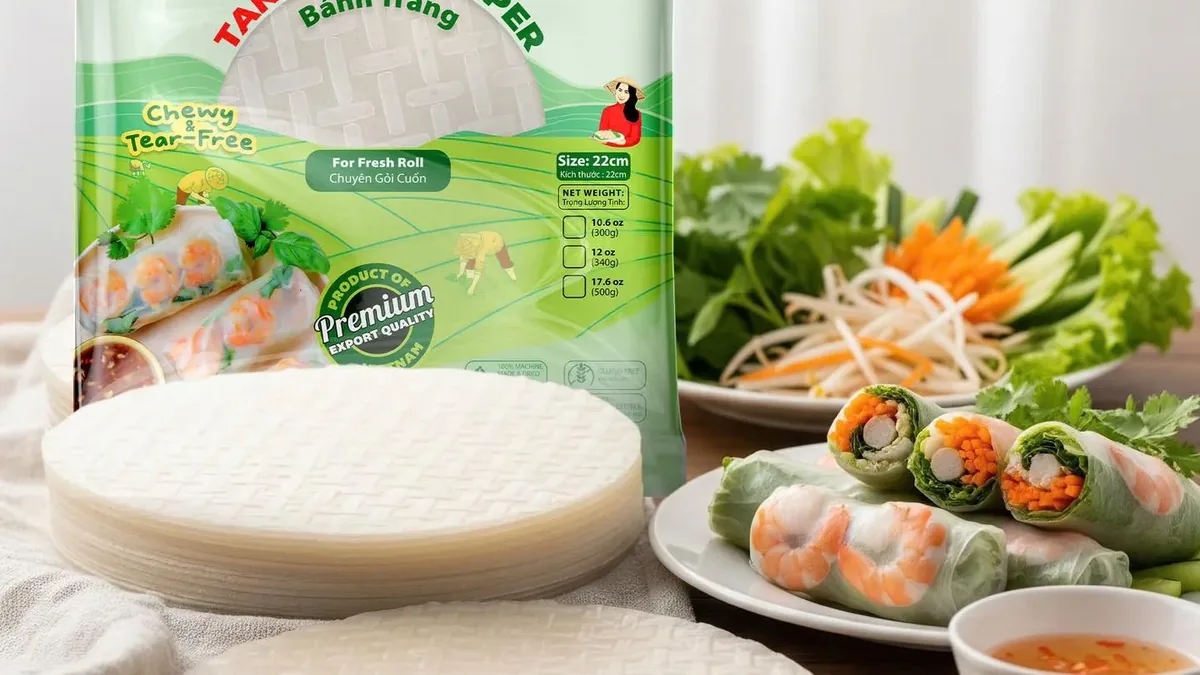
Choose the format and wrapper type that match your recipe. Tanisa's Green tea rice paper is listed in a 200 g format, while standard rice paper is offered in several sizes and pack weights. The table below helps separate the confirmed green tea specification from the wider standard range.
| Item | Green tea rice paper | Standard rice paper range |
|---|---|---|
| Main ingredients | Green tea powder, rice flour, tapioca starch and salt | Rice flour, tapioca starch and salt |
| Confirmed format | 200 g | 300 g, 340 g, 500 g, 1 kg and 5 kg bulk |
| Shapes and sizes | Confirm the current option for your recipe | Round, square and triangle; 16 cm, 18 cm, 22 cm, 28 cm, 31 cm and 32 cm |
| Shelf life | Confirm the product label | Two years |
| Best uses | Fresh rolls and creative wrappers | Fresh rolls or deep-fried rolls, depending on the type |
After opening, protect the sheets from humidity. Close the original pack firmly or place it inside an airtight bag. Store it in a cool, dry cupboard away from steam, sinks and direct sunlight.
Do you refrigerate rice paper after opening? Usually, a dry cupboard is more practical than a refrigerator because condensation may add moisture when the pack is moved in and out. Follow the product label first, and avoid freezing the sheets.
Does rice paper go bad after opening? It can lose quality if moisture enters the pack. Look for sheets that have become damp, stuck together, cracked or changed in smell. Discard food packaging if the product appears spoiled, and use the printed best-before information as the main guide.
Storage affects handling more than flavour alone. Moist sheets may stick together, while very dry or damaged sheets may crack during rolling. Keeping the pack sealed helps preserve the flexible texture you need for fresh rolls.
Frequently asked questions
Are Vietnamese rice paper rolls healthy?
A rice paper roll can be a light meal when filled with vegetables and cooked ingredients, but its nutrition depends on the complete recipe. Tanisa's green tea rice paper is plant-based, gluten-free and non-GMO. Sauces, fried fillings and portion size change the final meal.
How long does rice paper last after opening?
We list a two-year shelf life for its standard rice paper range. For green tea rice paper, check the date printed on the pack. After opening, close the package well and keep it dry. Discard sheets that become damp, moldy, unusually scented or difficult to separate.
How do you store rice paper after opening?
Keep opened rice paper in its resealable or tightly closed packaging, inside a cool, dry cupboard. Keep it away from steam and water. A refrigerator is not usually needed for dry sheets, but the product label takes priority. Moisture is the main storage problem because it can make sheets stick.
How do you make Vietnamese rice paper rolls?
Soften one sheet in warm water for about 10–20 seconds, then place it on a clean board. Add cooked fillings, fold the bottom and sides over them, and roll firmly. Keep filled fresh rolls chilled and eat them the same day. Use cooked shrimp, not raw shrimp.
Can green tea rice paper be fried?
Rice paper can be used for crisp fried rolls when the filling is fully cooked. Roll tightly, seal the edge, pat the outside dry and fry at about 175°C. Do not leave hot oil unattended. Check that the roll is browned and the filling is hot before serving.
Tanisa Foods JSC is a leading Vietnamese manufacturer of rice paper, rice noodles, and rice vermicelli, exporting to over 45 countries worldwide. We comply with international food safety standards, including FSSC 22000, ISO 22000:2018, FDA, KFDA, and Halal.
TANISA FOODS JSC
Factory add 1: 188 Lac Long Quan Street, Quarter 3, Tan Ninh Ward, Tay Ninh Province, Vietnam
Factory add 2: Phu Hoa Dong, Cu Chi, Ho Chi Minh City, Viet Nam
Office in HCMC: 18th Floor, Vincom Building, 72 Le Thanh Ton Street, District 1, Ho Chi Minh City, Vietnam
Warehouse in HCMC: 2/3 Binh Gia, Tan Binh District, Ho Chi Minh City, Vietnam
Hotline: +84 938 118 699 (WhatsApp/WeChat), +84 938 198 299 (Zalo)




Email: marketing@tanisagroup.com
Website: www.tanisagroup.com
Facebook: Tanisa Foods JSC
Instagram: @tanisa_foods
Youtube: Tanisa Kitchen

Read more