



How to Roll Rice Paper Without Tearing
Learn how to roll rice paper without tearing. Follow simple soaking, filling and folding steps, plus practical storage tips for fresh rolls.
To learn how to roll rice paper without tearing, dip one sheet briefly in warm water, place it on a flat board, and use it as soon as it becomes flexible. Keep the filling light and leave space at the edges so you can fold and tighten the wrapper without pulling it.
Key takeaways
- Dip rice paper for only a few seconds, then let it soften on the board.
- Use a flat surface and keep the filling in a compact line.
- Fold the bottom and sides over the filling before rolling forward.
- Tanisa rice paper comes in several shapes, sizes and pack formats.
- Store opened sheets in a dry, clean, airtight place.
What is how to roll rice paper?
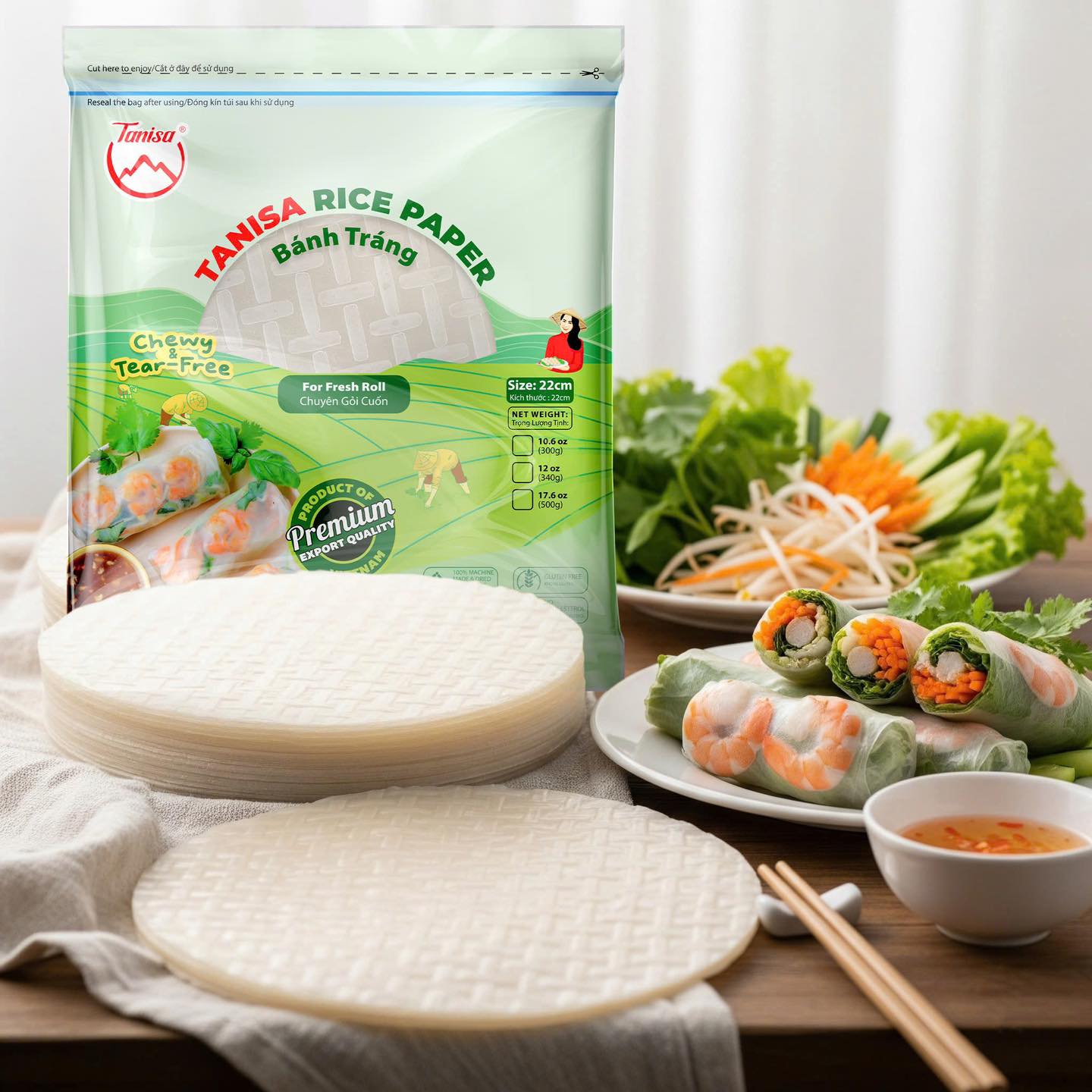
Rice paper is a thin wrapper made from rice flour, tapioca starch and salt. It becomes flexible after brief contact with water and is used for fresh spring rolls, fried spring rolls and other wraps.
For a fresh roll, prepare all ingredients before soaking the sheet. Use cooked shrimp, cooked chicken, tofu, vegetables, herbs or rice vermicelli. Cut long ingredients into pieces that fit the wrapper.
How do you roll rice paper step by step?
- Fill a wide, shallow dish with warm water. The water should feel comfortable to touch, not hot.
- Hold one sheet by the edge and dip it for about 5–10 seconds. Do not leave it submerged while waiting for it to become fully soft.
- Lay the sheet on a clean, flat plate or board. It will continue softening for a short time.
- Place the filling slightly below the centre. Leave space at both sides and at the top.
- Fold the bottom edge over the filling. Fold the left and right sides towards the centre.
- Roll forward with gentle, even pressure. Keep the filling together instead of pushing it towards the edges.
The sheet may still feel slightly firm when you place the filling. That is useful because over-softened rice paper becomes harder to lift and fold. If a wrapper sticks to the board, use a less wet surface and reduce the soaking time for the next sheet.
For a clear example using noodles, see our rice paper rolls with noodle. For a classic filling, follow our Vietnamese rice paper rolls with shrimp recipe.
How do you roll rice paper without tearing?
The main causes of tearing are long soaking, heavy filling and sharp ingredients. Keep the filling compact, remove hard stems from herbs, and avoid overfilling the first few rolls. A wrapper that is flexible but not completely limp gives you more control.
Rice paper also tears when you pull it across a wet board. Place it down smoothly after dipping. If you need to move it, lift the whole sheet with both hands rather than dragging one edge.
For fried spring rolls, use a filling that is cool and not wet. Wrap firmly, then allow the outside to dry slightly before frying. Keep hot oil attended throughout cooking, and make sure the rolls are dry enough to reduce splashing.
Kitchen notes
- Prep time: plan about 20 minutes for 8–12 fresh rolls, depending on the filling.
- Soaking time: dip each sheet for about 5–10 seconds, then use it promptly.
- Servings: 2–4 people for 8–12 rolls.
- Prepare the filling before wetting the wrapper because softened rice paper keeps changing texture.
- Do not stack wet sheets. Roll each one before soaking the next.
- Keep fresh rolls chilled and eat them the same day.
How is Vietnamese rice paper made and used?
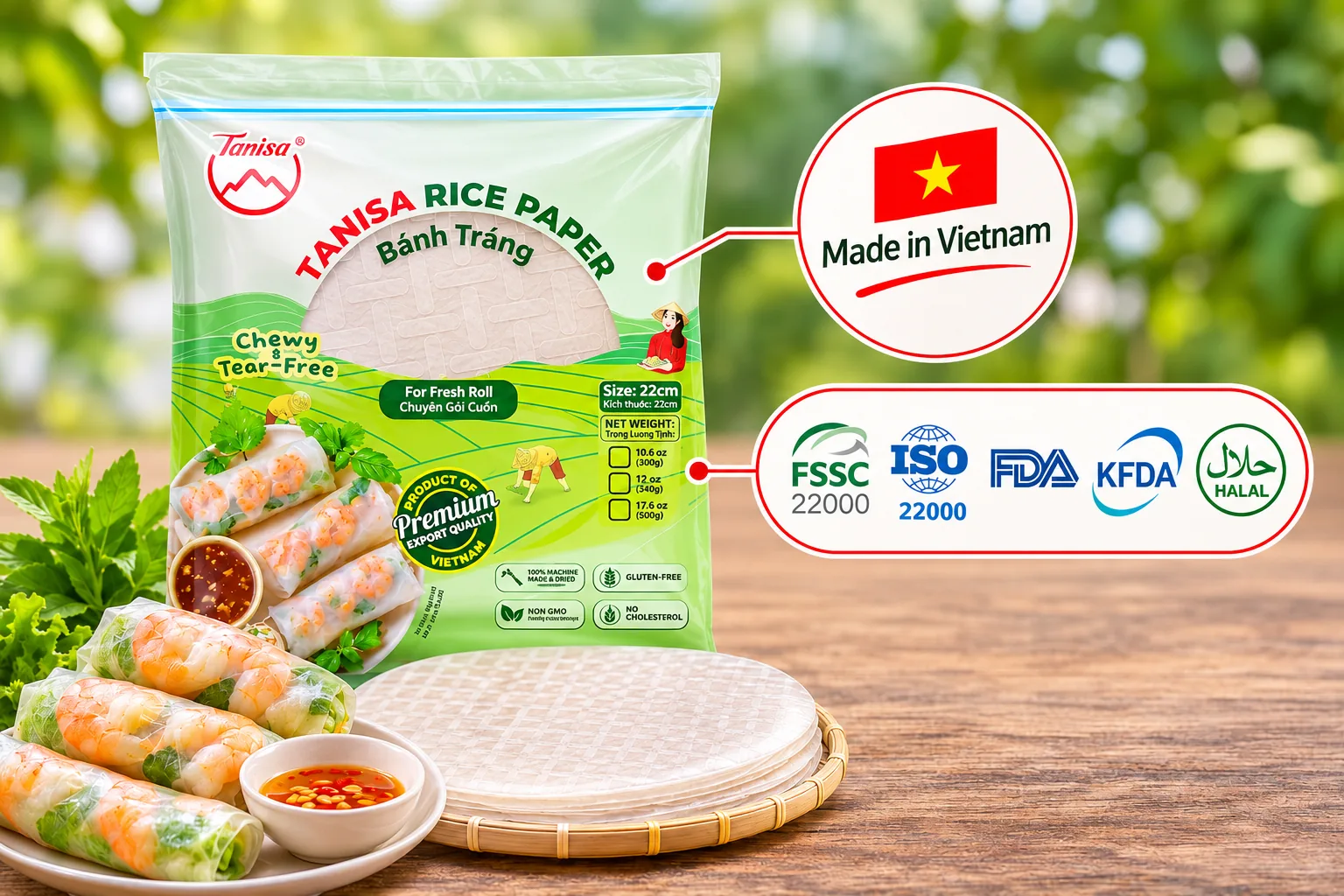
Vietnamese rice paper is made into a thin sheet from rice flour, tapioca starch and salt. At Tanisa, our rice paper is made and dried by machine, then checked for final quality before packing.
Tanisa standard white rice paper is available in round, square and triangle shapes. Sizes include 16 cm, 18 cm, 22 cm, 28 cm, 31 cm and 32 cm. A smaller sheet suits a light snack or small roll, while larger sheets give you more room for vegetables, noodles and herbs.
| Specification | Tanisa rice paper | Why it helps |
|---|---|---|
| Ingredients | Rice flour, tapioca starch and salt | Useful for checking the wrapper formula. |
| Shapes | Round, square and triangle | Supports different serving styles. |
| Sizes | 16 cm, 18 cm, 22 cm, 28 cm, 31 cm and 32 cm | Lets cooks match the sheet to the filling. |
| Retail and bulk packs | 300 g, 340 g, 500 g, 1 kg and 5 kg bulk | Works for home use, food service and larger kitchens. |
| Shelf life | 2 years | Gives unopened stock a clear planning point. |
Tanisa rice paper is described as thin but strong, chewy and easy to roll after soaking. The standard product is also listed as gluten-free, non-GMO, plant-based and free from preservatives. Check the ingredient label on the pack, especially if you manage food allergies.
Fresh spring rolls are often called summer rolls in international English. They usually combine the softened wrapper with vegetables, herbs, noodles and cooked protein. You can also use rice paper for fried spring rolls, where the finished wrapper becomes crisp and non-sticky.
What should you check when choosing and storing rice paper?
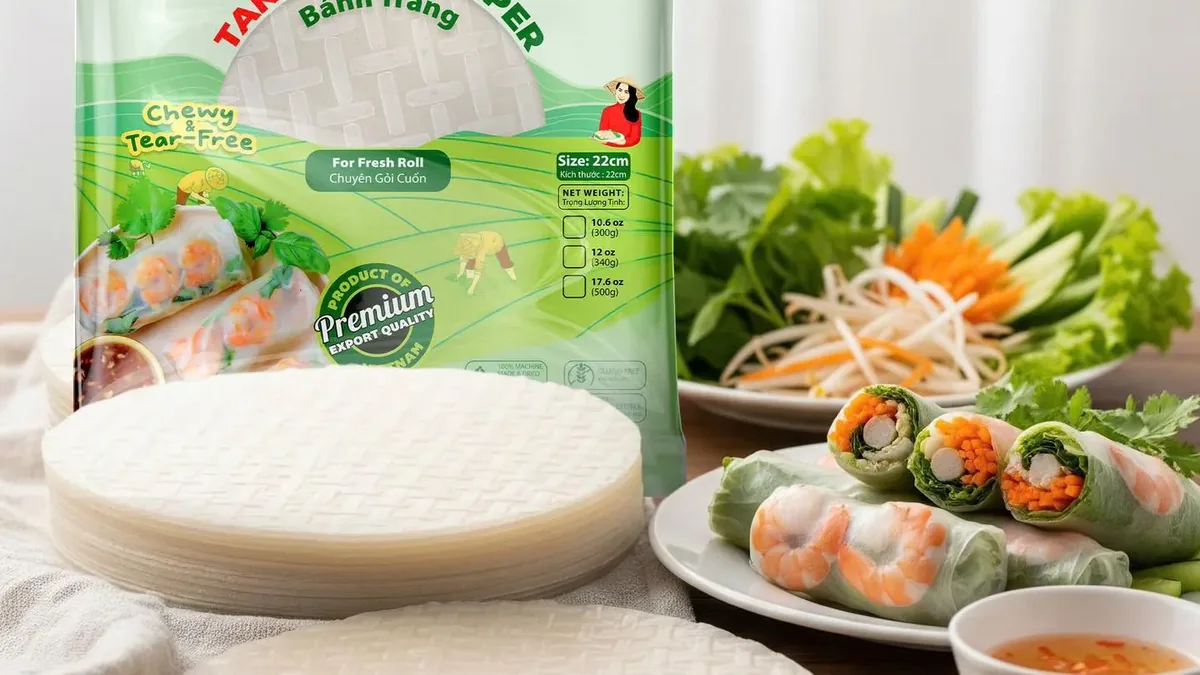
Choose rice paper by its ingredients, size, intended use and pack format. For fresh rolls, look for a sheet that becomes flexible without turning into a paste; for fried rolls, choose a product specified for crisp cooking.
Tanisa supplies rice paper in retail bags and bulk formats. At our factory, we offer the standard product in a 38-sheet resealable retail pack. A resealable pack helps reduce exposure to air and moisture after opening.
Store unopened and opened sheets in a dry, clean, airy place away from water and steam. Rice paper does not usually need refrigeration after opening. Refrigeration can expose the sheets to condensation when the pack is removed, so keep them sealed at room temperature unless the product label says otherwise.
Does rice paper go bad after opening? It can lose quality if it absorbs moisture, develops an unusual smell, shows visible mould or becomes badly cracked. Do not use sheets with mould or an off smell. For best texture, close the bag after every use and avoid storing it beside a kettle, sink or cooker.
How long rice paper lasts after opening depends on storage conditions and the pack label. We list a two-year shelf life for standard rice paper. That shelf-life statement applies to the product specification; after opening, protect the sheets from moisture and follow the date and storage instructions printed on the pack.
Before buying, compare the sheet size with your serving plan. A 22 cm wrapper is a practical middle option for a standard fresh roll, while larger sheets can hold more filling. For another filling idea, see our rice paper rolls recipe.
Frequently asked questions
How long should you soak rice paper?
Dip one sheet in warm water for about 5–10 seconds, then place it on a flat board. It will continue softening while you add the filling. The exact time depends on water temperature and sheet thickness. Start with less soaking time because an over-softened wrapper tears more easily during folding.
Do you refrigerate rice paper after opening?
Usually, store opened rice paper in its sealed bag at room temperature in a dry, clean place. Refrigeration may create condensation when the pack comes out. Keep the sheets away from steam and wet work areas. Follow the product label if it gives different storage instructions for your specific pack.
How do you store rice paper after opening?
Close the original bag tightly after removing the sheets, or transfer them to an airtight container. Keep the pack in a dry cupboard away from the sink, cooker and kettle. Moisture can make sheets stick together or crack later. Check for an unusual smell, mould or visible damage before use.
Are Vietnamese rice paper rolls healthy?
A roll’s nutrition depends on its filling, sauce and cooking method. Fresh rolls with vegetables and cooked ingredients are different from deep-fried rolls. Tanisa standard rice paper is listed as gluten-free, non-GMO, plant-based and free from preservatives, but those wrapper details do not describe the complete meal.
Tanisa Foods JSC is a leading Vietnamese manufacturer of rice paper, rice noodles, and rice vermicelli, exporting to over 45 countries worldwide. We comply with international food safety standards, including FSSC 22000, ISO 22000:2018, FDA, KFDA, and Halal.
TANISA FOODS JSC
Factory add 1: 188 Lac Long Quan Street, Quarter 3, Tan Ninh Ward, Tay Ninh Province, Vietnam
Factory add 2: Phu Hoa Dong, Cu Chi, Ho Chi Minh City, Viet Nam
Office in HCMC: 18th Floor, Vincom Building, 72 Le Thanh Ton Street, District 1, Ho Chi Minh City, Vietnam
Warehouse in HCMC: 2/3 Binh Gia, Tan Binh District, Ho Chi Minh City, Vietnam
Hotline: +84 938 118 699 (WhatsApp/WeChat), +84 938 198 299 (Zalo)




Email: marketing@tanisagroup.com
Website: www.tanisagroup.com
Facebook: Tanisa Foods JSC
Instagram: @tanisa_foods
Youtube: Tanisa Kitchen

Read more