


Rice Paper in Vietnam: Origin, Taste and Labels
Rice paper in Vietnam has a distinct origin and formula. Learn how to check labels, ingredients and certifications before buying or cooking.
Is Rice Paper Really From Vietnam?
Yes, rice paper, or bánh tráng, comes from Vietnam. It grew out of the country's rice-farming culture in the Mekong Delta and several provinces in central and southern Vietnam, where people turned rice grains into thin, easy-to-store sheets for everyday meals. But the question doesn't stop at history anymore. A fair share of products labeled "rice paper" sold around the world today aren't necessarily made in Vietnam, so knowing how to tell the difference matters more than before, especially right before you buy or cook with one.
The Real Origin of Rice Paper
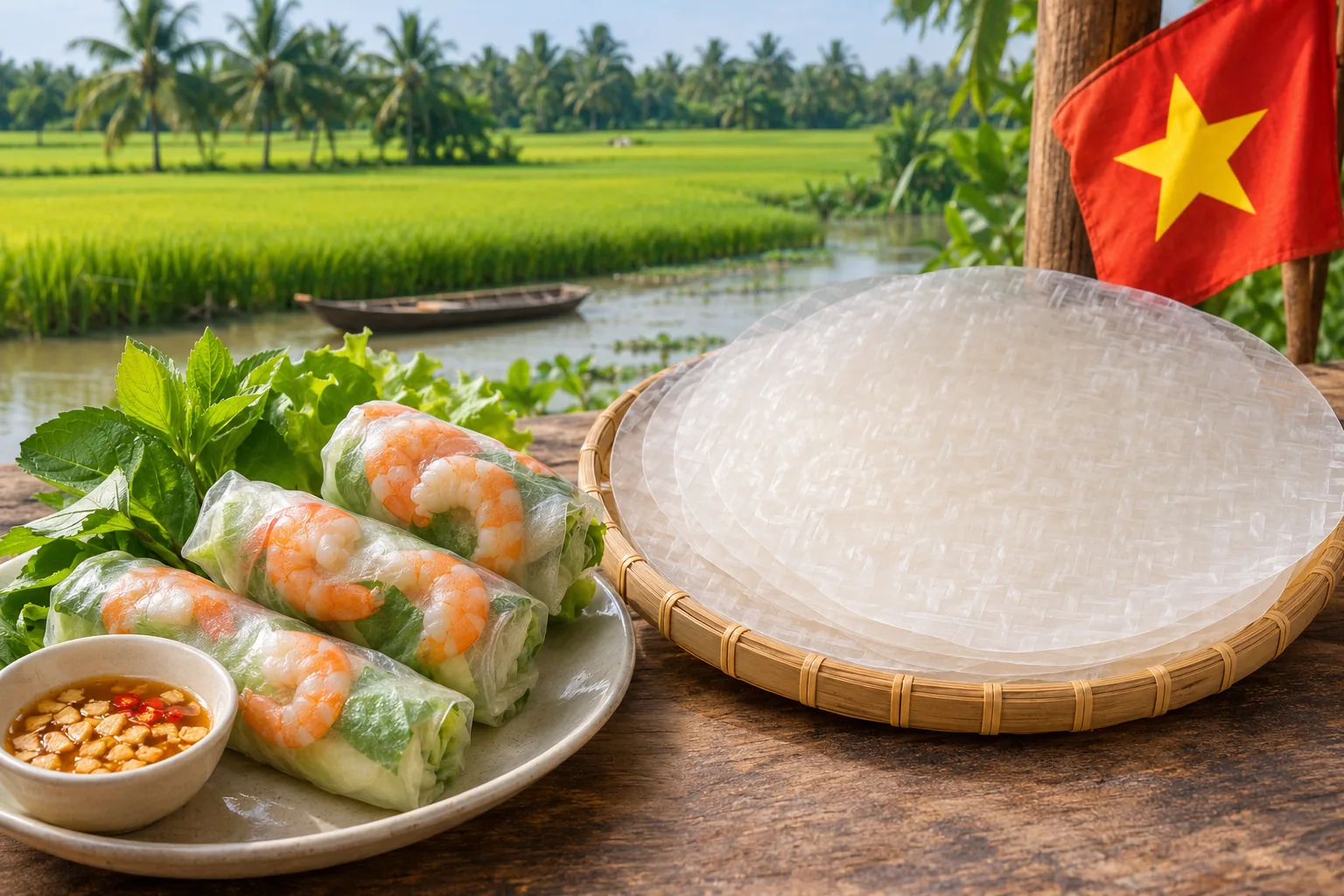
Rice paper wasn't invented by one person or one company. It took shape over generations of Vietnamese people who made their living from rice farming, mainly in the Mekong Delta and several provinces in central and southern Vietnam. When rice was the main food source, people found ways to turn it into different dishes: steamed rice, rice vermicelli, pho noodles, hu tieu noodles, and rice paper. Each dish reflects its own adaptation to the climate and the rhythm of agricultural life in that region.
If you want a closer look at the traditional rice paper making process (soaking the rice, grinding it into batter, steaming it, drying it in the sun) and the villages known for it, such as Trang Bang in Tay Ninh and Cu Chi, that ground has already been covered in Tanisa's The History of Vietnamese Rice Paper, so this article won't repeat it here.
Is All Rice Paper Sold Today Actually Made in Vietnam?
This is the part most people skip when learning about rice paper. In reality, not every product named "rice paper" today is made in Vietnam. Manufacturers in a number of other countries also produce rice paper, though sometimes with a different formula, for instance a higher ratio of tapioca starch than Vietnam's traditional recipe.
Why Origin Still Affects Taste and How It Cooks
Vietnam's rice-based formula, especially rice grown in the Mekong region, tends to produce sheets that are pliable, easy to roll, and resist tearing once soaked. Some alternative products made with a higher share of tapioca starch can turn out chewier or stickier when soaked.
"Rice Paper" Is Sometimes Used as a Catch-All Name
In many markets, the term "rice paper" gets used for any rolling wrapper, regardless of where it's actually made or what it's made from. That's also why the question "is rice paper from Vietnam" still gets searched, even though the basic answer is yes.
How to Tell If Your Rice Paper Is Genuinely Made in Vietnam
For everyday shoppers:
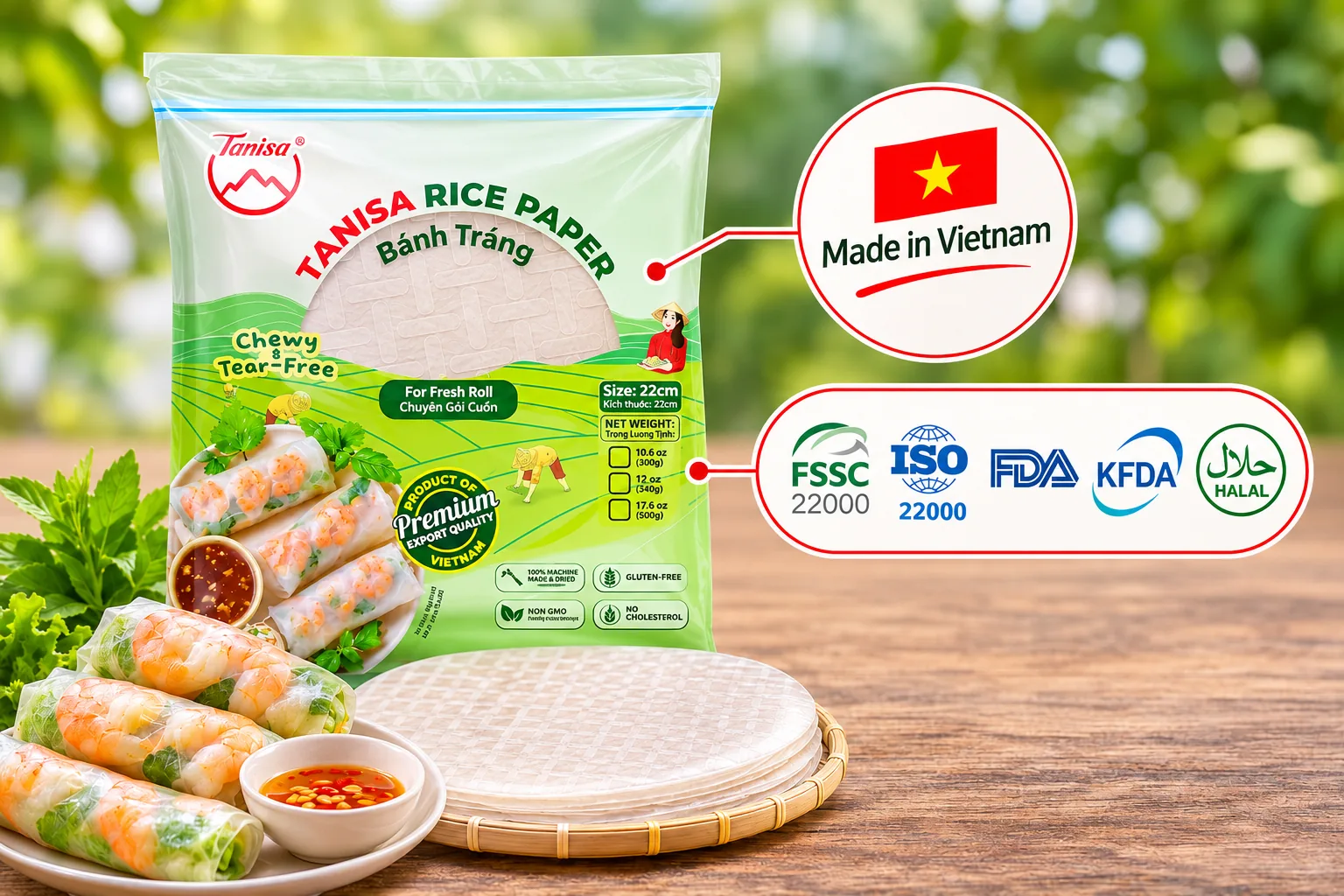
- Read the "Product of" or "Made in" line on the package instead of just the brand name. A brand that sounds Vietnamese doesn't necessarily mean it's made in Vietnam.
- Check the ingredient list. Traditional Vietnamese rice paper usually states its rice-to-tapioca-starch ratio clearly, not vaguely.
- Check the seller's information. A reputable retailer or distributor usually states the country of origin right on the product page.
For bulk buyers and importers:
- Ask for a specific factory address, not just the name of an intermediary trading company.
- Cross-check food safety certifications, such as FSSC 22000 or ISO 22000, to confirm they are issued to the actual manufacturing facility.
Small Packaging Details That Are Easy to Miss
Barcodes, secondary languages printed on the package, certification logos: these small details confirm origin more reliably than the brand name alone.
Why This Distinction Matters When You Buy or Cook
For home cooks, genuine Vietnamese rice paper tends to roll soft, fold cleanly at the edges, and hold up when packed with vegetables, shrimp, or meat. For bulk buyers, knowing the real origin ties directly to traceability, something that's hard to renegotiate once a shipment has already arrived.
Frequently Asked Questions
Is Rice Paper From Vietnam or Thailand? Historically, rice paper used in cooking originated in Vietnam. Thailand now also produces similar rolling wrappers, but with a different formula.
Is Rice Paper From Vietnam or China? Rice paper for cooking is tied to Vietnam's rice-growing culture. That's different from the paper made from mulberry bark in China, used for calligraphy, which also gets called "rice paper" even though it isn't food. For the rice paper used to wrap fresh spring rolls, the origin is Vietnam.
Does a "Product of Vietnam" Label Guarantee Better Quality? That line confirms where a product is made, but quality still depends on each factory's own process and standards. It's worth checking food safety certifications too, rather than relying on the origin label alone.
Tanisa, a Vietnamese Rice Paper Manufacturer
Tanisa is a direct manufacturer based in Vietnam, with no trading intermediary involved, making and drying its rice paper entirely by machine. Its products hold FSSC 22000, ISO 22000:2018, FDA, KFDA, and Halal certifications, and are currently exported to more than 45 countries. Against the verification criteria above, Tanisa's rice paper can be checked at every point, from the factory address to its food safety certifications, rather than resting on a name that simply sounds familiar.
Tanisa Foods JSC is a leading Vietnamese manufacturer of rice paper, rice noodles, and rice vermicelli, exporting to over 45 countries worldwide. We comply with international food safety standards, including FSSC 22000, ISO 22000:2018, FDA, KFDA, and Halal.
TANISA FOODS JSC
Factory add 1: 188 Lac Long Quan Street, Quarter 3, Tan Ninh Ward, Tay Ninh Province, Vietnam
Factory add 2: Phu Hoa Dong, Cu Chi, Ho Chi Minh City, Viet Nam
Office in HCMC: 18th Floor, Vincom Building, 72 Le Thanh Ton Street, District 1, Ho Chi Minh City, Vietnam
Warehouse in HCMC: 2/3 Binh Gia, Tan Binh District, Ho Chi Minh City, Vietnam
Hotline: +84 938 118 699 (WhatsApp/WeChat), +84 938 198 299 (Zalo)




Email: marketing@tanisagroup.com
Website: www.tanisagroup.com
Facebook: Tanisa Foods JSC
Instagram: @tanisa_foods
Youtube: Tanisa Kitchen

Read more