


Rice Paper Certifications: What Every Buyer Should Know
Rice paper certifications explained, from FSSC 22000 and ISO 22000 to FDA, Halal, and Non-GMO marks
An imported package of rice paper can carry five or six different certification marks: FSSC 22000, ISO 22000, an FDA registration number, a Halal seal. Each mark answers its own question. Some confirm that a factory's food safety control system has been audited. Some confirm that a product is allowed to enter a specific country. Others simply relate to whether the product fits a particular diet or religion. Confusing these groups is exactly where many purchasing or import decisions go wrong.
Why Rice Paper Certifications Matter More Than You Think
Rice paper is, at its core, a product whose recipe is simply rice flour, water, and salt, sometimes with a little starch such as tapioca added for extra flexibility. But once this simple product crosses a border, it enters a regulatory system that has nothing to do with the recipe itself. Food safety agencies, customs authorities, and religious certifying bodies each have their own standards, and a factory has to meet several of these standards at once to sell internationally.
Readers coming to this topic tend to fall into two groups, each with a different need. Home cooks and health-conscious consumers want to know what a label actually promises: is this product really gluten-free? Importers, distributors, and retail buyers need more operational information: which certifications are mandatory for customs clearance, and which are helpful but not required. This article addresses both needs.
Food Safety Management Certifications: Can This Factory Be Trusted?
This first group of certifications answers one question: does the factory producing the rice paper have a documented, audited system for controlling food safety hazards? This group says more about the process behind the product than about the ingredients in the finished product.
ISO 22000: The Foundational Standard
ISO 22000 is the international standard for food safety management systems, covering the entire supply chain from raw material suppliers to the finished product leaving the factory. The standard builds HACCP, meaning hazard analysis and critical control points, into a broader management framework that includes documented procedures, internal audits, management review, and continual improvement. On its own, however, ISO 22000 is not recognized by the Global Food Safety Initiative (GFSI), the body that most major retailers rely on for benchmarking.
FSSC 22000: The GFSI-Recognized Version
FSSC 22000 is built on top of ISO 22000, adding a sector-specific prerequisite program, such as ISO/TS 22002-1 for food manufacturing, along with extra requirements for food defense, food fraud prevention, allergen management, and food safety culture. Because of these additions, FSSC 22000 is GFSI-recognized, which is why many international retailers and importers specifically ask for this certification rather than accepting ISO 22000 alone.
Market Access Certifications: Can This Product Legally Enter My Country?
The certifications above relate to quality management. The next group concerns something more basic: whether a shipment is allowed to clear customs at all. A product can come from a clean, well-run factory and still be held at the border if this paperwork is missing.
FDA Facility Registration and FSVP (United States Market)
Any foreign facility that manufactures, processes, packs, or holds food for the US market must register with the FDA. Separately, the US importer, not the overseas factory, must maintain a Foreign Supplier Verification Program, known as FSVP, for each product-and-supplier combination it imports. This means evaluating hazards, verifying the supplier's capability through audits, testing, or records review, and re-evaluating the relationship at least once every three years. Many importers assume this responsibility belongs to the exporter, but in practice, the US-based importer is the party legally responsible for FSVP compliance.
KFDA / MFDS Import Requirements (South Korea)
South Korea's food regulator, now known as the Ministry of Food and Drug Safety (MFDS, formerly KFDA), requires imported food to be declared and to meet Korean food standards before it clears customs. For a product like rice paper entering Korean retail, this is simply the requirement for market entry.
Religious and Dietary Certifications: Can I Eat This Product?
This last group speaks directly to the end consumer. These certifications do not affect whether a shipment clears customs; they affect whether a specific person can eat the product without conflicting with their religious beliefs or their health.
Halal Certification: What a JAKIM or MUI Approval Actually Confirms
Halal certification is issued by religious certifying bodies, most notably JAKIM (the Department of Islamic Development Malaysia) and MUI (the Indonesian Ulema Council). These bodies inspect ingredients, processing methods, and handling against halal standards such as Malaysia's MS 1500. For products entering Malaysia, only Foreign Halal Certification Bodies recognized by JAKIM can issue a certificate that Malaysian authorities will accept, so a halal mark from an unrecognized body does not carry the same guarantee.
Non-GMO Project Verified
Non-GMO Project Verified is a third-party program that checks something more specific: the segregation of tested, low-risk ingredients from potential GMO contamination throughout the production process, along with traceability measures that confirm high-risk ingredients are tracked all the way through to the finished product.
How to Verify That a Rice Paper Certification Is Real
A few basic checks are worth doing:
- Ask for a currently valid certificate, not an old scan. Certifications have an expiry date and need to be renewed on a cycle, often annually for some schemes, so a certificate from several years ago may no longer be valid.
- Check the certificate number if the issuing body has a public lookup system. Many certifying organizations allow you to look up active certificates online.
- Ask who carried out the audit and when. A trustworthy supplier will answer this question without hesitation.
From Certificate to Shipment: What a Verified Supplier's Documentation Looks Like
The checklist above explains what to ask for. It is easier to picture this with a full, real-world answer. Tanisa Foods, a Vietnamese manufacturer of rice paper and other rice-based products, is used here as a reference point because the company's certifications, specifications, and trade terms are all publicly available.
Certifications and Registrations Currently Held
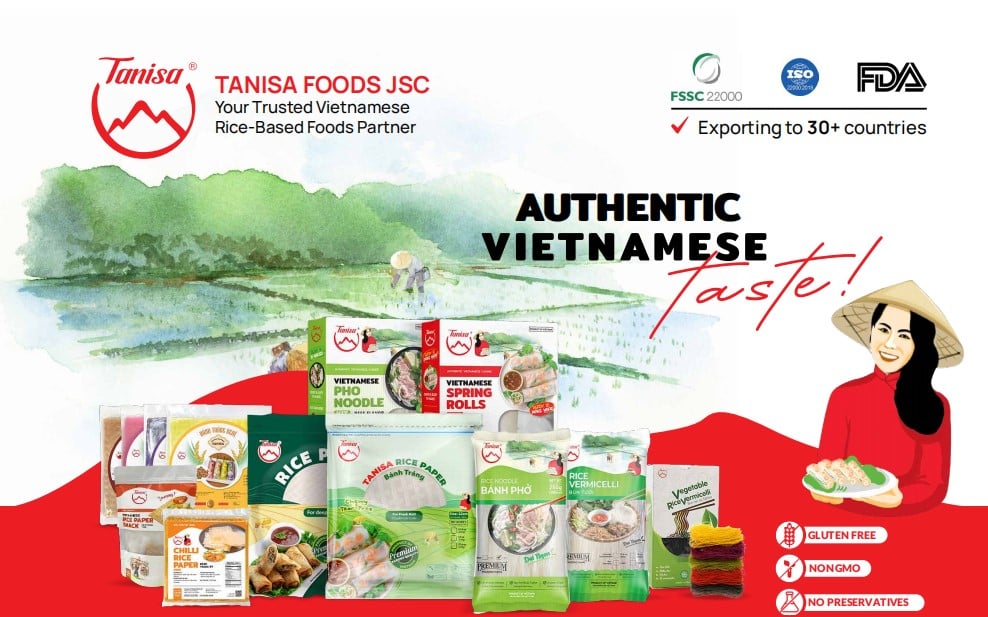
Tanisa's factory holds FSSC 22000 and ISO 22000:2018 certification. The company also has FDA registration for the US market, KFDA registration for Korea, and Halal certification.
Specifications and Packing Formats
Certification says nothing about sheet size, packing format, or shelf presentation, so these details still need to be confirmed separately against the specification sheet for the exact product being ordered. Tanisa's product range shows how specific this gets in practice:
| What to Confirm | Example (Tanisa) | Why It Matters |
| Product range | White rice paper, brown rice paper, chilli rice paper, and vegetable-colour rice paper | Suits different retail segments and uses. |
| Vegetable-colour rice paper ingredients | Rice flour, tapioca starch, natural vegetable powder, and salt | Gives the labeling and technical teams a starting point for review. |
| Example size | 22 cm, square or round, on selected vegetable-colour lines | Affects portion size, display space, and case packing. |
| Retail packing | Resealable zip pack, 38 sheets per retail pack | Supports shelf display and keeps the sheets usable after opening. |
Trade Terms That Come With the Documentation Certifications and specifications still need to connect to a workable order in practice. The terms below are the operational side of that same picture:
| Buyer Question | What to Expect | Planning Note |
| How long does production take? | Lead time of 20 to 30 days | Allow time for specification approval, artwork, and destination paperwork. |
| What is the minimum order quantity? | MOQ is confirmed separately for each order and each packing format | Ask for the MOQ for the specific product code, rather than applying one general figure. |
| Which shipping terms are available? | FOB, EXW, CIF, and DDP | Choose the term that matches your customs broker and shipping plan. |
| Which markets has it already sold into? | More than 35 countries, including the US, Europe, Korea, Japan, and Australia, through retailers such as H-Mart, Amazon US, Coupang, and Don Quijote | A product already sold through a retailer with its own vetting process is also a useful cross-check, alongside the certifications themselves. |
Buyers who want to see this documentation for a specific order can request samples, certificates, and a quotation directly from the supplier's export team; for Tanisa, this can be done through the contact page or by emailing marketing@tanisagroup.com.
Frequently Asked Questions About Rice Paper Certifications
Is rice paper always naturally gluten-free? The main ingredients, rice flour, water, and salt, do not contain gluten. But being naturally gluten-free by ingredient is different from carrying gluten-free certification, which requires testing and facility audits as explained above. If gluten is a genuine health concern rather than just a preference, check the package for an actual certification mark.
Is rice paper always a vegan food? Traditional rice paper made from rice flour, water, and salt is generally vegan. Some flavored or colored varieties may add other ingredients, so it is still worth reading the full ingredient list rather than assuming.
Does rice paper need FDA approval to be sold in the US? The FDA does not approve food the way it approves drugs. What is required is that the foreign factory producing the rice paper is registered with the FDA, and that the US importer maintains an FSVP for that supplier relationship, as explained above.
What should I ask a supplier to verify their certifications? Ask for a currently valid certificate that names the specific facility, the name of the certifying body, and the date of the most recent audit. If that certification has a public lookup system, ask for the certificate number so you can check it yourself.
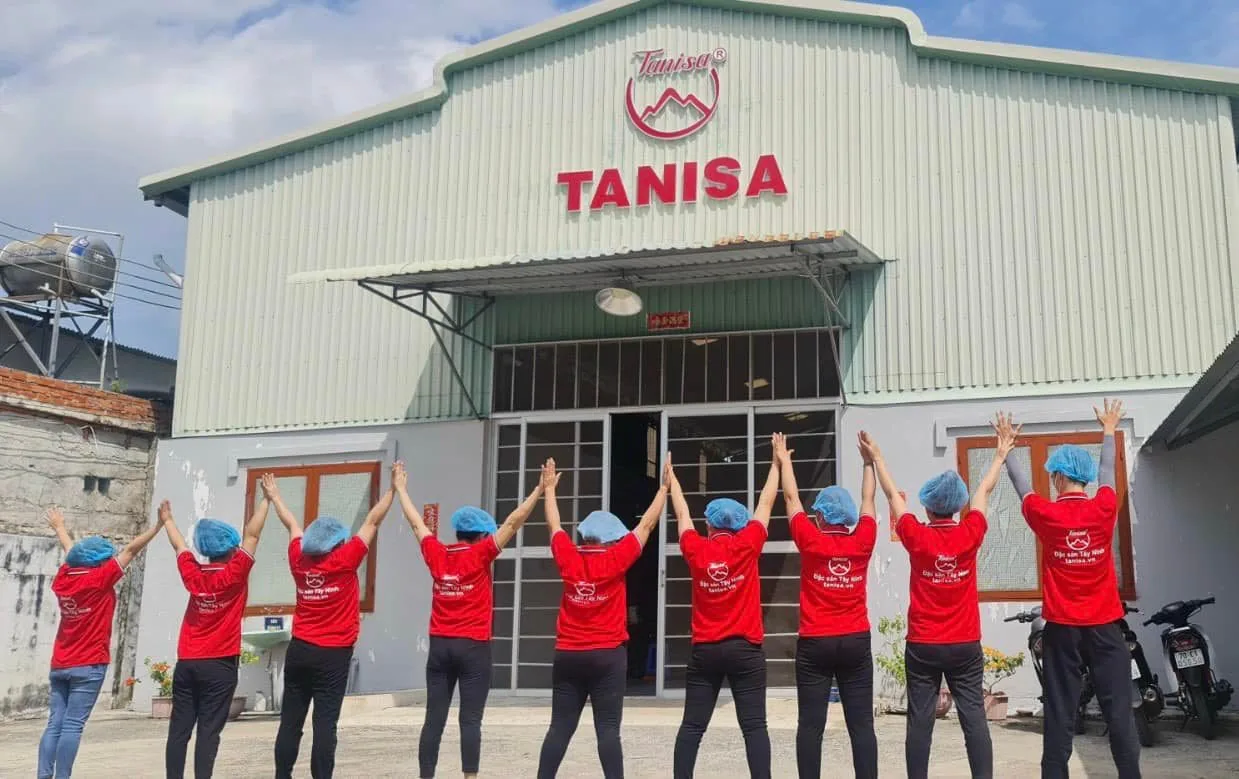
TANISA FOODS JSC, a strong brand in the market for the production and distribution of specialty products (rice paper, rice noodles...) and spices (seasoning) which exported to some countries such as USA, France, South Korea, Japan, Russia, Brunei...
TANISA FOODS JSC
Factory add 1: 188 Lac Long Quan Street, Quarter 3, Tan Ninh Ward, Tay Ninh Province, Vietnam
Factory add 2: Phu Hoa Dong, Cu Chi, Ho Chi Minh City, Viet Nam
Office in HCMC: 18th Floor, Vincom Building, 72 Le Thanh Ton Street, District 1, Ho Chi Minh City, Vietnam
Warehouse in HCMC: 2/3 Binh Gia, Tan Binh District, Ho Chi Minh City, Vietnam
Hotline: +84 938 118 699 (WhatsApp/WeChat), +84 938 198 299 (Zalo)

Email: marketing@tanisagroup.com
Website: www.tanisagroup.com
Facebook: Tanisa Foods JSC
Instagram: @tanisa_foods
Youtube: Tanisa Kitchen


Xem thêm