


Vietnamese Rice Paper: What Really Sets It Apart From the Rest?
In 2026, rice paper suddenly became a hot keyword on TikTok. People wrap it around fried eggs, stuff it into dumplings, and fry it crispy as a snack. But few notice one thing: not every sheet of rice paper sold on the international market actually comes from Vietnam. Vietnamese rice paper, however, is the true origin of rice paper and is known for its superior quality.
Vietnamese rice paper, or bánh tráng, is a thin, translucent sheet made from rice flour, tapioca starch, water, and a bit of salt, spread into a thin layer and then dried or sun-dried. It is a traditional ingredient tied to Vietnam's rice-growing regions, distinct from the rice paper or wrappers made in China and Thailand.
Not Every "Rice Paper" Is Vietnamese Rice Paper
On international marketplaces, "rice paper" is used as a catch-all name for several different products. The Chinese version is usually a thin rice batter sheet in the style of cheung fun or a crispy fried wrapper (jian bing), eaten right after being made, with a texture and use quite different from Vietnamese rice paper. Thai spring roll wrappers also carry the name rice paper but tend to be thinner and are used only for fried dishes.
Vietnamese rice paper is different in that it is fully dried after being made, keeps well for a long time, and only needs to be re-soaked in water before use. This is exactly what allows Vietnamese rice paper to serve so many dishes, from fresh rolls to fried snacks, while the other versions are usually limited to one fixed use.
How to Recognize Authentic Vietnamese Rice Paper
One way to tell the difference is by looking at the formula. Rice paper used for rolling (fresh spring rolls, grilled meat rolls) needs to be soft and easy to fold, so the ratio usually leans toward tapioca starch: around 80% tapioca starch, 20% rice flour and salt. Rice paper used for frying needs to be crisp and not stick together while frying, so rice flour makes up the larger share: around 80% rice flour, 20% tapioca starch and salt.
Another sign is the shape. Traditional Vietnamese rice paper is usually round, not for aesthetic reasons but because the frame used to spread the batter is a piece of cloth stretched over the mouth of a steaming pot, which is round. When buying, consumers can also check the origin label and any accompanying export certifications, since this is the easiest information to verify.
In addition, rice grown in Vietnam is known for its exceptional quality, something few other countries can match, which is why rice paper made from Vietnamese rice continues to draw strong interest from international markets.
Origin: Rice Paper Was Born From a Rice-Growing Civilization
Rice paper has no single inventor. It took shape gradually over many generations, tied to Vietnam's Mekong Delta, where rice has always been at the center of agricultural life. When people needed a way to preserve rice longer and create food that was easy to carry, they found a way to grind rice into a liquid batter, spread it thin, and dry it under the sun. Around the same time, other rice-based foods such as rice vermicelli, pho, and hu tieu noodles came about in a similar way.
Several regions in Vietnam are well known for traditional rice paper making, with Trang Bang (Tay Ninh) and Cu Chi being the two most recognized names.
From One Container to More Than 30 Countries: A Real Export Story
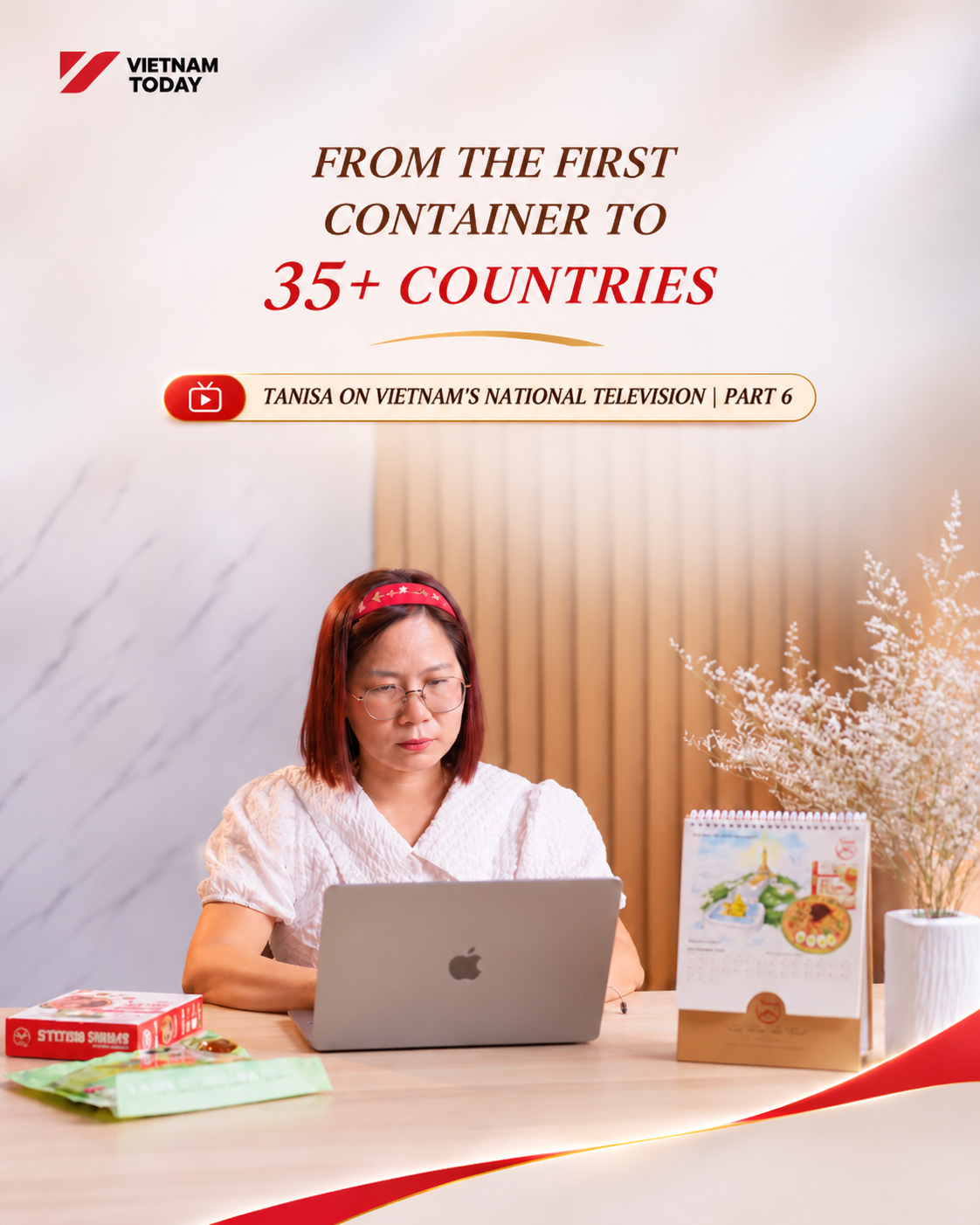
Every great journey begins with a small step. For Tanisa Foods, that step was a single container of Vietnamese rice paper shipped to Taiwan. Before that shipment left Vietnam, Tanisa's Founder spent six months studying the entire export process, from international requirements to the standards needed for the goods to clear customs and be accepted in a foreign market.
When that first container left the port, the profit wasn't much, but the joy was unforgettable. From that milestone, Tanisa kept growing, bringing Vietnamese rice paper to more than 45 countries around the world.
Innovating Without Losing the Roots: Rice Paper Colored With Natural Ingredients
Along the way, Tanisa also introduced colored rice paper lines, dyed with natural ingredients: beetroot for red, turmeric for yellow, butterfly pea flower for purple, and green tea for a new variety. From traditional rice paper to these more creative products, every step still carries the same original spirit: bringing Vietnamese flavor to the world.
This story was also featured on a program broadcast by Vietnam's national television, where Tanisa's Founder spoke directly about that first export shipment and how product innovation has helped Vietnamese rice paper reach more international markets.
Why Vietnamese Rice Paper Is Gaining More Attention Worldwide
The 2026 TikTok wave, with dishes like rice paper dumplings or rice paper egg wraps, isn't random. Rice paper is naturally gluten-free, light, and doesn't impose a fixed formula on a dish, it adapts to it. This fits the broader trend toward lighter, less processed eating that works well for vegans and people avoiding gluten.
Because demand is rising so fast, being able to tell authentic Vietnamese rice paper apart from the many rice paper products floating around the market matters more than ever, especially for first-time buyers who aren't yet used to telling the different versions apart.
Frequently Asked Questions
How many countries does Vietnamese rice paper currently export to?
According to Tanisa, the product is now present in more than 45 countries, counting from that first export shipment to Taiwan.
Is colored rice paper, such as beetroot, turmeric, or butterfly pea flower, naturally colored?
Yes. These colored rice paper lines are dyed with natural ingredients rather than artificial coloring agents.
Tanisa: A Vietnamese Rice Paper Story Told on National Television
If you're looking to understand export-grade Vietnamese rice paper, Tanisa's story is a concrete example. From a single first container, Tanisa has now expanded to more than 45 countries, holding certifications including FSSC 22000, ISO 22000:2018, FDA (USA), KFDA (South Korea), and Halal. This journey was also broadcast on national television, proof that Vietnamese rice paper can meet international standards while still holding on to its traditional roots.
TANISA FOODS JSC, a strong brand in the market for the production and distribution of specialty products (rice paper, rice noodles...) and spices (seasoning) which exported to some countries such as USA, France, South Korea, Japan, Russia, Brunei...
TANISA FOODS JSC
Factory add 1: 188 Lac Long Quan Street, Quarter 3, Tan Ninh Ward, Tay Ninh Province, Vietnam
Factory add 2: Phu Hoa Dong, Cu Chi, Ho Chi Minh City, Viet Nam
Office in HCMC: 18th Floor, Vincom Building, 72 Le Thanh Ton Street, District 1, Ho Chi Minh City, Vietnam
Warehouse in HCMC: 2/3 Binh Gia, Tan Binh District, Ho Chi Minh City, Vietnam
Hotline: +84 938 118 699 (WhatsApp/WeChat), +84 938 198 299 (Zalo)




Email: marketing@tanisagroup.com
Website: www.tanisagroup.com
Facebook: Tanisa Foods JSC
Instagram: @tanisa_foods
Youtube: Tanisa Kitchen

Xem thêm