



Crispy Rice Paper Blueberry Danish Recipe (No Puff Pastry)
Learn how to make a crispy rice paper blueberry Danish, the viral gluten-free pastry hack using Tanisa Rice Paper instead of butter and puff pastry.
A crisp, flaky Danish usually means either a trip to the bakery or giving up an entire afternoon to fold butter into dough at home. The version currently spreading on TikTok skips both. People use rice paper, the thin wrapper normally meant for spring rolls, dip it in egg, then bake it until it turns as crisp as a croissant. Many home cooks have filmed themselves making it and posted the results, and the crispness is convincing enough to explain why this trend keeps resurfacing. Here is what is actually happening inside the oven, and how to get the same crispness at home.
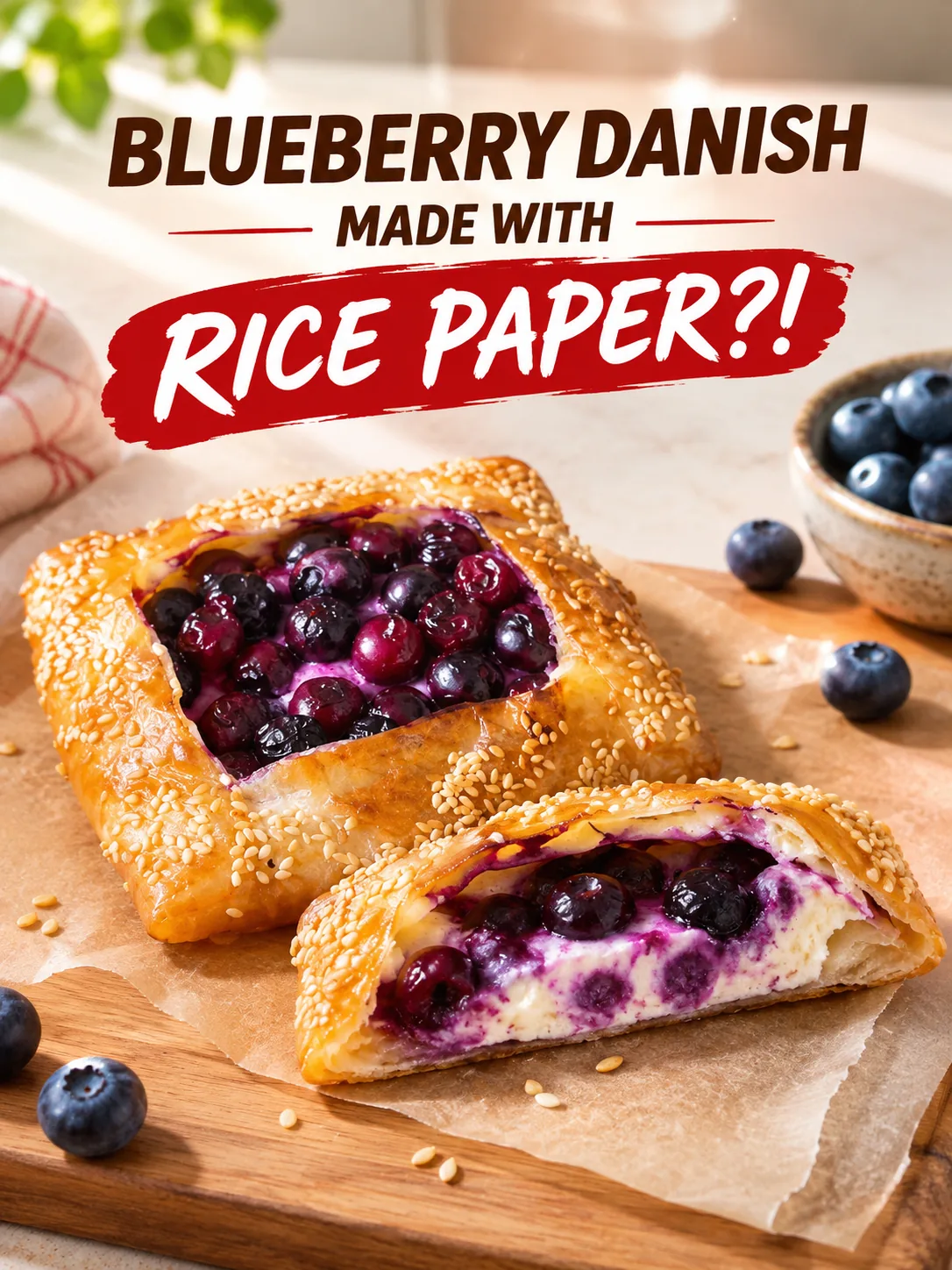
What Is a Rice Paper Danish, Really?
In the simplest terms, a "rice paper Danish" is sheets of rice paper dipped in an egg mixture, stacked together, filled with cream cheese and blueberries in the center, folded into a square, then baked until golden. On the outside it looks almost identical to the signature open window of a classic Danish pastry. The difference lies in where the "dough" starts: from dried, store-bought rice paper, instead of dough laminated with butter from scratch.
The TikTok Trend Behind This Recipe
This recipe did not appear out of nowhere. It belongs to a wider group of "rice paper hacks" that has been building on TikTok for a while, including rice paper croissants, rice paper bagels, and even rice paper mochi. The blueberry Danish is one of the newer branches of the same idea: if rice paper can crisp up into a croissant shape, it can just as well hold a sweet filling and bake into a Danish shape.
How Is It Different From a Traditional Danish Pastry?
The traditional Danish pastry, which Danes themselves call wienerbrød (meaning "Vienna bread"), actually traces back to a labor dispute rather than a Danish baking tradition. During a bakers' strike in Copenhagen in 1850, employers brought in Austrian bakers, who carried with them the technique of folding butter between thin layers of dough. When Danish bakers returned to work, they kept building on that technique, adding eggs and fruit fillings in their own way. The butter is folded in over and over, creating dozens of thin layers, and because butter has a relatively low melting point, it separates those layers apart as it bakes, producing the flaky, many-layered texture that defines a bakery Danish.
The rice paper version replaces that entire lamination process. There is no folding butter into dough across multiple rounds of resting. A few egg-dipped rice paper sheets are simply stacked on top of each other. The crispness still shows up, just through a different mechanism.
Why Does Rice Paper Crisp Up Like a Pastry Crust?
What Rice Paper Is Actually Made Of
Rice paper is made from rice flour, tapioca starch, water, and salt. Tapioca starch is what gives it elasticity and translucency once it is rehydrated. Because its main ingredients are rice and tapioca rather than wheat flour, rice paper is naturally gluten-free, with no need to adjust the recipe at all.
The Crispness Comes From Moisture Loss, Not Butter
In a traditional Danish, butter melts between the layers of dough and creates separation as it bakes. In the rice paper version, the outer egg coating sits on a sheet that is already thin and starch-rich. Under oven heat, the surface moisture evaporates quickly, and the starch on the outside hardens into a crisp shell, while the inside stays soft around the filling. This is a completely different chemical mechanism from butter lamination, but the result on the plate ends up similar: a crisp exterior, a soft interior.
Is a Rice Paper Danish Actually Healthier?
Naturally Gluten-Free, No Laminated Butter Dough Required
Skipping the butter lamination step also means skipping the large amount of butter typically folded into a classic Danish. Combined with its naturally gluten-free base, this recipe lines up well with real consumer demand. According to market research firm SNS Insider, the global gluten-free bakery market is projected to grow from USD 4.84 billion in 2025 to USD 11.97 billion by 2035, a compound annual growth rate of roughly 9.5 percent, with pastries considered one of the segments driving that demand. A viral recipe that happens to be gluten-free is arriving right as that matters to a lot of home bakers.
The Blueberry Factor
Blueberries are not just there to look good. A serving of blueberries provides a meaningful amount of vitamin C, vitamin K, and manganese, along with anthocyanins, the antioxidant compounds responsible for the fruit's deep color. A review of existing studies found that regular blueberry consumption is associated with lower LDL cholesterol and lower blood pressure. A 2023 study from King's College London specifically found that participants who consumed 26 grams of freeze-dried wild blueberry powder daily for 12 weeks showed improvements in executive function, short-term memory, and reaction speed. None of this turns a baked pastry into a "superfood," but it does show that the blueberries in this recipe are doing more than just sitting in the middle for decoration.
Crispy Rice Paper Blueberry Danish Recipe
Ingredients (makes 2 pastries)
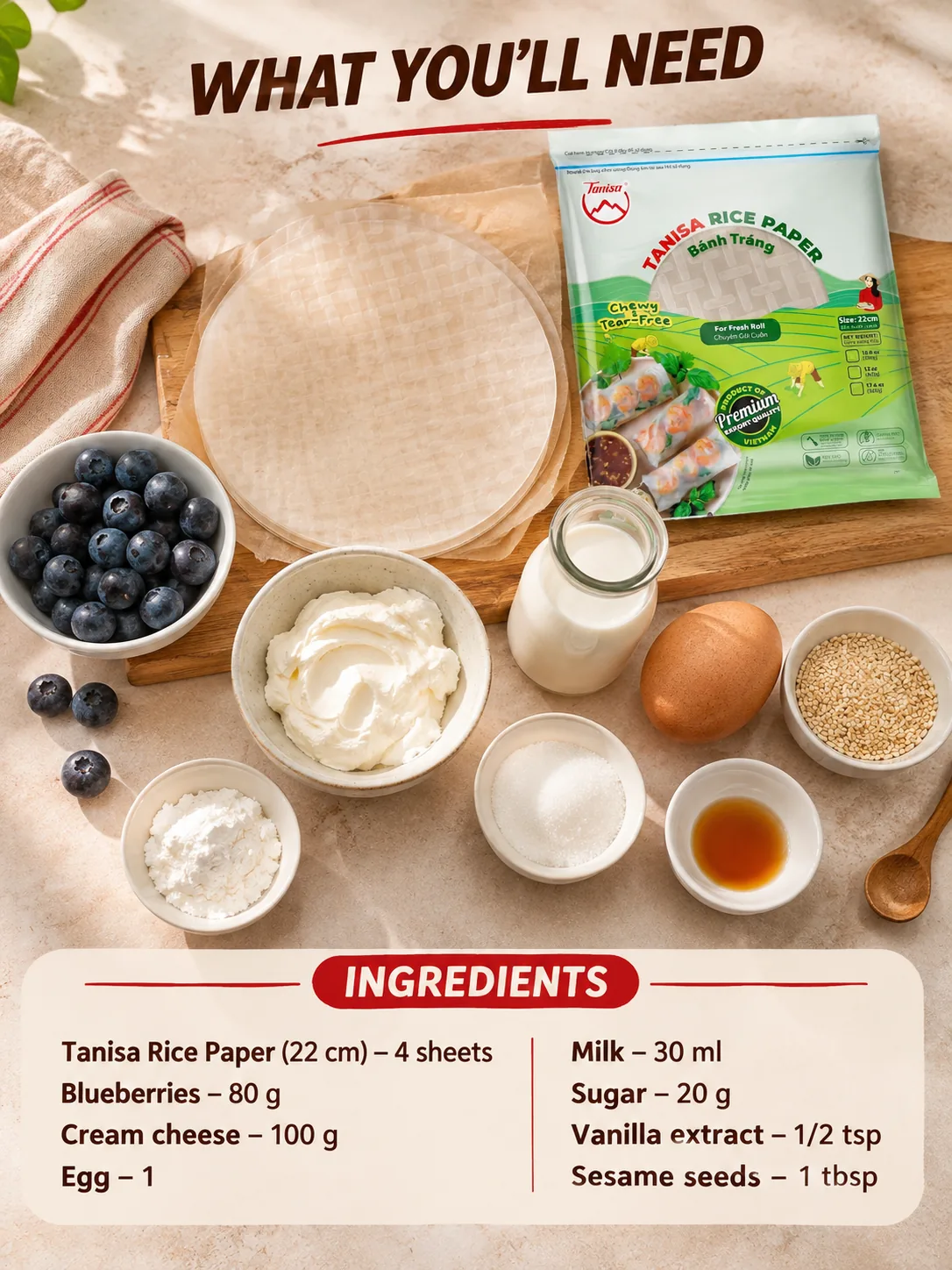
- 4 Tanisa Rice Paper sheets (22 cm)
- 80 g fresh blueberries
- 100 g cream cheese
- 1 egg
- 30 ml milk
- 20 g sugar
- 1/2 tsp vanilla extract
- 1 tbsp white sesame seeds
Instructions
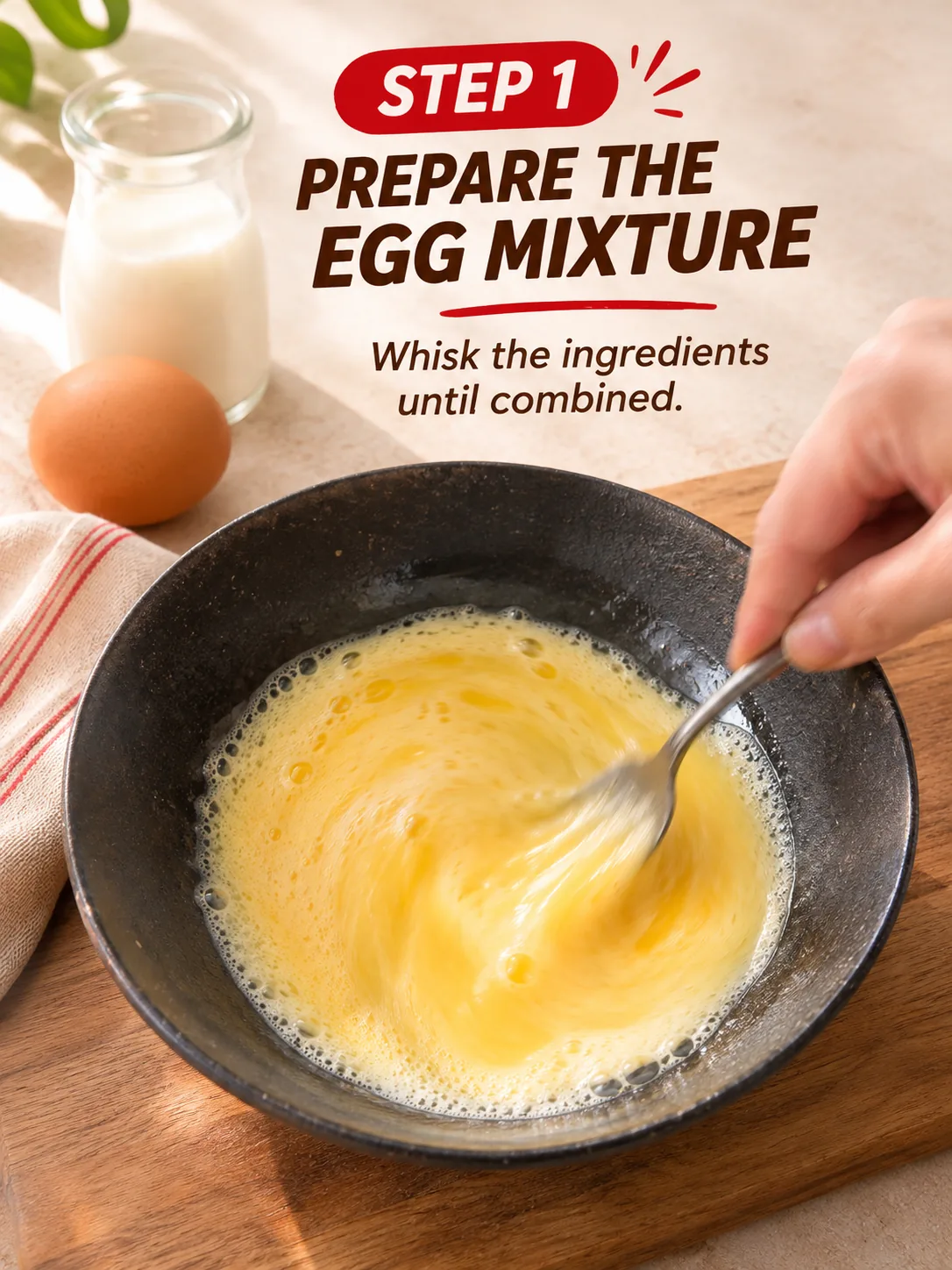
Step 1: Prepare the Egg Mixture Whisk the egg, milk, sugar, and vanilla extract together in a shallow bowl until combined.
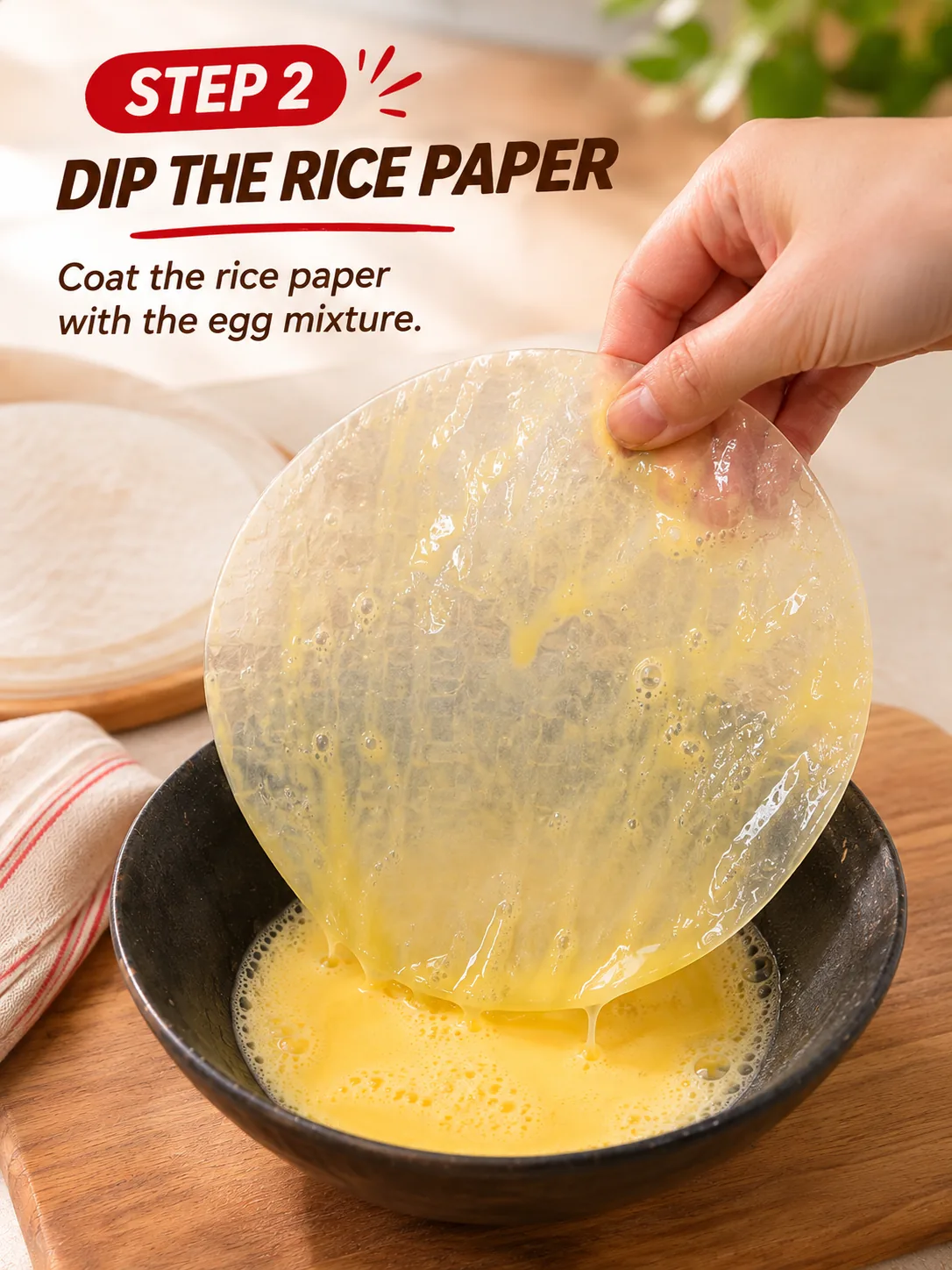
Step 2: Dip the Rice Paper Coat each rice paper sheet evenly with the egg mixture, just enough for it to soften and turn pliable. A quick dip keeps the sheet easy to handle without making it too soft.
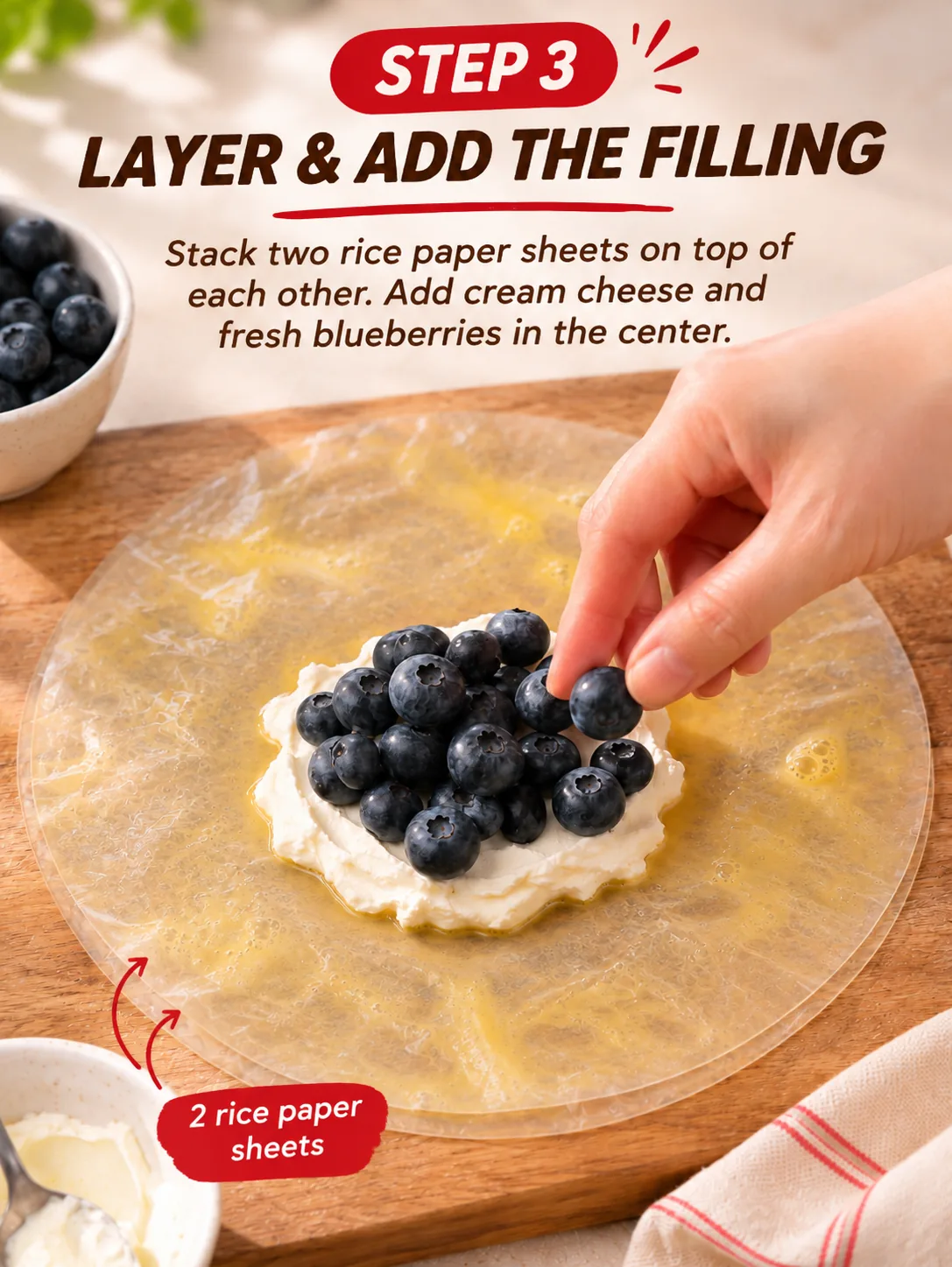
Step 3: Layer and Add the Filling Stack two rice paper sheets on top of each other. Add cream cheese and fresh blueberries in the center, then repeat with the remaining two sheets to form a second parcel.
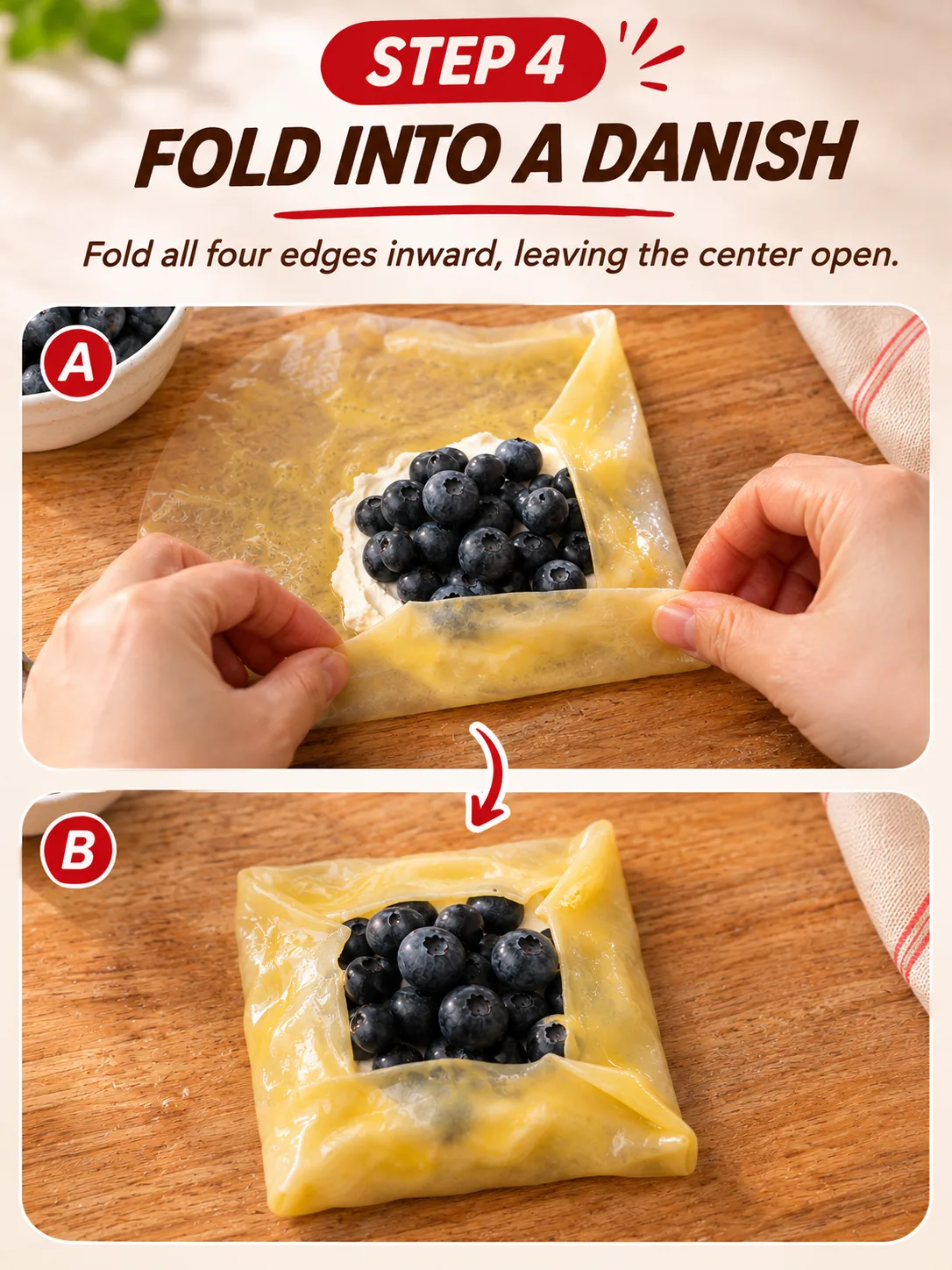
Step 4: Fold into a Danish Fold all four edges inward, leaving the center open so the cream cheese and blueberries stay visible.
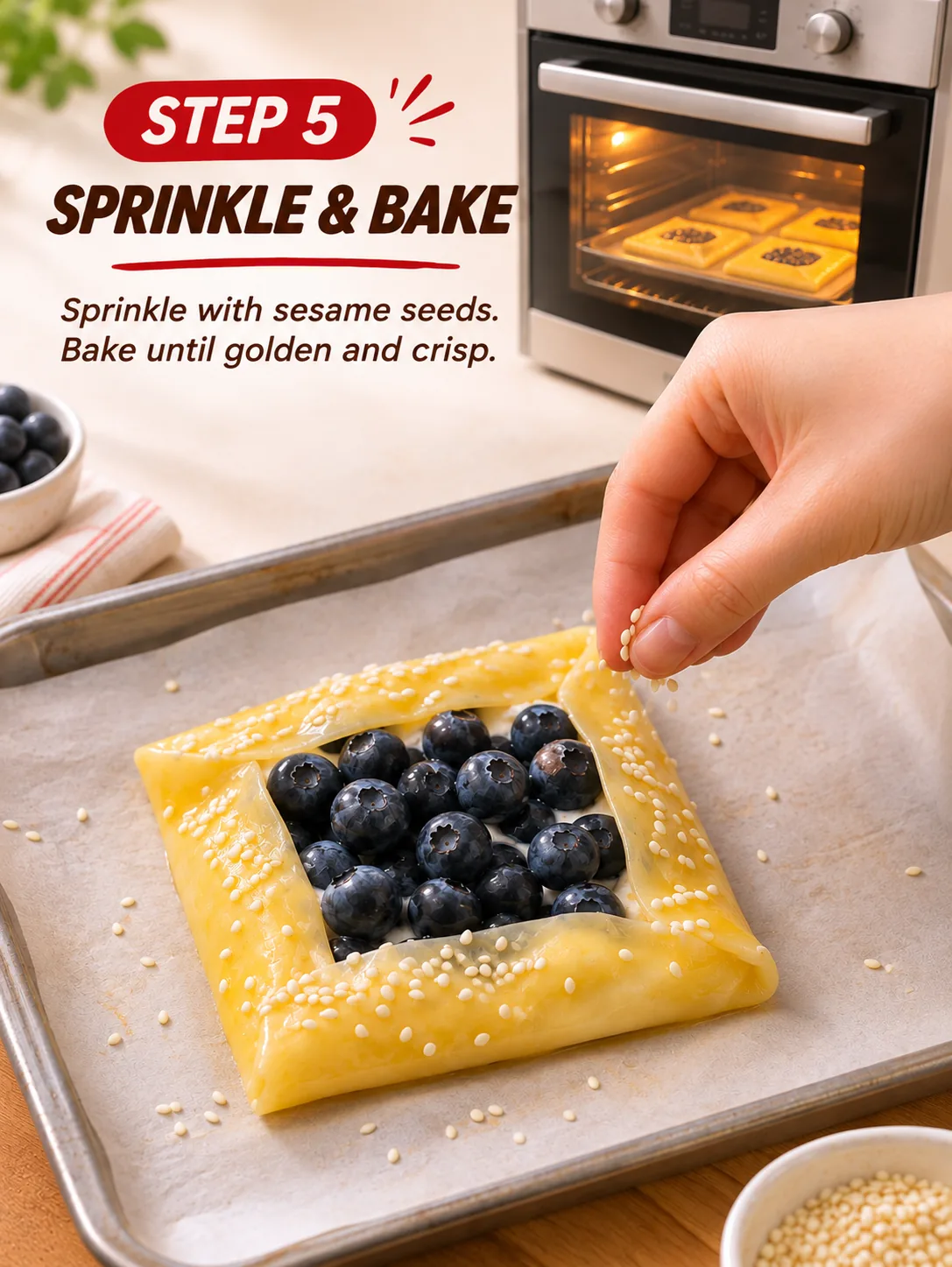
Step 5: Sprinkle and Bake Sprinkle white sesame seeds on top, then bake until golden and crisp.
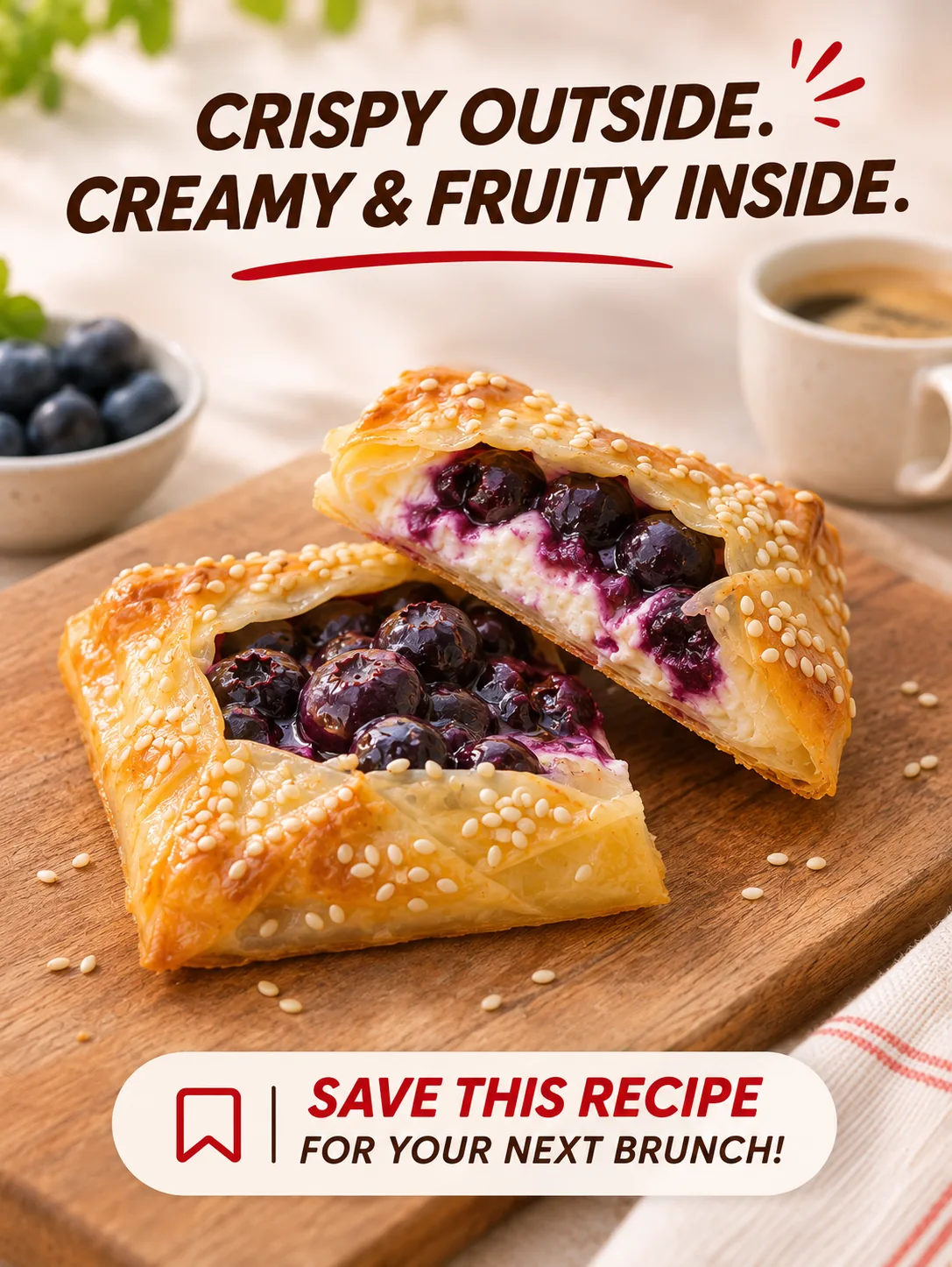
Crispy outside. Creamy and fruity inside.
Tips for a Crisper Result
- Dip quickly. Soaking the rice paper too long in the egg mixture is the most common reason it turns chewy instead of crisp; a few seconds is enough.
- Line the tray with parchment paper or lightly oil it so the pastries do not stick while baking.
- Brushing a thin layer of egg over the folded edges right before baking helps the pastry brown more evenly.
- If using an air fryer, check earlier than you would with a regular oven time, since air fryers tend to brown food faster. (The exact time and temperature for an air fryer have not been verified for this specific recipe; see the note at the end of the article.)
Common Questions About the Rice Paper Danish Hack
Why did my rice paper turn out chewy instead of crispy?
It was most likely left in the egg mixture too long. Rice paper only needs a quick dip, not a thorough soak, to become pliable enough to fold.
Can I use a different fruit instead of blueberries?
Yes, though fruits with higher water content may release more liquid while baking, so you may need to bake a little longer to keep the crust crisp.
Tanisa rice paper is built around a Chewy & Tear-free standard: thin yet strong sheets that reduce waste and stretch your value further, easy to roll, and able to stay flexible after soaking while resisting cracking and tearing, even for recipes like this one that involve an egg dip and a tight roll. The factory holds FSSC 22000, ISO 22000, Halal, FDA, and KFDA certifications, and the product is now exported to more than 45 countries, including demanding markets such as the United States, Japan, and South Korea.
TANISA FOODS JSC, a strong brand in the market for the production and distribution of specialty products (rice paper, rice noodles...) and spices (seasoning) which exported to some countries such as USA, France, South Korea, Japan, Russia, Brunei...
TANISA FOODS JSC
Factory add 1: 188 Lac Long Quan Street, Quarter 3, Tan Ninh Ward, Tay Ninh Province, Vietnam
Factory add 2: Phu Hoa Dong, Cu Chi, Ho Chi Minh City, Viet Nam
Office in HCMC: 18th Floor, Vincom Building, 72 Le Thanh Ton Street, District 1, Ho Chi Minh City, Vietnam
Warehouse in HCMC: 2/3 Binh Gia, Tan Binh District, Ho Chi Minh City, Vietnam
Hotline: +84 938 118 699 (WhatsApp/WeChat), +84 938 198 299 (Zalo)




Email: marketing@tanisagroup.com
Website: www.tanisagroup.com
Facebook: Tanisa Foods JSC
Instagram: @tanisa_foods
Youtube: Tanisa Kitchen

Xem thêm