



Rice Paper Quiche: The Crispy, Gluten-Free Quiche Made From Rice Paper
No flour, no gluten. Two sheets of rice paper dipped in egg create a crisp quiche crust instantly. See the full recipe and 3 common mistakes to avoid.
You don't need pastry dough to get a quiche with a crust that shatters when you cut into it. Two sheets of rice paper, dipped in egg instead of water, take less than a minute to prepare, with no rolling, no chilling, and no gluten. If spring rolls are the only thing you've ever made with rice paper, this recipe is worth five minutes of your time.
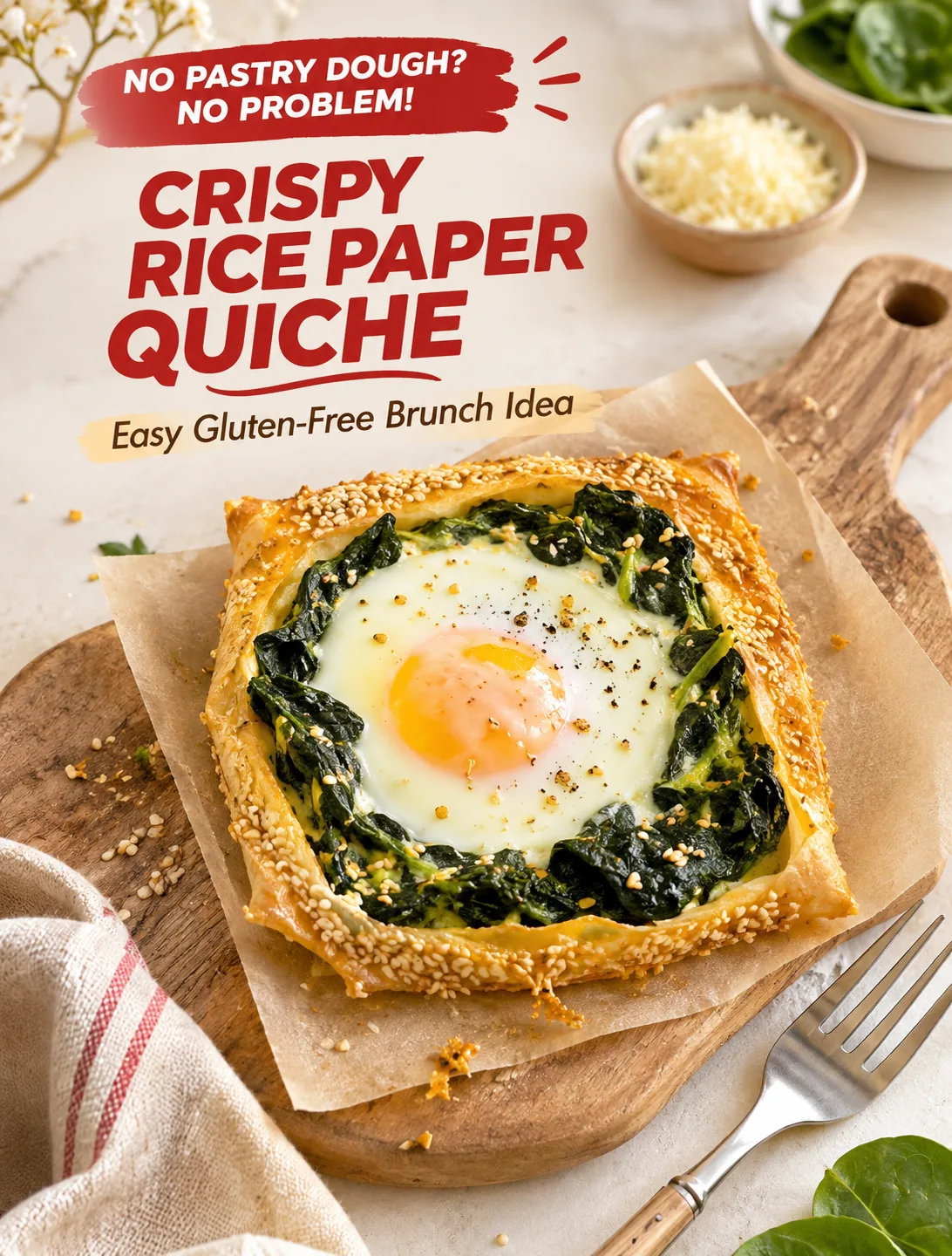
Rice paper quiche is a savory tart made for individual servings, where softened sheets of rice paper fully replace a traditional crust. Instead of being dipped in plain water, the rice paper is soaked in an egg and milk mixture, then folded into a square frame and baked until the golden, crisp shell surrounds a ricotta and spinach filling, with a softly set egg in the center. It's naturally gluten-free, ready in under 40 minutes, and portions out far more neatly than a quiche baked in one large dish.
What Is Rice Paper Quiche?
Rice paper quiche is a savory tart for individual servings that replaces a wheat-flour crust with layered sheets of egg-soaked rice paper. Instead of being rolled into a pie dish, the rice paper is folded into a square or rectangular frame around a cheese and vegetable filling, then baked with a raw egg cracked into the center. It looks like a small galette but eats like a true quiche: crisp, layered edges around a soft, custard-like filling.
Why Rice Paper Can Replace a Quiche Crust
Soaked in Egg, Not Water
Rice paper used for spring rolls only needs a quick dip in water, just enough to soften it for rolling. For a quiche crust, though, water alone isn't enough. This recipe soaks the rice paper in a mixture of egg, milk, and a little oil. The protein in the egg and the fat in the milk coat the starch layer of the rice paper. In the oven, the moisture evaporates and the protein sets, leaving a shell sturdy enough to hold the filling and crisp enough to crackle when you cut into it with a fork.
Why Two Layers of Rice Paper Instead of One
A single sheet of rice paper is too thin and too fragile to hold a wet filling and a raw egg on its own; it tears right at the fold and lets the filling leak out. Stacking two egg-soaked sheets directly on top of each other before folding reinforces the base, the same way stacked, thinly rolled layers of dough build strength in a laminated pastry. This is also why the fold matters: overlapping the corners slightly as you bring the sides in locks the structure together.
Rice Paper Quiche Ingredients (Serves 2)
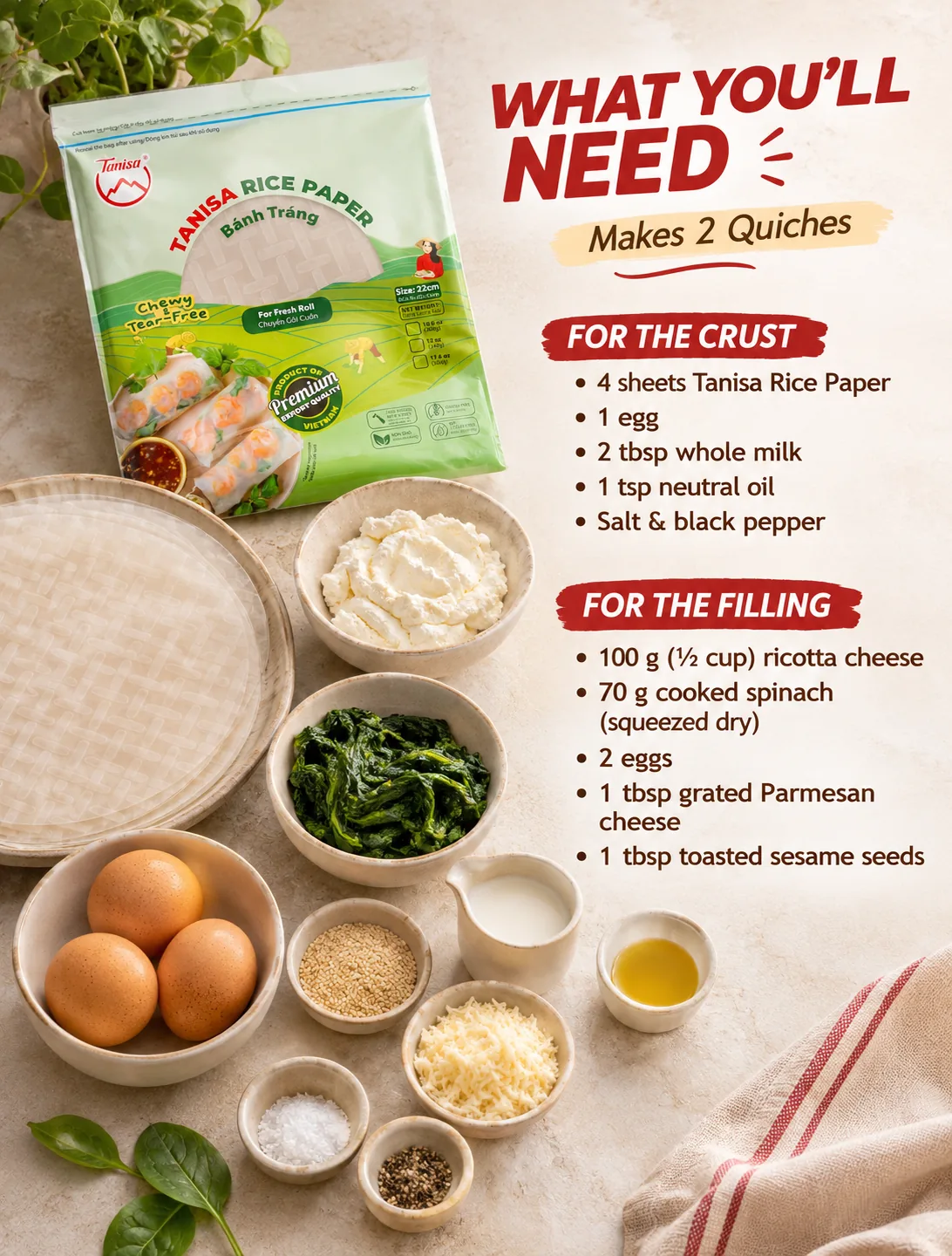
For the Crust
- 4 sheets rice paper (standard 22 cm round)
- 1 large egg
- 2 tbsp whole milk
- 1 tsp neutral oil (grapeseed oil or light olive oil)
- Salt and black pepper
For the Filling
- 100 g (½ cup) ricotta cheese, drained
- 70 g cooked spinach, squeezed dry and chopped
- 2 large eggs (one per quiche, cracked in whole)
- 1 tbsp grated Parmesan cheese
- 1 tbsp toasted sesame seeds
Prep time: 20 minutes. Cook time: 15 to 20 minutes. Total time: about 40 minutes. Servings: 2.
How to Make Rice Paper Quiche
Step 1: Whisk the Egg Mixture for Dipping
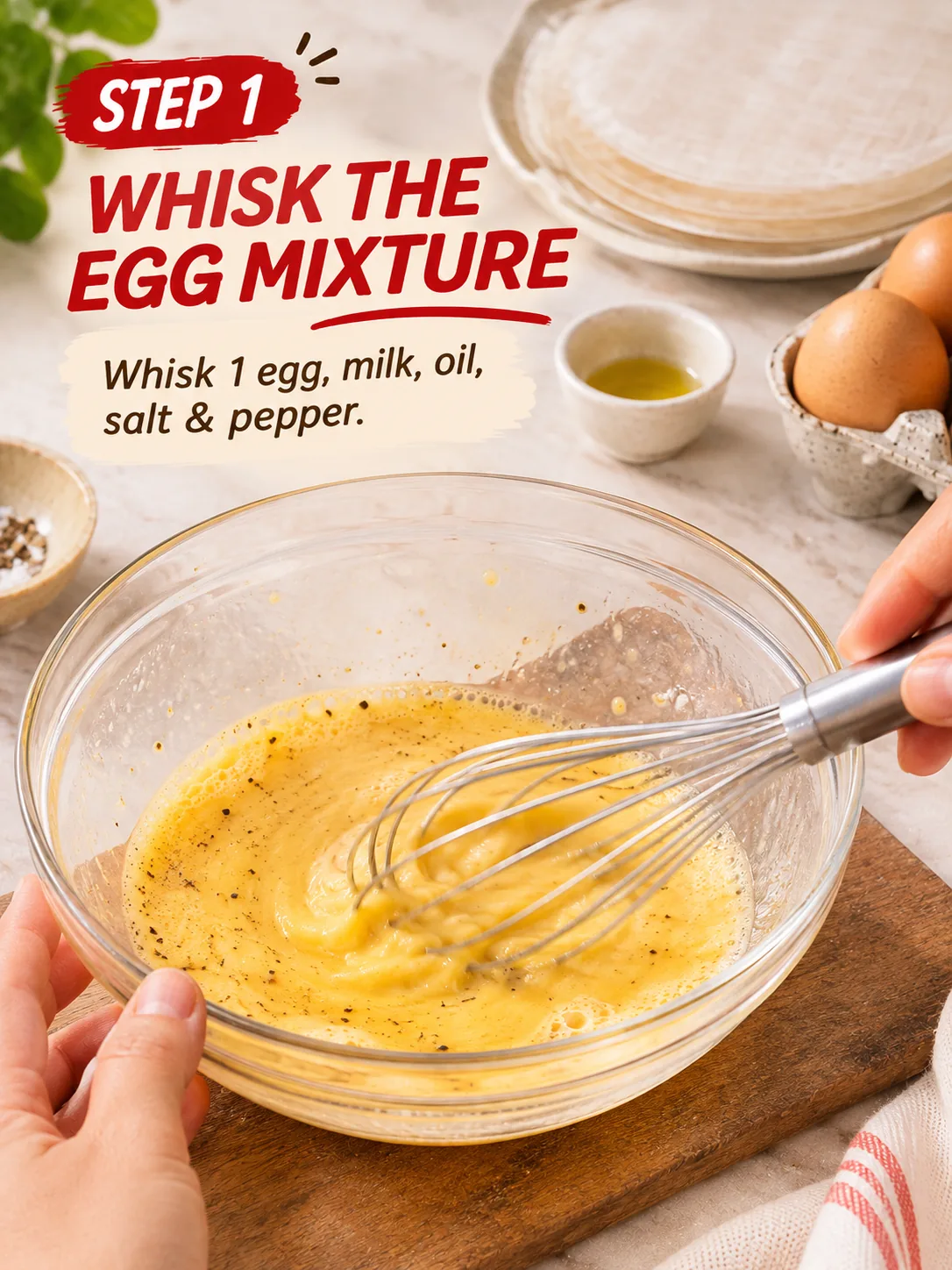
In a wide, shallow dish, large enough to fit a full sheet of rice paper, whisk together 1 egg with the milk, oil, salt, and pepper. This is the mixture you'll dip the rice paper in, so the dish needs to be wider than it is deep.
Step 2: Dip and Stack the Rice Paper
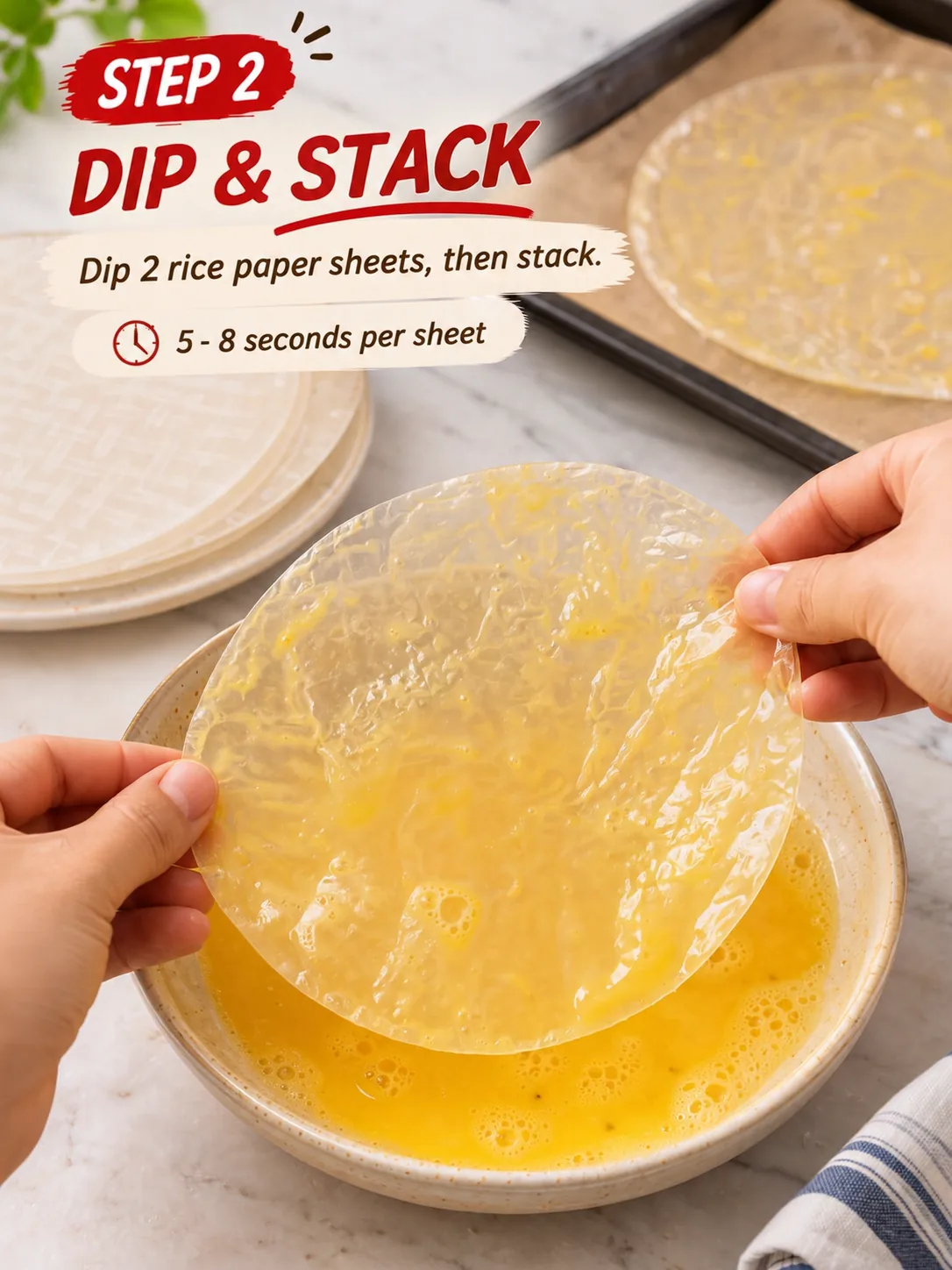
Dip one sheet of rice paper into the egg mixture for 5 to 8 seconds, just until it turns soft and pliable but not fully limp. Lift it out and lay it on a parchment-lined baking sheet. Repeat with a second sheet and stack it directly on top of the first. Do this twice to prepare the base for both quiches.
Step 3: Add the Ricotta and Spinach Filling
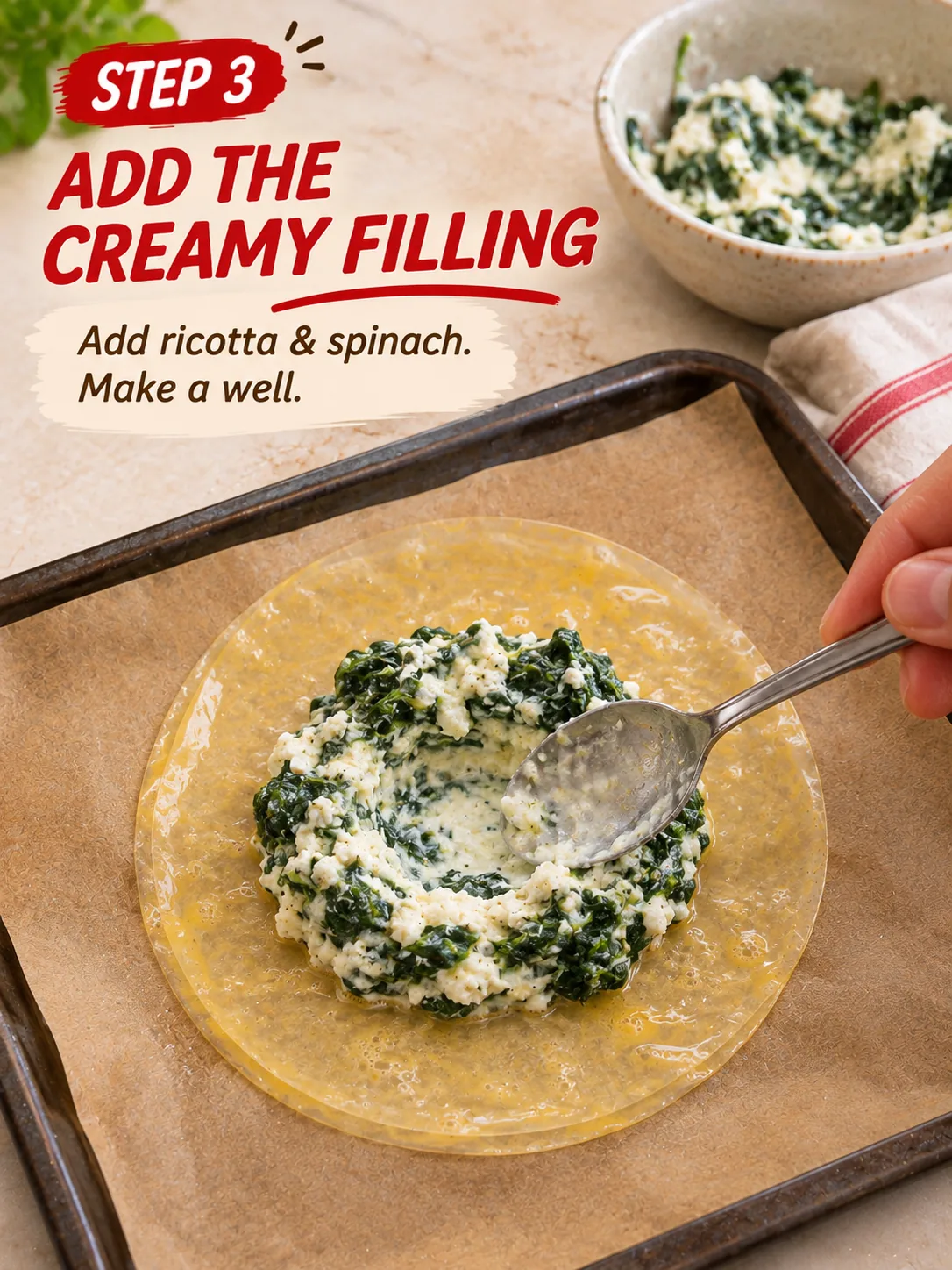
Mix the drained ricotta with the chopped spinach in a small bowl, seasoning lightly with salt and pepper. Spoon the mixture onto the center of each stacked rice paper round, spreading it into a ring and leaving a small well in the middle. That well is where the egg goes in the next step.
Step 4: Fold the Edges and Crack In an Egg
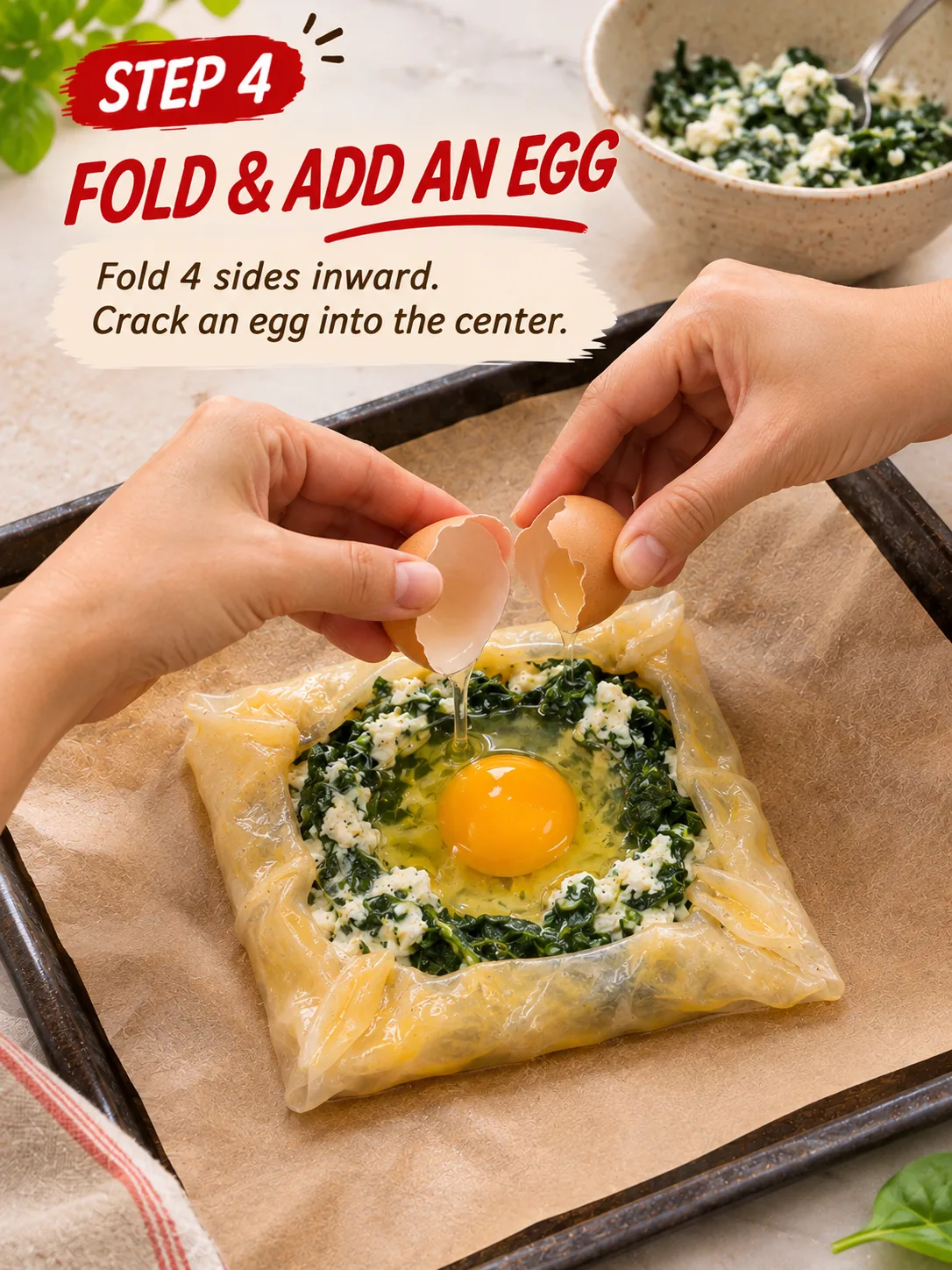
Fold the round edges of the rice paper inward on all four sides to form a square frame, overlapping the corners slightly so the filling can't spill out. Crack a whole egg into the well in the center. The yolk should stay exposed, not covered by the filling.
Step 5: Bake Until the Crust Is Golden
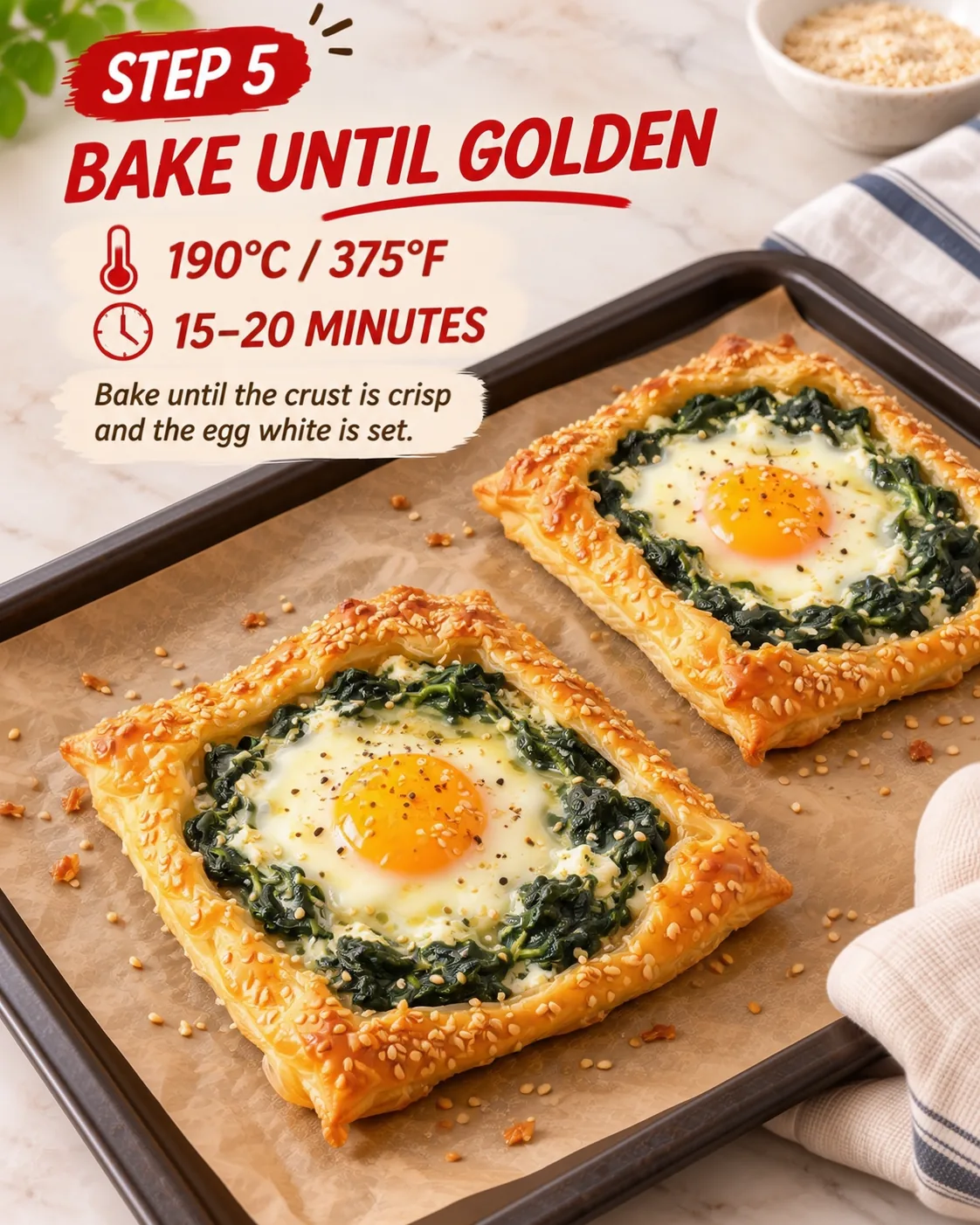
Sprinkle the folded border with grated Parmesan and toasted sesame seeds; both help the crust brown through the Maillard reaction as it bakes. Bake at 190°C / 375°F for 15 to 20 minutes, until the border is crisp and deep golden, the egg white is fully set, and the yolk is still slightly soft. Serve within 20 minutes of coming out of the oven, since the crust loses its crispness as it sits.
Common Rice Paper Quiche Mistakes (and How to Fix Them)
Most recipes stop at the steps above and skip the part that matters most: when the dish goes wrong, and why. Here are the most common causes:
- Soggy, unbrowned bottom. This almost always comes from the filling, not the rice paper. Ricotta and spinach both hold a lot of water; if you skip draining the ricotta or don't squeeze the spinach dry, that moisture seeps into the base while it bakes and keeps it from crisping.
- Rice paper tearing when folded. This usually means it sat in the egg mixture too long. Lift it out the moment it turns soft and pliable, around the 5 to 8 second mark. Oversoaked rice paper turns gummy and tears the instant you try to fold a corner.
- Egg leaking out during baking. If the folded corners don't overlap, there's a gap for the raw egg to run through before it sets. Press each corner down firmly so the layers seal against each other.
- Center doesn't fully set. This points to an oven running cool or a filling mound that's too thick. If this keeps happening, check your oven temperature with a separate thermometer, and spread the ricotta-spinach layer into a thin, even ring instead of piling it high.

What Kind of Rice Paper Should You Use?
Not every type of rice paper behaves the same way when dipped in an egg mixture instead of plain water. Two factors matter most for this recipe:
Chewiness and tear resistance. The rice paper gets folded, pressed at the corners, and handled extensively while wet, so a sheet that tears easily during normal spring roll rolling will tear here too, usually right at the fold.
Sheet size. A standard 22 cm round gives enough surface area to fold a full square frame with the corners overlapping. Smaller sheets don't leave enough border to fold, leaving the filling exposed at the edges instead of fully enclosed.
Thickness is also worth paying attention to. A sheet that's too thin will tear under the weight of a raw egg; one that's too thick won't fully soften in the short dipping time this recipe calls for.
Filling Variations Worth Trying
The ricotta and spinach version is just a starting point, not the only option. Once you've got the folding technique down, the filling is easy to switch up:
- Sun-dried tomato and feta cheese, for a Mediterranean twist
- Smoked salmon and fresh dill, to dress up a brunch table
- Sautéed wild mushroom and thyme, for a vegetarian option with more depth
When swapping fillings, keep the ratio in mind: about ½ cup of filling base per quiche, drained or sautéed dry enough that it won't add extra moisture to the crust.
Can You Make Rice Paper Quiche Ahead of Time?
The filling can be mixed ahead and refrigerated for up to a day. Assembly and baking, though, should happen close to serving time. The rice paper loses its crispness within about 20 minutes of leaving the oven, and it can't be reheated the way a traditional crust can, since its structure depends on freshly set egg protein rather than baked fat and flour. If you're preparing for a crowd, make the filling in advance and assemble the quiches right before your guests sit down to eat.
Rice Paper Quiche FAQs
Is rice paper quiche actually gluten-free? Tanisa rice paper is made from rice flour and water, with no wheat involved, so rice paper quiche is gluten-free as long as the filling ingredients (cheese, spinach, eggs) are gluten-free too.
Why is my rice paper quiche still soggy even though I followed the steps? Start by checking the moisture in your filling. Ricotta that hasn't been drained and spinach that hasn't been squeezed dry are the two most common causes, far more common than a problem with the rice paper itself.
Can I make a dairy-free version? Swap the ricotta for a plant-based ricotta-style cheese, and use a plant milk with enough fat to still help the egg mixture bind. The Parmesan topping can be left off or replaced with nutritional yeast for a similar savory flavor.
Choosing Rice Paper You Can Trust for Recipes Like This
Recipes that fold and double-dip rice paper like this one put more strain on the sheet than a standard spring roll does, which makes the quality of the rice paper matter more here than in most other recipes.
Tanisa rice paper is made to handle exactly this kind of use: a chewy, tear-resistant sheet at the standard 22 cm size that holds its structure through the egg dip, the fold, and the overlapped corners without tearing.
It's also certified under FSSC 22000 and ISO 22000, with FDA and KFDA approval for the US and South Korean markets, making it a reliable choice whether you're cooking at home or sourcing for a commercial menu. If the rice paper you're using tears before it even makes it into the oven, it may be worth trying a sturdier sheet before blaming the recipe.
TANISA FOODS JSC, a strong brand in the market for the production and distribution of specialty products (rice paper, rice noodles...) and spices (seasoning) which exported to some countries such as USA, France, South Korea, Japan, Russia, Brunei...
TANISA FOODS JSC
Factory add 1: 188 Lac Long Quan Street, Quarter 3, Tan Ninh Ward, Tay Ninh Province, Vietnam
Factory add 2: Phu Hoa Dong, Cu Chi, Ho Chi Minh City, Viet Nam
Office in HCMC: 18th Floor, Vincom Building, 72 Le Thanh Ton Street, District 1, Ho Chi Minh City, Vietnam
Warehouse in HCMC: 2/3 Binh Gia, Tan Binh District, Ho Chi Minh City, Vietnam
Hotline: +84 938 118 699 (WhatsApp/WeChat), +84 938 198 299 (Zalo)




Email: marketing@tanisagroup.com
Website: www.tanisagroup.com
Facebook: Tanisa Foods JSC
Instagram: @tanisa_foods
Youtube: Tanisa Kitchen

Xem thêm