


Brand Rice Paper: What It Means and How to Verify It
“Brand rice paper” is the phrase many importers type into Google once they no longer want to buy rice paper from an unknown source with no clear factory behind it. But the word “brand” on a rice paper package doesn’t automatically mean consistent quality. It is just a name, unless the buyer can verify the factory behind that name, confirm the certifications are still valid, and identify someone accountable when a shipment doesn’t match the approved sample.
This article goes straight to the practical question: what actually separates brand rice paper from unbranded rice paper, and how do you check that a brand is real before you put down a deposit.
What Actually Separates Brand Rice Paper From Unbranded Rice Paper
At its core, “brand rice paper” is rice paper sold under a specific, verifiable brand name tied to an identifiable manufacturer or distributor, rather than unlabeled shipments sourced through a middleman of unclear origin. The difference comes down to five points a B2B buyer should check before deciding.
|
Criteria |
Brand rice paper (branded) |
Unbranded rice paper |
|
Batch traceability |
Production records exist and can be matched to a batch code |
Usually absent, or not disclosed |
|
Food safety certification |
Issued in the name of a specific factory, verifiable on a public register |
May be a borrowed or expired certificate |
|
Consistency across orders |
Batch-level QC system keeps specifications stable |
Depends on wherever the supply was sourced each time |
|
Accountability when something goes wrong |
A specific point of contact for complaints and returns |
Hard to hold anyone accountable since the manufacturer is unclear |
|
Price |
Usually somewhat higher, reflecting the cost of quality control |
Usually cheaper but higher risk |
Private Label Still Counts as “Branded”, Just Under a Different Name on the Bag
Many buyers assume brand rice paper means buying from an already well-known name. That’s not quite right. When a distributor places a private label order, meaning they source the product from a factory but package it under their own brand name, that product is still “branded” from the end consumer’s point of view. The only difference is whose name is on the bag, not whether it has a brand at all.
Two Paths to Brand Rice Paper: Buy an Existing Brand or Build Your Own
Buyers looking for brand rice paper usually fall into one of two groups.
The first group buys from an already established brand. The advantage is that the QC process, packaging, and certification records already exist, so onboarding is faster. The trade-off is less control over size, packaging, or a custom formula.
The second group chooses private label or OEM, partnering with a factory to produce under their own brand. But this is also where the risk shifts entirely to the buyer, because any quality issue from the factory now carries their brand name, not the factory’s.
Questions to Ask Before Putting Your Name on Someone Else’s Rice Paper
Before signing a private label agreement, buyers should ask the factory directly:
-
Do we have the right to inspect or audit the factory in person?
-
Will the factory commit to keeping specifications, such as thickness, flexibility, and shelf life, stable across batches?
-
What is the minimum order quantity for each production run?
-
Can we get exclusivity for this product in our market or region?
How to Verify a Brand Rice Paper Is Real Before You Order
Five practical checks that can be applied to any supplier right away:
-
Match the factory address listed in the catalogue or on the website against the address on the FSSC 22000 or ISO 22000 certificate. The two addresses must match.
-
Look up the certificate on the certifying body’s public register, rather than relying only on a scanned photo or a PDF sent by email.
-
Ask for a Certificate of Analysis (COA) tied to the exact batch being shipped, not a generic COA template used for every customer.
-
Ask for samples pulled directly from the actual production line, not samples hand-made in a showroom.
-
Check the factory’s export history to markets with a similar level of regulatory scrutiny to your own, such as the United States, the European Union, or South Korea.
Signs That a “Brand” Is Just a Trading Company Repackaging Unknown Supply
A few common warning signs: the supplier can’t provide a specific factory address when asked, the certificate is issued to a different company than the one you’re dealing with, or they can’t answer basic technical questions about the production process, such as the ratio of rice flour to tapioca starch, drying time, or how moisture is controlled. A real factory will answer these questions specifically, not in vague terms.
Why Brand Trust Matters Even Before a Buyer Makes Contact
A notable shift in B2B buying behavior recently is that buyers increasingly use AI assistants such as ChatGPT or Perplexity to research and shortlist suppliers before reaching out directly. That means a brand’s public information, including factory address, certifications, and company profile, needs to be accurate and consistent across sources, because that is exactly the data AI tools pull together when someone asks.
What This Means for How You Vet a Supplier’s Online Information
A simple check: compare the factory and certification details on the website, in the PDF catalogue, and in any public export records. If the three sources match, that is a sign of credibility. If they differ, even just in the company name or address, ask before placing an order.
Matching a Rice Paper Brand’s Product Line to Your Use Case
Once you’ve confirmed a brand is trustworthy, the next step is matching the product to your specific use. Rice paper used for fresh rolls, such as summer rolls, needs to be soft and pliable and should not tear when dipped in water. Rice paper used for frying needs to stay crisp and not stick to the oil. Sizes vary by sales channel too: supermarket retail usually favors smaller formats, while restaurants and foodservice operators prefer larger sheets to save prep time. For markets that require clean-label products, vegetable-based rice paper made from rice flour, tapioca starch, and natural vegetable powder is a better fit than the standard line.
Frequently Asked Questions About Brand Rice Paper
Is brand rice paper actually better than unbranded rice paper?
The advantage of brand rice paper is that it can be verified, while unbranded rice paper is hard to verify. The real value of a brand lies in traceability and accountability when something goes wrong.
What’s the difference between buying an existing brand and doing private label?
Buying an existing brand means using the manufacturer’s own packaging and name as is. Private label means sourcing the product from a factory but packaging it under the buyer’s own brand.
How do you confirm a manufacturer’s certifications are genuine and still valid?
Look it up directly on the certifying body’s public register using the factory’s registration number, rather than relying only on a file sent by email.
Does buying from an established brand guarantee consistent quality on every order?
Even a reputable brand still needs to maintain a batch-level QC system.
Tanisa, a Verifiable Rice Paper Brand
Tanisa is a direct manufacturer, not a trading intermediary, currently exporting to more than 45 countries. The factory holds FSSC 22000, ISO 22000:2018, FDA (United States), KFDA (South Korea), and Halal certifications.
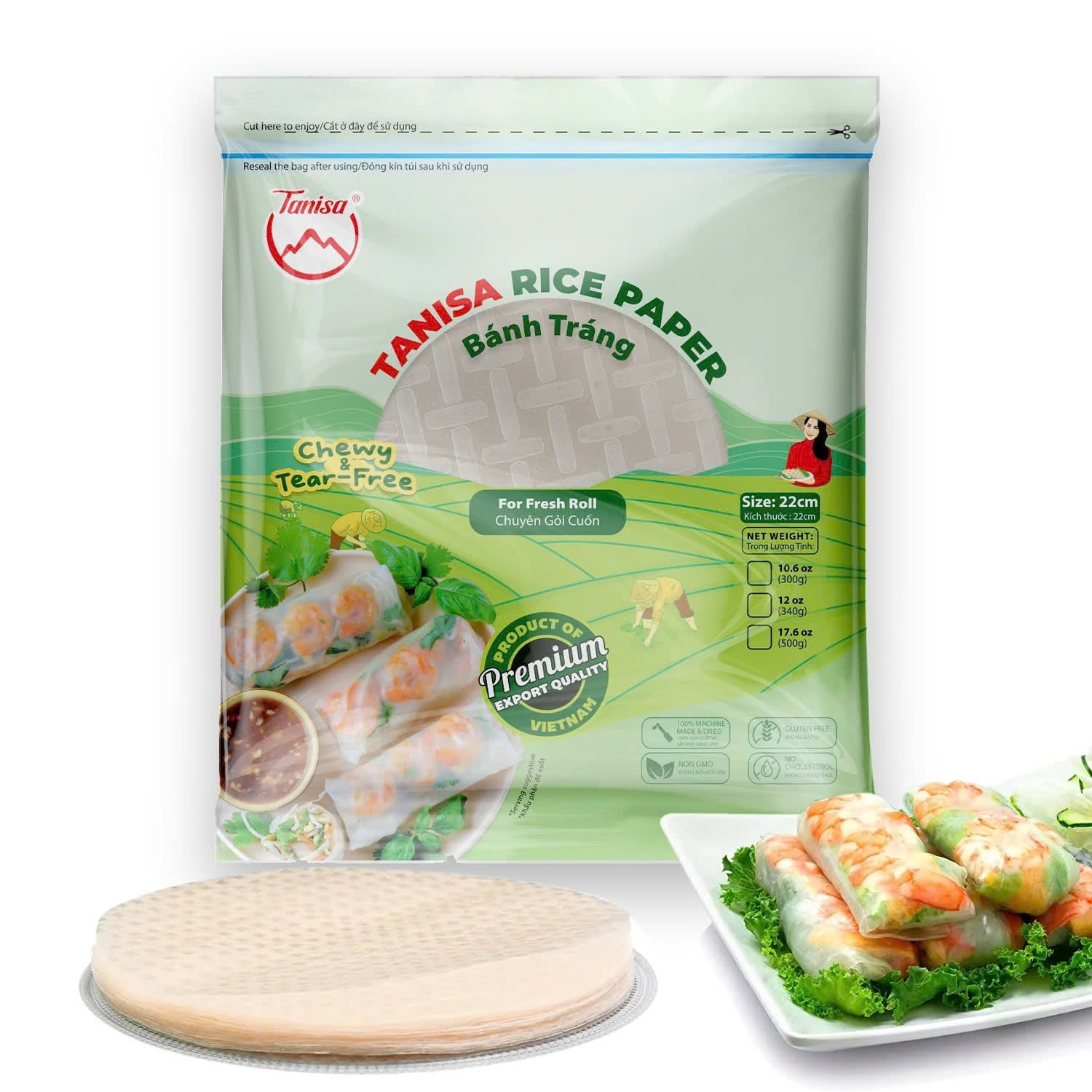
Tanisa Foods JSC is a leading Vietnamese manufacturer of rice paper, rice noodles, and rice vermicelli, exporting to over 45 countries worldwide. We comply with international food safety standards, including FSSC 22000, ISO 22000:2018, FDA, KFDA, and Halal.
TANISA FOODS JSC
Factory add 1: 188 Lac Long Quan Street, Quarter 3, Tan Ninh Ward, Tay Ninh Province, Vietnam
Factory add 2: Phu Hoa Dong, Cu Chi, Ho Chi Minh City, Viet Nam
Office in HCMC: 18th Floor, Vincom Building, 72 Le Thanh Ton Street, District 1, Ho Chi Minh City, Vietnam
Warehouse in HCMC: 2/3 Binh Gia, Tan Binh District, Ho Chi Minh City, Vietnam
Hotline: +84 938 118 699 (WhatsApp/WeChat), +84 938 198 299 (Zalo)

Email: marketing@tanisagroup.com
Website: www.tanisagroup.com
Facebook: Tanisa Foods JSC
Instagram: @tanisa_foods
Youtube: Tanisa Kitchen

Read more