



Brown Rice Paper: Uses, Preparation and Storage Tips
Learn how to use brown rice paper for fresh or fried rolls, avoid tearing, and store opened sheets with practical preparation tips.
Brown rice paper is a thin Vietnamese wrapper made with rice flour, tapioca starch, natural brown rice colour, and salt. Soak it briefly, fill it with fresh ingredients, and roll it for fresh spring rolls, fried spring rolls, or gluten-free wraps.
Key takeaways
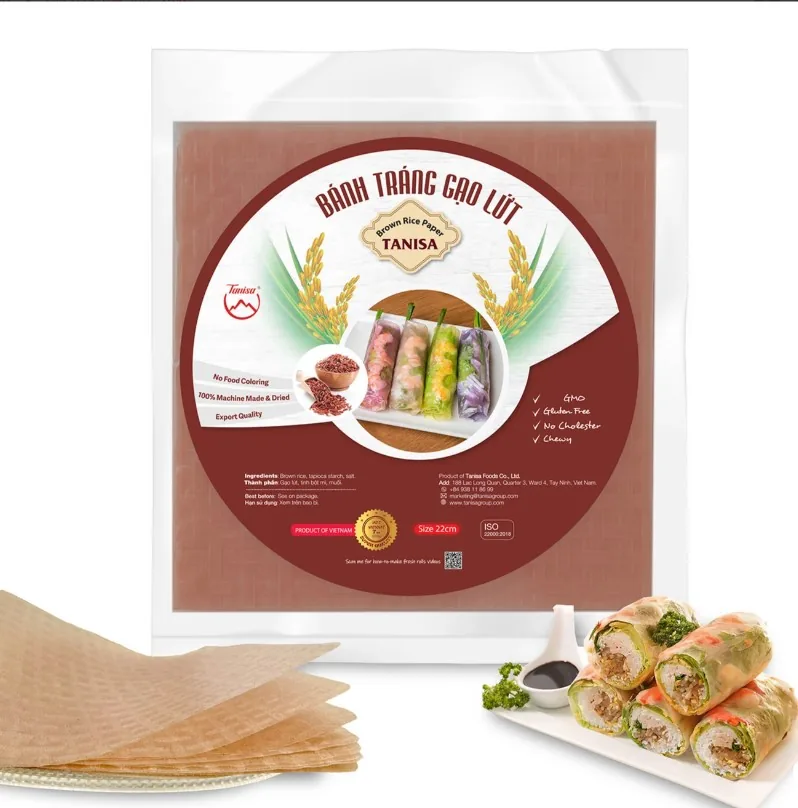
- Tanisa brown rice paper comes in 22 cm square or round sheets.
- Use a short soak and let the sheet finish softening on the work surface.
- Keep opened rice paper sealed and dry rather than refrigerating it.
- Check the product size, ingredients, pack format, and storage instructions before buying.
What is brown rice paper?
Brown rice paper is a Vietnamese rice wrapper with a naturally darker appearance than standard white rice paper. Tanisa makes its vegetable-colour rice paper with rice flour, tapioca starch, natural vegetable powder, and salt. The brown rice version is available in a 22 cm square or round shape, so cooks can choose the format that suits their rolling method.
At Tanisa, our brown rice paper is gluten-free, non-GMO, plant-based, and made without preservatives. These details matter when you are choosing a wrapper for a household with specific ingredient preferences. Always read the pack label for the product and destination market before serving it to someone with an allergy.
You can use brown rice paper for fresh spring rolls, also called summer rolls, with vegetables, herbs, cooked seafood, tofu, or cooked meat. It can also be fried for a crisp wrapper. The mild rice flavour works with Asian sauces and many everyday fillings, but the final dish depends on the ingredients and cooking method.
For the product details, sizes, and current availability, see our brown rice paper page.
How is brown rice paper made and used?
Tanisa makes and dries its rice paper 100% by machine in a modern factory. Machine drying gives the production process a defined step for removing moisture before packing. For a buyer, this supports a repeatable product format between shipments when the stated specification remains unchanged.
To make fresh rolls at home, prepare the filling before you soften the sheets. Use a wide plate or shallow bowl of warm water. Dip one sheet briefly, place it on a clean board, and wait for it to become flexible before adding the filling. The sheet continues to soften after dipping, so a long soak can make it fragile.
- Place cooked filling, vegetables, and herbs near the lower third of the sheet.
- Fold the lower edge over the filling, then fold in both sides.
- Roll forward with steady pressure until the seam closes.
- Serve soon after rolling, or keep the filled rolls chilled and eat them the same day.
For fried spring rolls, use a filling that is already cooked or safe to cook through. Pat the outside dry before frying, and never leave hot oil unattended. Cook meat, poultry, seafood, or egg filling until it is fully done. Cook poultry and minced meat until fully cooked throughout, with no raw areas remaining inside.
Common allergens may include peanuts, shellfish, fish sauce, soy, sesame, and gluten in soy sauce. Check every filling and sauce, not only the rice paper. Our brown rice paper itself is described as gluten-free, but the complete dish may not be.
Tips for choosing and storing brown rice paper
The main mistake is choosing a wrapper without checking its size, ingredients, shape, and pack format. A 22 cm sheet gives home cooks enough surface for a moderate filling, while the square or round option may suit different rolling habits.
Mistake: soaking the sheet for too long
A rice paper sheet may feel firm when it leaves the water, then soften on the board. Use a short dip rather than waiting for it to become completely soft in the bowl. This reduces tearing during filling and rolling. Keep the filling dry enough to prevent excess moisture from weakening the wrapper.
Mistake: overfilling the roll
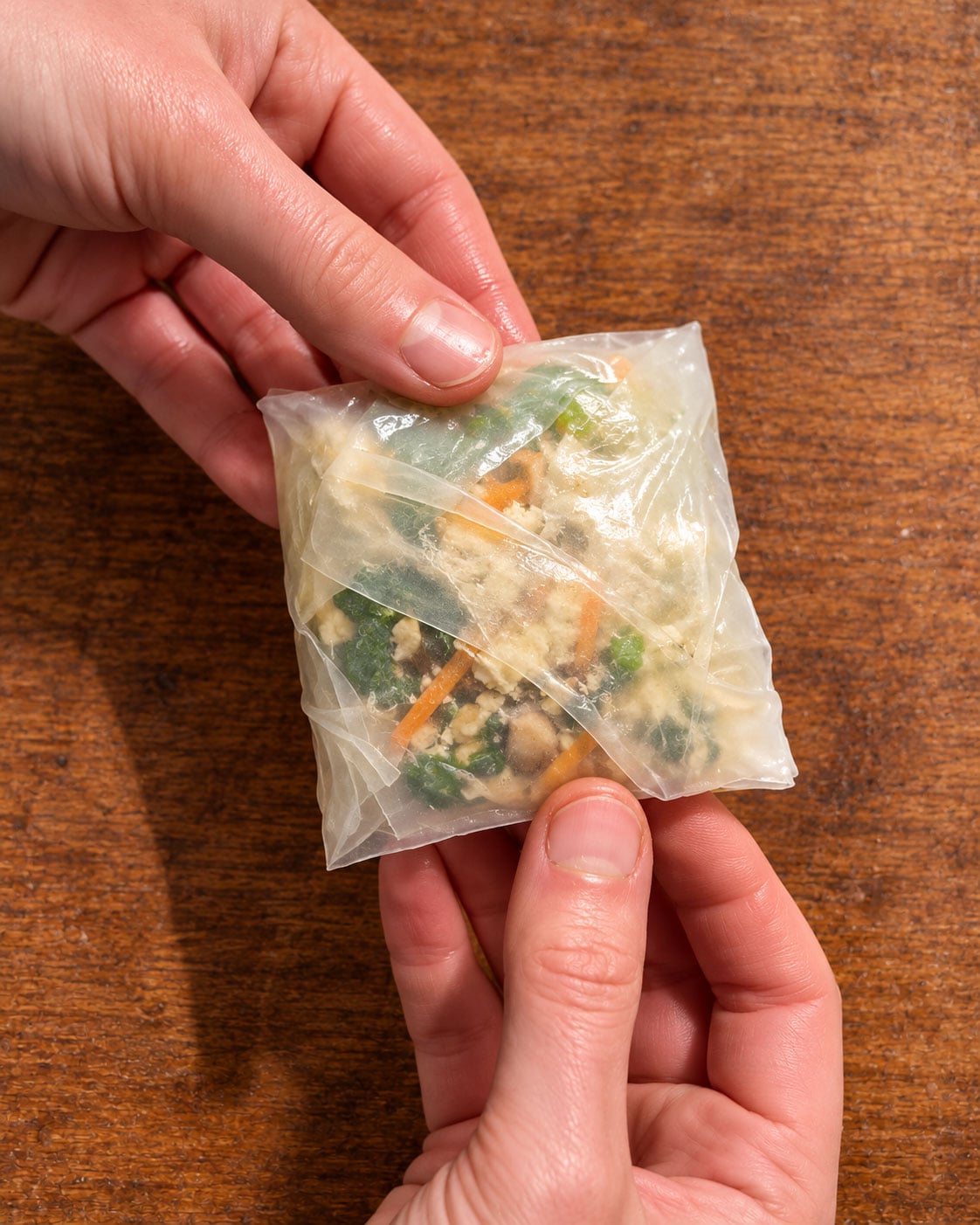
Large pieces of carrot, noodles, or meat can stretch the sheet at one point. Cut ingredients into manageable pieces and leave space at both sides. A smaller filling is easier to close and gives a cleaner roll for serving.
Mistake: leaving the opened pack exposed
Rice paper absorbs moisture from the surrounding air. After opening, press the air from the pack, close it firmly, and store it in a cool, dry cupboard away from steam. Do not refrigerate dry rice paper unless the product label specifically instructs you to do so, because condensation can affect the sheets.
For the best answer to “does rice paper go bad after opening?”, check the printed date and the pack condition. Discard sheets with an unusual smell, visible mould, insect damage, or a damp texture. The label remains the correct reference for shelf life because storage conditions and destination packaging can differ.
Buyers comparing formats can also review our organic brown rice paper. We list organic brown rice paper in 200 g and 340 g retail formats, with 16 cm and 22 cm sizes.
For importers and distributors, the useful checks are product specification, pack size, shelf-life statement, minimum order quantity, lead time, and destination documents. Tanisa offers factory-direct supply, private label and OEM support depending on the market, and a stated lead time of 20–30 days. Confirm the final specification and current documents with the export team before ordering.
Our wider brown rice paper manufacturer sourcing guide can help business buyers prepare those questions before requesting samples.
Frequently asked questions about brown rice paper
Are Vietnamese rice paper rolls healthy?
A roll can fit a balanced meal, but its nutrition depends on the filling, sauce, and cooking method. Brown rice paper itself is described as gluten-free and plant-based. Fresh rolls with vegetables and cooked protein differ from fried rolls with sweet or salty sauces, so assess the complete dish rather than the wrapper alone.
Do you refrigerate rice paper after opening?
Usually, keep dry rice paper sealed in a cool, dry cupboard. Refrigeration may expose the sheets to condensation when the pack comes out. Follow the product label for your market, close the package after each use, and keep it away from steam, wet utensils, and direct heat.
How do you make Vietnamese rice paper rolls?
Dip one dry sheet briefly in warm water, place it on a clean board, and let it soften. Add prepared vegetables, herbs, noodles, tofu, or cooked protein. Fold the lower edge over the filling, fold in the sides, and roll forward. Keep finished rolls chilled and eat them the same day.
How long does rice paper last after opening?
The printed date and storage instructions give the reliable answer for each pack. After opening, close the bag tightly and store the dry sheets away from moisture. Before use, check for a damp texture, unusual smell, mould, or insects. Do not use sheets that show spoilage or packaging damage.
Tanisa Foods JSC is a leading Vietnamese manufacturer of rice paper, rice noodles, and rice vermicelli, exporting to over 45 countries worldwide. We comply with international food safety standards, including FSSC 22000, ISO 22000:2018, FDA, KFDA, and Halal.
TANISA FOODS JSC
Factory add 1: 188 Lac Long Quan Street, Quarter 3, Tan Ninh Ward, Tay Ninh Province, Vietnam
Factory add 2: Phu Hoa Dong, Cu Chi, Ho Chi Minh City, Viet Nam
Office in HCMC: 18th Floor, Vincom Building, 72 Le Thanh Ton Street, District 1, Ho Chi Minh City, Vietnam
Warehouse in HCMC: 2/3 Binh Gia, Tan Binh District, Ho Chi Minh City, Vietnam
Hotline: +84 938 118 699 (WhatsApp/WeChat), +84 938 198 299 (Zalo)




Email: marketing@tanisagroup.com
Website: www.tanisagroup.com
Facebook: Tanisa Foods JSC
Instagram: @tanisa_foods
Youtube: Tanisa Kitchen

Read more