



Colored Rice Paper: 12 Creative Roll Ideas Inspired by Plants
Vietnamese fresh rolls are already visually appealing, combining translucent rice paper with herbs, noodles, vegetables, protein and dipping sauce. When the wrapper carries the golden color of turmeric, the pink-red character of beetroot, the soft green of green tea or the blue-purple hue of butterfly pea flower, a familiar dish becomes an entirely new experience.
This is the distinctive appeal of colored rice paper: Vietnamese rice paper combined with plant ingredients that give each variety its own natural appearance and subtle character.
Colored rice paper does more than add color to a plate. Each variety can become the starting point for a new combination of fillings, textures and sauces.
This guide introduces four vegetable-colored rice paper varieties from TANISA and 12 creative roll ideas for home cooking, restaurants, catering and food-product development.
What Is Colored Rice Paper?
Colored rice paper is Vietnamese rice paper made with additional plant ingredients that give the wrapper a distinctive color.
Depending on the variety, those ingredients may include turmeric, beetroot, green tea or butterfly pea flower. The wrapper retains the familiar function of traditional rice paper: it becomes pliable when moistened and can be folded around vegetables, noodles, meat, seafood, tofu or fruit.
Common English names include:
• Colored rice paper;
• Vegetable-colored rice paper;
• Colorful rice paper;
• Colored rice paper wrappers;
• Vegetable spring roll wrappers.
In this article, colored rice paper refers specifically to rice paper varieties made with plant ingredients, rather than conventional white wrappers.
TANISA Vegetable-Colored Rice Paper Varieties
TANISA’s vegetable-colored rice paper range includes products made with plant ingredients such as:
• Green tea;
• Turmeric;
• Beetroot;
• Butterfly pea flower.
Each ingredient creates a recognizable visual identity. Turmeric produces a warm golden color, beetroot creates pink or red tones, green tea brings a gentle green shade, and butterfly pea flower delivers an eye-catching blue or blue-purple appearance.
Some plant ingredients may also contribute a light aroma or flavor. The precise color, flavor and intensity depend on the formulation of each product.
Colored rice paper should therefore be treated as part of the complete recipe—not simply as decorative packaging around the filling.
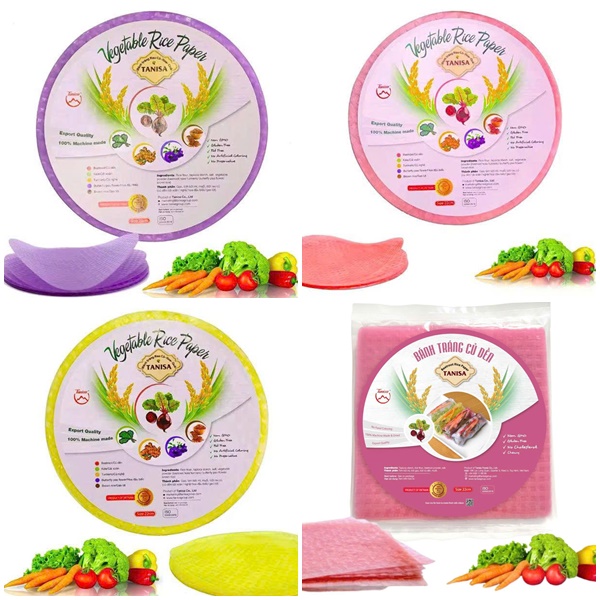
Colored rice paper
A Quick Pairing Guide
|
Rice paper variety |
Characteristic color |
Suggested fillings |
Suggested dipping sauces |
| Turmeric rice paper |
Warm golden yellow |
Chicken, shrimp, mango, carrot and green vegetables |
Lime dressing, sesame sauce or Vietnamese dipping sauce |
|
Beetroot rice paper |
Pink to red |
Shrimp, salmon, root vegetables and white noodles |
Yogurt-based sauce or sweet-and-sour sauce |
|
Green tea rice paper |
Soft green |
Tofu, mushrooms, cucumber and fresh herbs |
Roasted sesame sauce or soybean sauce |
|
Butterfly pea flower rice paper |
Blue to blue-purple |
Shrimp, dragon fruit, purple cabbage and fruit |
Lime, coconut or fruit-based sauce |
These combinations are creative suggestions rather than fixed rules. Ingredients can be adapted to local tastes, seasonal availability and individual dietary preferences.
Three Ideas for Turmeric Rice Paper
The golden tone of turmeric rice paper works particularly well with fresh green vegetables, white noodles and colorful proteins.
1. Chicken, Mango and Herb Rolls
Chicken, mango and herbs create a balance of savory, sweet and fresh flavors.
Suggested ingredients:
• Turmeric rice paper;
• Boiled or pan-seared chicken, thinly sliced;
• Green or slightly ripe mango;
• Cucumber;
• Rice vermicelli;
• Lettuce, mint or Thai basil.
Serve the rolls with a light lime dressing, sweet-and-sour fish sauce or another bright dipping sauce. The green herbs and yellow mango complement the warm color of the wrapper.
2. Shrimp, Avocado and Green Vegetable Rolls
Shrimp adds red-orange color, while avocado provides a soft texture and contrasting green.
Use avocado that is ripe but still firm enough to hold its shape. Placing it between more structured ingredients can make the roll easier to assemble.
A citrus-based or light sesame sauce works well with this combination.
3. Tofu, Mushroom and Carrot Rolls
This plant-forward roll combines tofu, mushrooms, carrot and leafy greens.
Pan-seared tofu provides structure. Mushrooms should be cooked, drained and cooled before rolling. Thinly sliced carrot adds crunch and creates a bright visual connection with the turmeric wrapper.
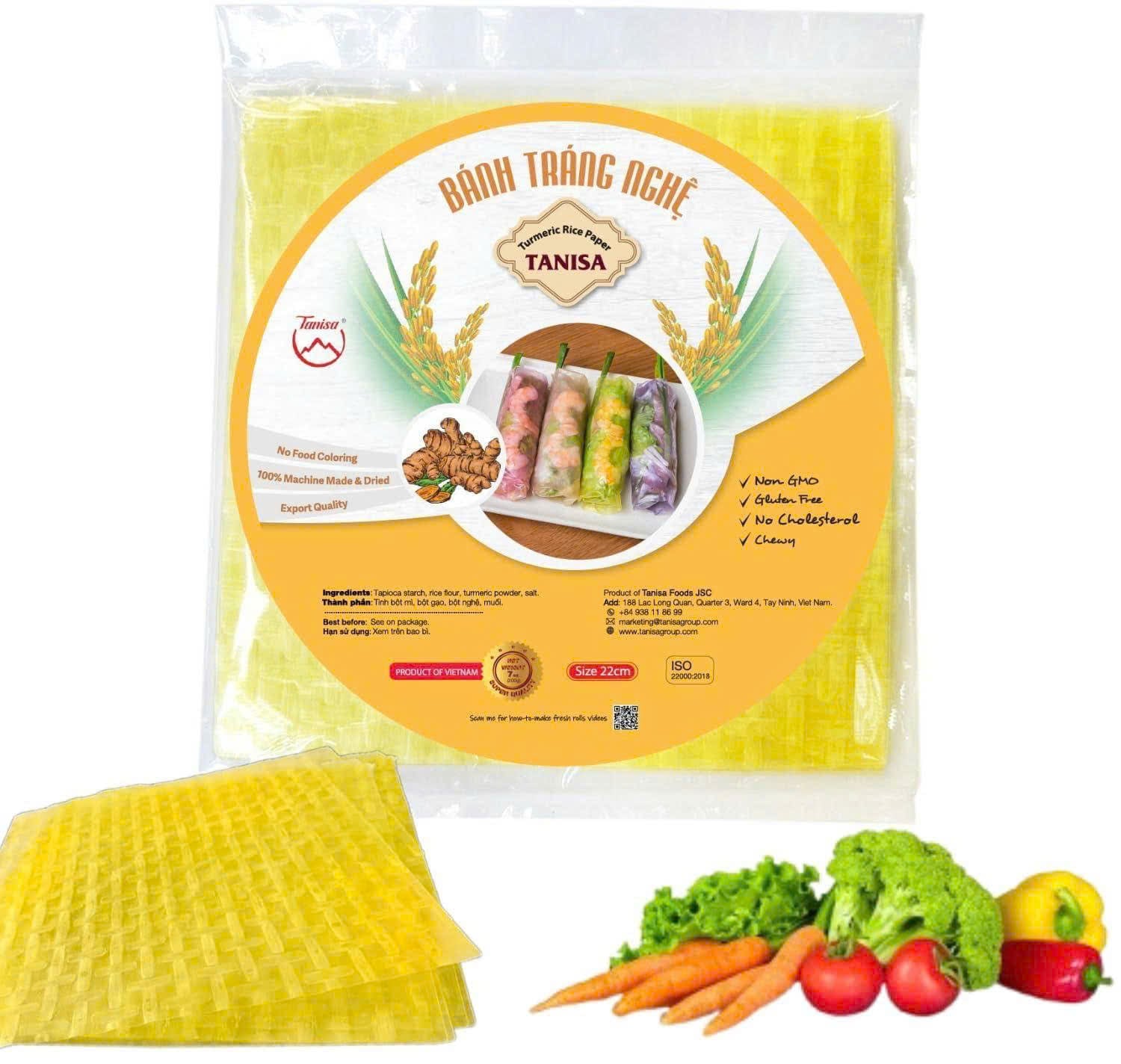
Turmeric Rice Paper
Three Ideas for Beetroot Rice Paper
Beetroot rice paper has a distinctive pink-red appearance. It is especially suitable for party platters, themed menus and dishes designed to create a strong visual impression.
4. Shrimp, Rice Noodle and Herb Rolls
A traditional shrimp roll can be transformed by replacing the conventional white wrapper with beetroot rice paper.
White noodles and green herbs allow the wrapper’s pink color to remain visible. Place the shrimp close to the outer surface so that its orange-red color forms another layer beneath the rice paper.
Serve with Vietnamese dipping sauce or peanut sauce.
5. Salmon, Cucumber and Sprout Rolls
The pink-orange color of salmon complements beetroot rice paper. Cucumber and sprouts add green contrast and a fresh, crisp texture.
When serving raw salmon, use ingredients suitable for raw consumption and follow appropriate food-safety and cold-storage procedures. Cooked or smoked salmon can be used as an alternative.
6. Rainbow Vegetable Rolls
For a colorful vegetable roll, combine:
• Beetroot rice paper;
• Purple cabbage;
• Carrot;
• Cucumber;
• Yellow bell pepper;
• Rice noodles;
• Fresh herbs.
Cut the ingredients into evenly sized strips to produce a neat roll with clearly defined colors. A sesame or sweet-and-sour dipping sauce can help bring the vegetables together.
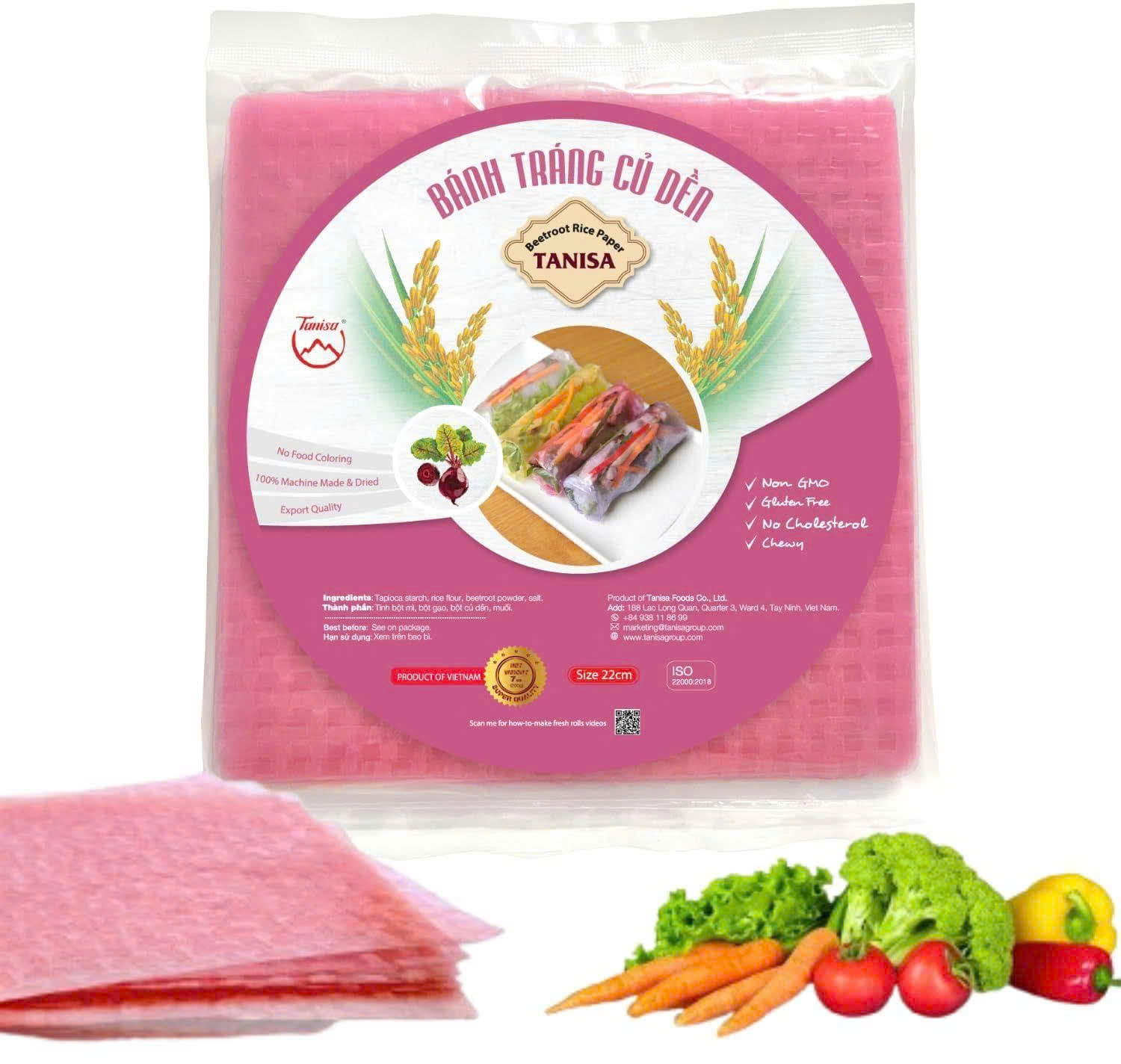
Beetroot rice paper
Three Ideas for Green Tea Rice Paper
Green tea rice paper has a soft green appearance that works well with minimalist presentation, vegetable-forward menus, mushrooms and tofu.
7. Tofu, Mushroom and Sesame Rolls
Pan-seared tofu and cooked mushrooms provide savory depth, while cucumber and lettuce keep the roll fresh.
Serve with roasted sesame sauce or soybean-based dipping sauce. Keep the sauce outside the roll to prevent excess moisture from softening the wrapper too quickly.
8. Chicken, Cucumber and Mint Rolls
This combination pairs mild chicken with crisp cucumber and aromatic mint. The green tea rice paper enhances the fresh visual character of the dish.
Rice vermicelli or a small amount of avocado can be added for a more substantial roll. A light lime or sesame dressing completes the recipe.
9. Garden Vegetable Rolls
A garden-inspired roll can contain:
• Lettuce;
• Cucumber;
• Carrot;
• Bean sprouts;
• Mint;
• Coriander;
• Cabbage;
• Tofu or rice noodles.
Avoid placing several hard vegetable edges in the same position. Arrange softer ingredients next to the wrapper to reduce the risk of tearing.
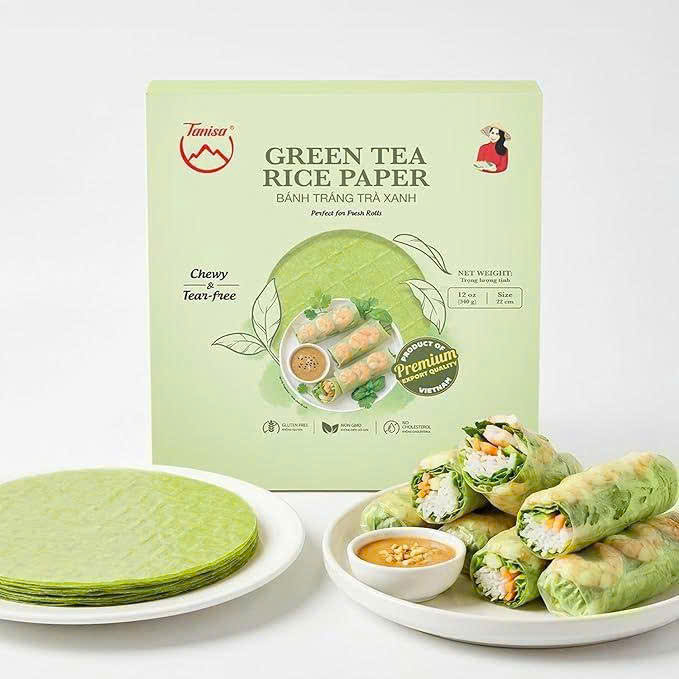
Green tea rice paper
Three Ideas for Butterfly Pea Flower Rice Paper
The blue or blue-purple appearance of butterfly pea flower rice paper creates an immediate point of difference. It is well suited to modern menus, themed dishes and highly visual food concepts.
10. Shrimp, Dragon Fruit and Green Vegetable Rolls
Shrimp and dragon fruit create a combination of light savory and sweet flavors.
Suggested ingredients:
• Butterfly pea flower rice paper;
• Cooked shrimp;
• White or red dragon fruit;
• Cucumber;
• Lettuce;
• A small portion of rice vermicelli.
Dragon fruit contains considerable moisture, so cut it into manageable pieces and remove excess surface moisture before rolling. Serve with a light lime sauce.
11. Purple Cabbage, Tofu and Mango Rolls
Purple cabbage visually connects with the blue-purple wrapper. Mango adds yellow contrast, while tofu balances the filling.
This combination works well with sesame, soy or lime-based dipping sauces.
12. Fresh Fruit Dessert Rolls
Colored rice paper can also be used for dessert-inspired rolls.
Possible fillings include:
• Mango;
• Strawberry;
• Dragon fruit;
• Banana;
• Coconut;
• Other firm seasonal fruit.
Drain or dry the fruit surfaces before assembling the rolls. Serve with coconut or fruit sauce, keeping the sweetness balanced so that the natural fruit flavors remain noticeable.
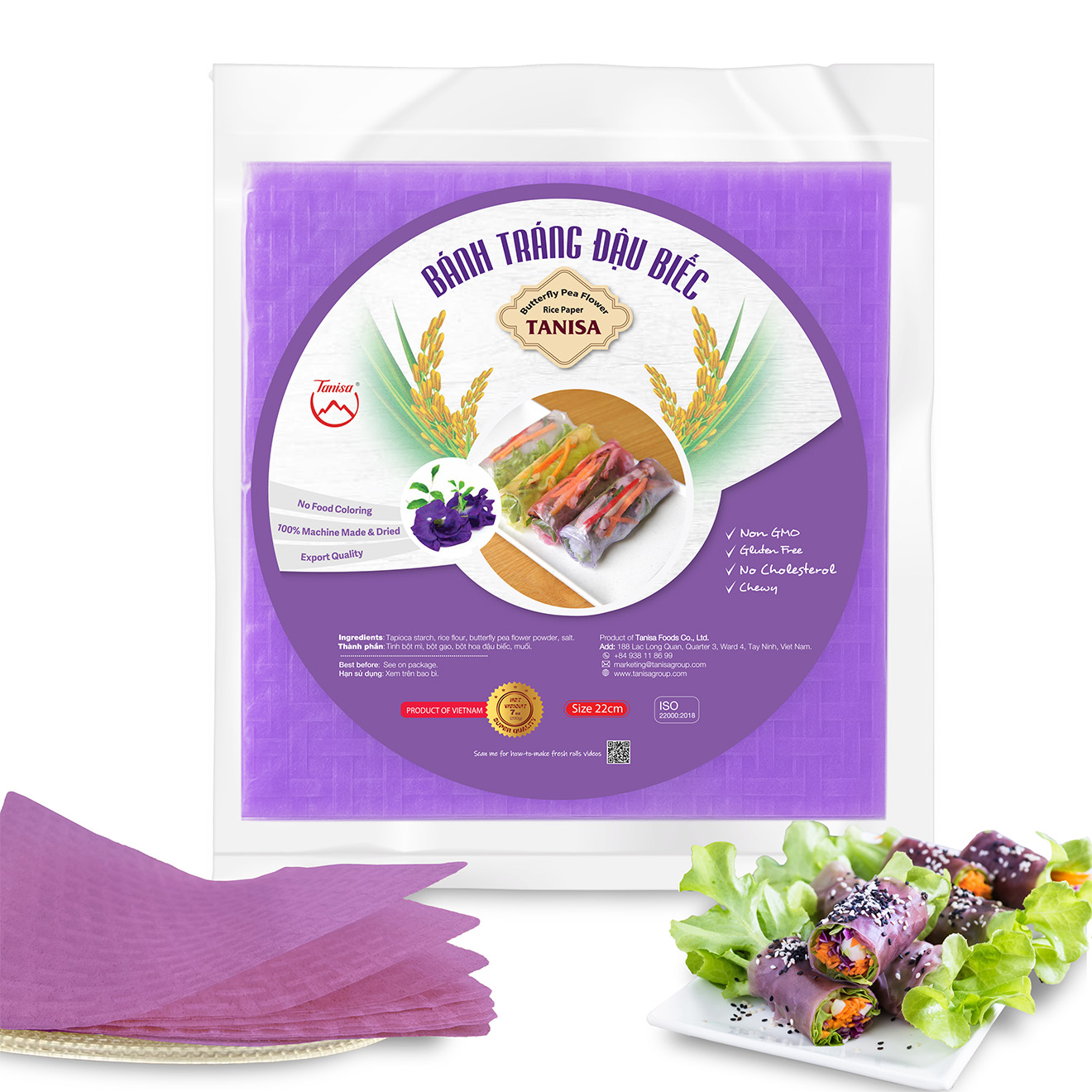
Butterfly pea flower rice paper
A Simple Formula for Building a Balanced Roll
When developing recipes with colored rice paper, use a five-part structure.
1. Choose one vegetable-colored wrapper
Select the color and plant ingredient that support the concept:
• Turmeric for a warm appearance;
• Beetroot for a bold focal point;
• Green tea for a fresh and subtle look;
• Butterfly pea flower for a creative blue-purple effect.
2. Select one main filling
The main filling may be shrimp, chicken, pork, fish, tofu or mushrooms.
Using too many proteins in one roll can make it heavy and difficult to shape. A single focal ingredient often produces a cleaner eating experience.
3. Add a crisp component
Cucumber, carrot, cabbage and other crisp vegetables add texture.
Cut the ingredients into neat strips and trim hard edges that might puncture the wrapper.
4. Add a soft ingredient or starch
Rice vermicelli, avocado, mango or another soft ingredient helps connect the filling.
Use a moderate amount. Too much filling produces an oversized roll and increases the risk of tearing.
5. Finish with herbs or dipping sauce
Fresh herbs add aroma, while a suitable sauce completes the flavor profile.
Serve wet sauces separately whenever possible. Excess sauce inside the roll may weaken the wrapper and shorten its holding time.
How to Make the Colors Stand Out
Colored rice paper is most effective when the filling and presentation support its appearance.
Use contrasting ingredients
Pair golden turmeric rice paper with green and white fillings. Add yellow, white or green ingredients to pink beetroot wrappers. Contrasting colors help the complete roll remain visually clear.
If every ingredient has a similar color, the dish may appear flat even when each component looks attractive on its own.
Place attractive ingredients near the surface
Shrimp, herbs, fruit and colorful vegetables can be arranged close to the outer layer.
As the wrapper softens and becomes more translucent, these ingredients remain visible through the rice paper.
Avoid over-soaking
Over-soaking makes rice paper difficult to control and may cause it to stick or lose its shape.
Moisten the wrapper according to the product instructions, place it on the rolling surface and allow it to soften gradually.
Drain the filling
Water from washed vegetables, cooked mushrooms or fresh fruit can make the wrapper soften too quickly.
Drain all ingredients thoroughly and allow cooked fillings to cool before assembling the rolls.
Use neutral lighting for photography
Natural daylight or neutral white lighting usually represents food colors more accurately. Strong yellow light may distort blue, green, pink and purple tones.
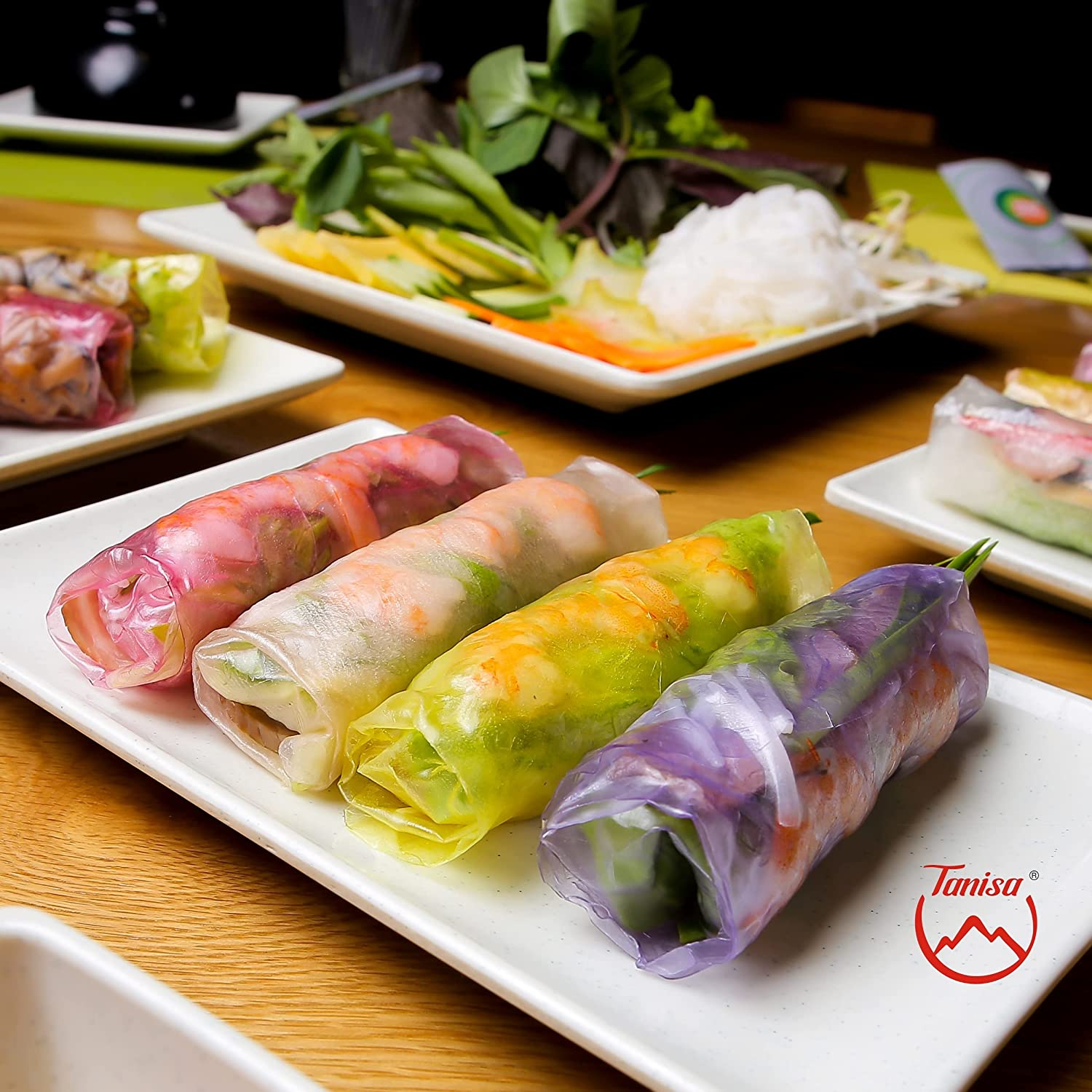
Colored rice paper is most effective when the filling and presentation support its appearance.
Colored Rice Paper for Restaurants and Catering
Vegetable-colored rice paper can support several practical food-service concepts.
Create a color-themed roll platter
Restaurants can serve four wrapper colors with four different fillings. This allows guests to explore several flavors while creating a shareable centerpiece.
A tasting menu might combine:
• Turmeric rice paper with chicken;
• Beetroot rice paper with shrimp;
• Green tea rice paper with tofu;
• Butterfly pea flower rice paper with fruit.
Use wrapper colors to identify fillings
Each color can represent a specific recipe:
• Yellow for chicken;
• Pink for shrimp;
• Green for tofu;
• Blue-purple for fruit.
This system can help staff and guests distinguish products in buffets or catering displays. However, color should never replace written ingredient and allergen information.
Develop seasonal menus
Vegetable-colored rice paper can support summer menus, festive platters and color-themed events.
Restaurants may retain familiar fillings while changing the wrapper selection and presentation. This creates a new experience without requiring a completely different kitchen process.
Create more distinctive visual content
Colorful rolls can attract attention in menu photography, short-form video and social media content.
However, appearance should support—not replace—flavor, texture and ease of eating. A visually impressive roll still needs to perform well on the plate.
Opportunities for Retailers and Food Brands
Colored rice paper can be developed in several commercial formats:
• Single-variety packs;
• Mixed-color packs;
• Spring roll kits;
• Family activity kits;
• Seasonal products;
• Food-service packs;
• OEM products;
• Private-label product lines.
A mixed-color package becomes more useful when it includes filling suggestions for each variety. Customers are more likely to use an unfamiliar product when the packaging provides clear inspiration.
A QR code can lead to recipes, preparation videos or information about the plant ingredients. This provides more value than describing the product only as colorful or visually attractive.
Frequently Asked Questions About Colored Rice Paper
What is TANISA colored rice paper made with?
TANISA’s vegetable-colored rice paper range includes products made with plant ingredients such as turmeric, beetroot, green tea and butterfly pea flower. Consult the specification and label of each product for its complete ingredient list.
Does colored rice paper taste like vegetables?
Some varieties may carry a light aroma or flavor from the plant ingredient. The intensity depends on the formulation, filling and dipping sauce.
Which fillings work with vegetable-colored rice paper?
Colored rice paper can be paired with vegetables, rice noodles, shrimp, meat, tofu, mushrooms and fruit. Choose ingredients that create a balanced combination of color, flavor and texture.
Is colored rice paper suitable for vegetarian rolls?
It can be combined with tofu, mushrooms, noodles and vegetables. Anyone following a specific vegetarian or vegan diet should verify the complete ingredient list and accompanying sauces.
Can colored rice paper be used for desserts?
Yes. It can be combined with mango, strawberry, dragon fruit, banana, coconut and suitable dessert sauces. Drain the fruit to prevent the wrapper from becoming excessively soft.
Can restaurants use wrapper colors to identify fillings?
Yes. Different colors can represent different recipes in buffets and catering. Written ingredient and allergen information should still be provided.
Can buyers order mixed-color packages?
Mixed packs, customized packaging and private-label options depend on project requirements and order quantities. Buyers should consult TANISA and approve final samples before mass production.
Discover a Plant-Inspired Palette for Modern Rolls
Colored rice paper brings ingredients such as turmeric, beetroot, green tea and butterfly pea flower into one of Vietnam’s most familiar foods.
Each wrapper creates its own visual identity and opens new possibilities for combining vegetables, fruit, protein and dipping sauces. Families can make mealtimes more engaging, chefs can build colorful tasting platters, and food brands can develop distinctive retail products or meal kits.
TANISA Foods supplies vegetable-colored rice paper for consumers, restaurants, distributors, importers and private-label partners.
Contact TANISA to discuss available products, sizes, samples, packaging and export requirements.
TANISA FOODS JSC, a strong brand in the market for the production and distribution of specialty products (rice paper, rice noodles...) and spices (seasoning) which exported to some countries such as USA, France, South Korea, Japan, Russia, Brunei...
TANISA FOODS JSC
Factory add 1: 188 Lac Long Quan Street, Quarter 3, Tan Ninh Ward, Tay Ninh Province, Vietnam
Factory add 2: Phu Hoa Dong, Cu Chi, Ho Chi Minh City, Viet Nam
Office in HCMC: 18th Floor, Vincom Building, 72 Le Thanh Ton Street, District 1, Ho Chi Minh City, Vietnam
Warehouse in HCMC: 2/3 Binh Gia, Tan Binh District, Ho Chi Minh City, Vietnam
Hotline: +84 938 118 699 (WhatsApp/WeChat), +84 938 198 299 (Zalo)




Email: marketing@tanisagroup.com
Website: www.tanisagroup.com
Facebook: Tanisa Foods JSC
Instagram: @tanisa_foods
Youtube: Tanisa Kitchen

Xem thêm