


Rice Paper Nutrition: Calories, Carbs & the Real Facts
Rice paper nutrition facts: calories, carbs, protein, and why it's naturally gluten-free. Compared to tortillas, plus which diets it actually fits.
Anyone who switches from tortillas or bread to rice paper eventually asks the same question: what am I actually eating? A sheet of rice paper looks almost weightless — and the actual nutrition numbers confirm that exact impression.
A single sheet of plain rice paper (with no filling), depending on its size, contains roughly 15 to 40 calories, almost no fat, around 3 to 9 grams of carbohydrates, and less than 1 gram of protein. Smaller sheets (around 5g, close to the standard reference serving) sit at the lower end of that range, while the larger commercial sheets most brands sell (around 10–13g) sit at the higher end. Whichever size it is, the core profile stays the same: rice paper is a carbohydrate-based wrapper, not a source of protein, fiber, or fat.
This consistency comes from how simple rice paper's ingredients are — and it's worth understanding those ingredients before deciding what these numbers actually mean for a diet.
Rice Paper Nutrition Facts: The Breakdown Per Sheet
Broken down by nutrient, across the two most common sheet sizes on the market, rice paper nutrition looks like this:
| Nutrient | Small sheet (~5g) | Standard commercial sheet (~10–13g) |
| Calories | 15–20 kcal | 30–40 kcal |
| Carbohydrates | 3–4g | 7–9g |
| Protein | under 0.3g | 0.5–1g |
| Fat | ~0g | ~0g |
| Fiber | negligible | negligible |
| Cholesterol | 0mg | 0mg |
| Sodium (salt) | 10–20mg | 20–50mg |
These are estimated figures, not a fixed label value — rice paper from different manufacturers varies in thickness, diameter, and moisture content, so the actual numbers on any given package may fall slightly outside this range.
Why Do the Numbers Differ Between Brands?
This variation isn't a sign that one brand is "more honest" than another. Rice paper comes in a range of diameters (commonly 16cm, 22cm, or larger) and different thicknesses depending on its purpose — fresh rolls or frying. A thicker, wider sheet simply weighs more, so it carries more calories and carbs per piece — while the nutrient density per gram barely changes.
What Is Rice Paper Actually Made Of? (The Ingredients Behind These Numbers)
Rice paper's nutrition profile traces directly back to its ingredient list: rice flour, or sometimes tapioca starch, water, and a small amount of salt. The traditional recipe contains no oil, no dairy, no egg, and no sugar — which is exactly why its fat, protein, and sodium levels stay so low.
The ratio between rice flour and tapioca starch shifts depending on how the sheet will be used, which also accounts for small differences in texture and moisture retention from one brand to another.
Rolling Rice Paper vs. Frying Rice Paper — Same Nutritional Base, Different Texture
Rice paper made for fresh rolls usually leans toward more tapioca starch (around 80% tapioca, 20% rice flour) to stay soft and easy to fold after a quick soak in water. Rice paper made for frying goes the other way — more rice flour (around 80% rice flour, 20% tapioca starch) so it turns crisp and doesn't stick together in hot oil. These two formulas affect how the sheet behaves in the kitchen far more than they affect its nutrition — both remain low-fat, low-protein, carbohydrate-based sheets before anything else is added.
Is Rice Paper Healthy? What These Numbers Actually Mean
On its own, rice paper checks a lot of boxes that health-conscious eaters care about: low in calories, almost no fat, no cholesterol, naturally gluten-free, and made from plant-based ingredients with no preservatives.
But it's equally important to be clear about what rice paper isn't. It isn't a meaningful source of protein, fiber, or vitamins. The sheet itself is best understood as a light, neutral wrapper — the nutritional "weight" of the meal comes from whatever is rolled inside it.
The Wrapper Isn't the Nutrition — the Filling Is What Decides It
This is the part people tend to miss when they search for "rice paper nutrition" expecting the wrapper itself to be the "healthy" part of the dish. A roll filled with shrimp, herbs, and vegetables and a roll filled with fried noodles and processed meat will land in very different places nutritionally — even though the rice paper wrapper is identical in both. Choosing rice paper mainly lowers the baseline (fewer calories and less fat from the wrapper itself), but the filling still decides most of the nutritional outcome.
Rice Paper vs. Tortilla vs. Bread: What Do the Numbers Say?
Side by side, rice paper and a flour tortilla solve the same problem — wrapping food — but with fairly different nutrition math. A medium tortilla typically has over 100 calories, around 20–25g of carbohydrates, and contains gluten because it's made from wheat flour. A sheet of rice paper, even at its largest, is usually lighter in both calories and fat, and it's naturally gluten-free since there's no wheat flour in the recipe at all. White bread sits in a similar spot to tortillas — more calories per slice, made from wheat flour, and usually with added fat or sugar that rice paper simply doesn't have.
| Rice paper (1 sheet, ~10–13g) | Flour tortilla (medium) | White bread (1 slice) | |
| Calories | 30–40 kcal | 140–150 kcal | 70–80 kcal |
| Carbohydrates | 7–9g | 24–26g | 13–14g |
| Fat | ~0g | 3–4g | ~1g |
| Gluten | None | Yes | Yes |
Good for Gluten-Free Eaters
Rice paper is a good alternative for anyone avoiding gluten or cutting back on fat.
Does Rice Paper Fit Specific Diets?
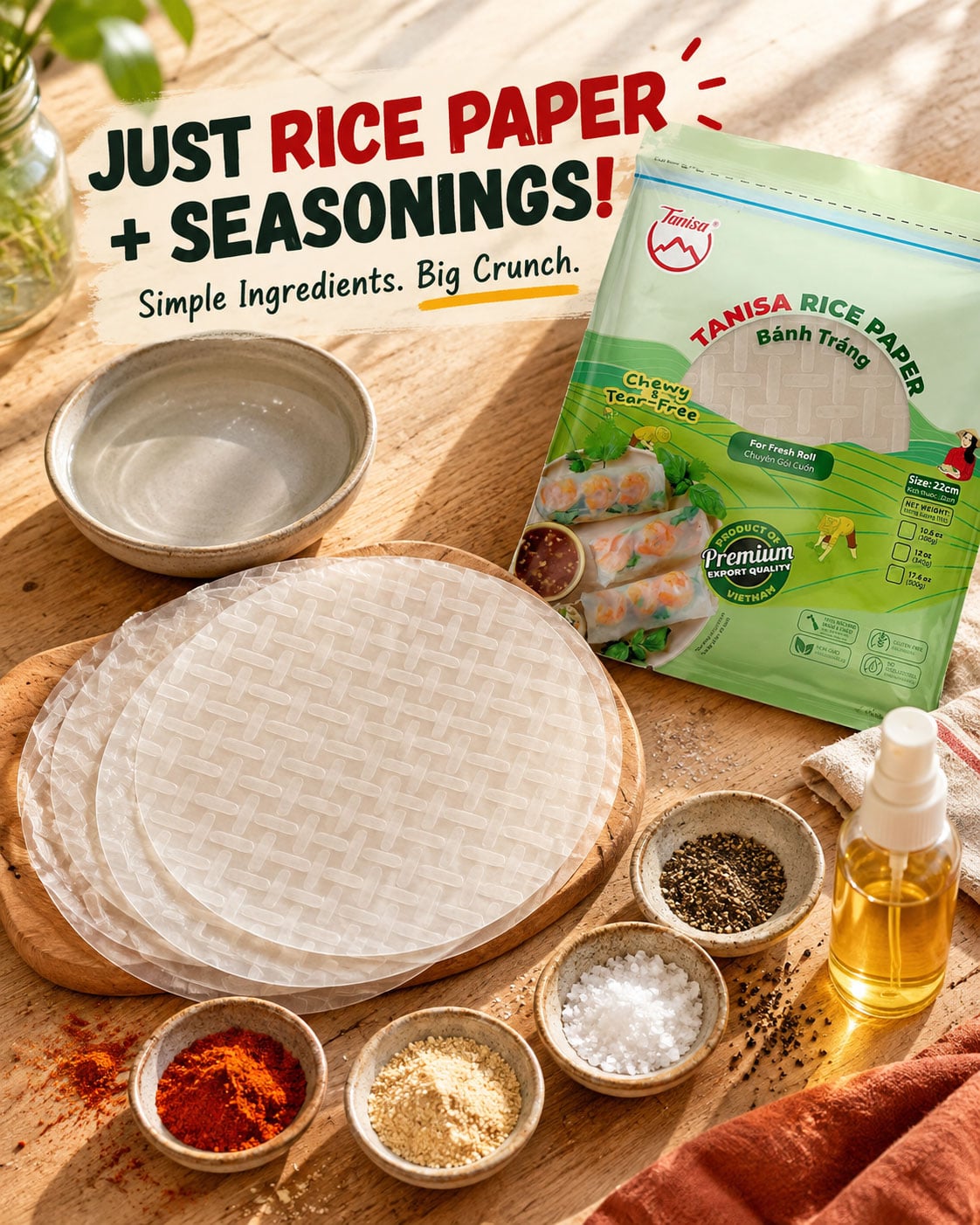
- Gluten-free: Yes, in its traditional form — both rice flour and tapioca starch are wheat-free. One small caveat: some imported or flavored products blend in wheat starch for texture, so it's worth checking the ingredient label rather than assuming every rice paper on the shelf is automatically gluten-free.
- Plant-based / vegan: Yes, by default — the standard recipe contains no animal-derived ingredients.
- Low-fat / heart-healthy: Yes — negligible fat and no cholesterol.
- Low-carb / keto: Not a great fit, as noted above — it's still a starch-based wrapper.
Rice Paper for Weight Loss — The Real Calorie Count Per Roll
A full fresh roll — rice paper plus vegetables, herbs, and a lean protein like shrimp or chicken — typically comes to around 80 to 120 calories per roll, well below a thick bread sandwich or a flour burrito of similar size. That gap comes mainly from what rice paper leaves out (oil, gluten-heavy dough, added fat) rather than any "magic weight-loss" property of the sheet itself. It's a light base to build a meal on, not a diet in itself.
How to Make a Rice Paper Roll Actually Nutritious
Since the wrapper itself contributes little nutritionally, the nutritional quality of a rice paper dish depends almost entirely on the filling and how it's prepared:
- Add a variety of vegetables and herbs to supply the fiber and micronutrients the wrapper doesn't provide.
- Add lean protein (shrimp, chicken, tofu) rather than relying on carbs alone for the filling.
- Go easy on dipping sauces — peanut sauce or sweetened fish sauce can carry more sugar, fat, and sodium than the roll itself.
Fresh Rolls vs. Fried Rolls — Where the Calories Really Change
The biggest swing in calories doesn't come from the rice paper itself — it comes from how it's cooked. A fresh, unfried roll keeps the low-calorie profile described above. A fried roll, on the other hand, absorbs oil during cooking, which can significantly raise the calories and fat per piece, no matter how light the raw sheet was.
Frequently Asked Questions
How many calories are in one sheet of rice paper?
Roughly 15 to 40 calories per sheet, depending on size and brand. Small, thin sheets sit at the lower end; larger commercial sheets sit at the higher end.
Is rice paper good for weight loss?
It can help, mainly because it's lower in calories and fat than tortillas or bread. A full fresh roll with vegetables and lean protein typically totals around 80–120 calories, but the result still depends heavily on what's inside.
Is rice paper gluten-free?
Traditional rice paper made from rice flour and tapioca starch is naturally gluten-free. Some imported or flavored varieties may blend in wheat starch, so check the label if you need to avoid gluten strictly.
Is rice paper healthier than tortillas?
In terms of calories, fat, and gluten, rice paper is generally lighter than a flour tortilla.
Tanisa: Gluten-Free, Clean-Label Rice Paper From Vietnam's Mekong Delta
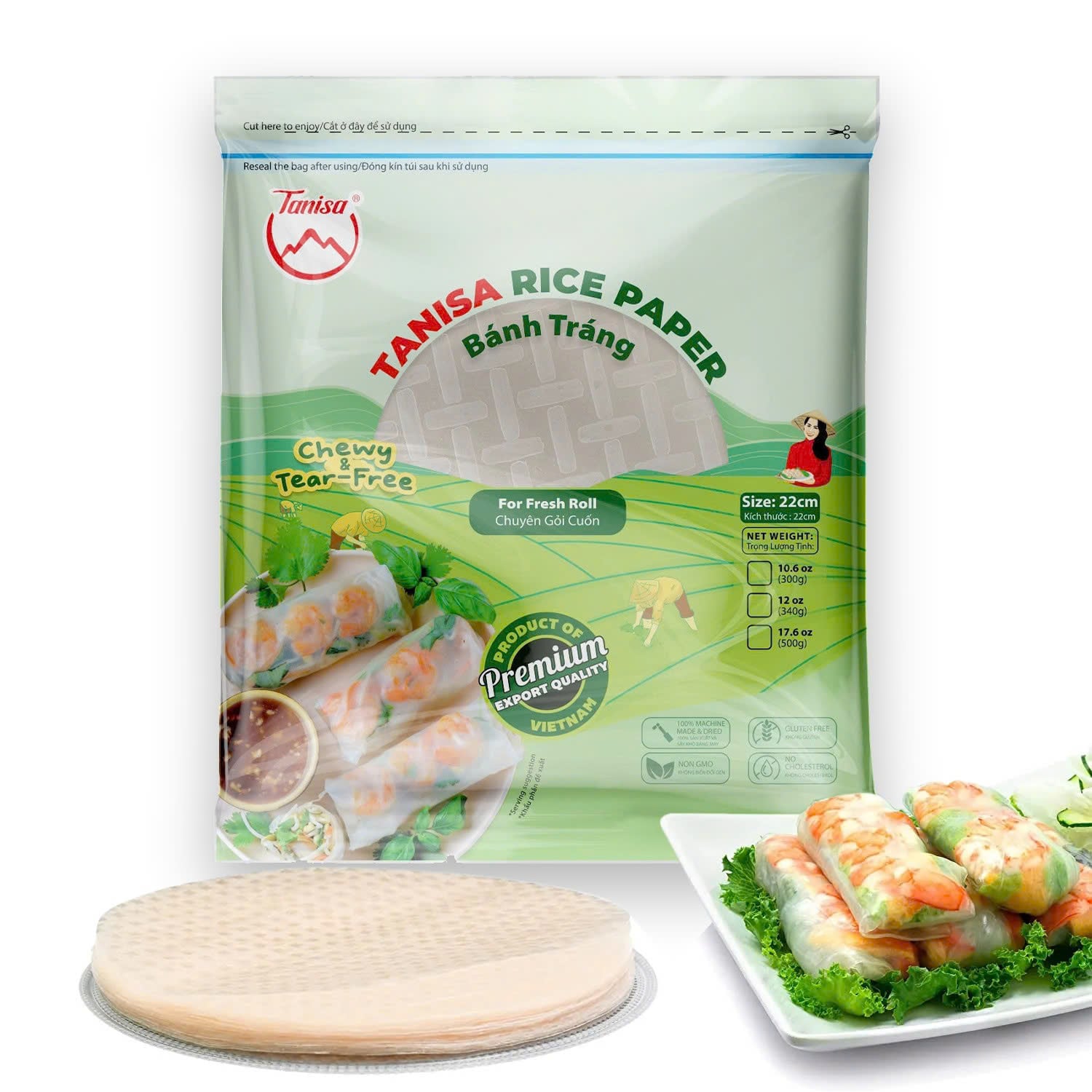
If the numbers above matter to you — no cholesterol, naturally gluten-free — it's also worth knowing where the rice paper you're eating actually comes from. Tanisa Foods is a rice paper manufacturer based in Vietnam's Mekong Delta, a region known for producing excellent rice, following a clean-label approach: no preservatives, no added oil, no GMO ingredients. Tanisa's rice paper holds certifications including FSSC 22000, ISO 22000:2018, FDA (USA), KFDA (South Korea), and Halal, and is exported to more than 35 countries. For anyone cross-checking rice paper nutrition claims against what's actually on the package, that level of certification is a reliable place to start.
TANISA FOODS JSC, a strong brand in the market for the production and distribution of specialty products (rice paper, rice noodles...) and spices (seasoning) which exported to some countries such as USA, France, South Korea, Japan, Russia, Brunei...
TANISA FOODS JSC
Factory add 1: 188 Lac Long Quan Street, Quarter 3, Tan Ninh Ward, Tay Ninh Province, Vietnam
Factory add 2: Phu Hoa Dong, Cu Chi, Ho Chi Minh City, Viet Nam
Office in HCMC: 18th Floor, Vincom Building, 72 Le Thanh Ton Street, District 1, Ho Chi Minh City, Vietnam
Warehouse in HCMC: 2/3 Binh Gia, Tan Binh District, Ho Chi Minh City, Vietnam
Hotline: +84 938 118 699 (WhatsApp/WeChat), +84 938 198 299 (Zalo)




Email: marketing@tanisagroup.com
Website: www.tanisagroup.com
Facebook: Tanisa Foods JSC
Instagram: @tanisa_foods
Youtube: Tanisa Kitchen

Xem thêm