


What Is Rice Paper? Origin, Ingredients & Uses Explained
What is rice paper made of, how is it produced, and how is it used? Explore its Vietnamese origins, types, applications, and key differences.
A sheet of rice paper once known mainly for wrapping Vietnamese fresh spring rolls now shows up in countless dishes across many countries, inspiring thousands of different recipes, from wraps and fried snacks to steamed creations. So what exactly is rice paper, and why has it spread so far?
Rice paper is a thin, translucent sheet made from rice flour, tapioca starch, water, and salt, spread into a thin layer and then dried or sun-dried. It is a traditional Vietnamese ingredient used for wrapping or frying in many dishes.
In recent years, rice paper has stopped being an ingredient confined to Vietnamese kitchens. It is becoming one of the most flexible food formats in modern cooking: light, easy to adapt, and naturally gluten-free. As consumers around the world shift toward lighter, healthier, and more flexible ways of eating, and rice paper can be used to wrap all kinds of dishes, rice-based products like rice paper are drawing more attention in markets outside Vietnam.
To understand why such a humble ingredient has traveled so far, it helps to first look at what rice paper is made of and where it came from.
What Is Rice Paper Made Of? Ingredients and Production Process
The ingredients in rice paper are fairly simple: rice flour, tapioca starch, water, and a bit of salt. However, the ratio between rice flour and tapioca starch changes depending on how the rice paper will be used.
Rice paper used for wrapping (fresh rolls, grilled meat rolls) needs to be soft and easy to fold, so the formula usually leans toward tapioca starch: around a higher share of tapioca starch, 20% rice flour and salt. Rice paper used for frying or grilling, on the other hand, needs to be crisp and not stick together during frying, so rice flour makes up the larger share: around 80% rice flour, 20% tapioca starch and salt.
The traditional rice paper-making process, used for many years, involves several steps: rice is soaked until soft, ground into a liquid batter, then spread thinly over a cloth stretched above a pot of boiling water. The steam cooks the batter within seconds, and the maker lifts the sheet off with a thin bamboo stick, lays it on bamboo racks, and dries it in the sun. The softness, crispness, and elasticity of each batch depend heavily on the maker's experience.
Today, rice paper production has become more modern, relying on machines.
Common Types of Rice Paper Today
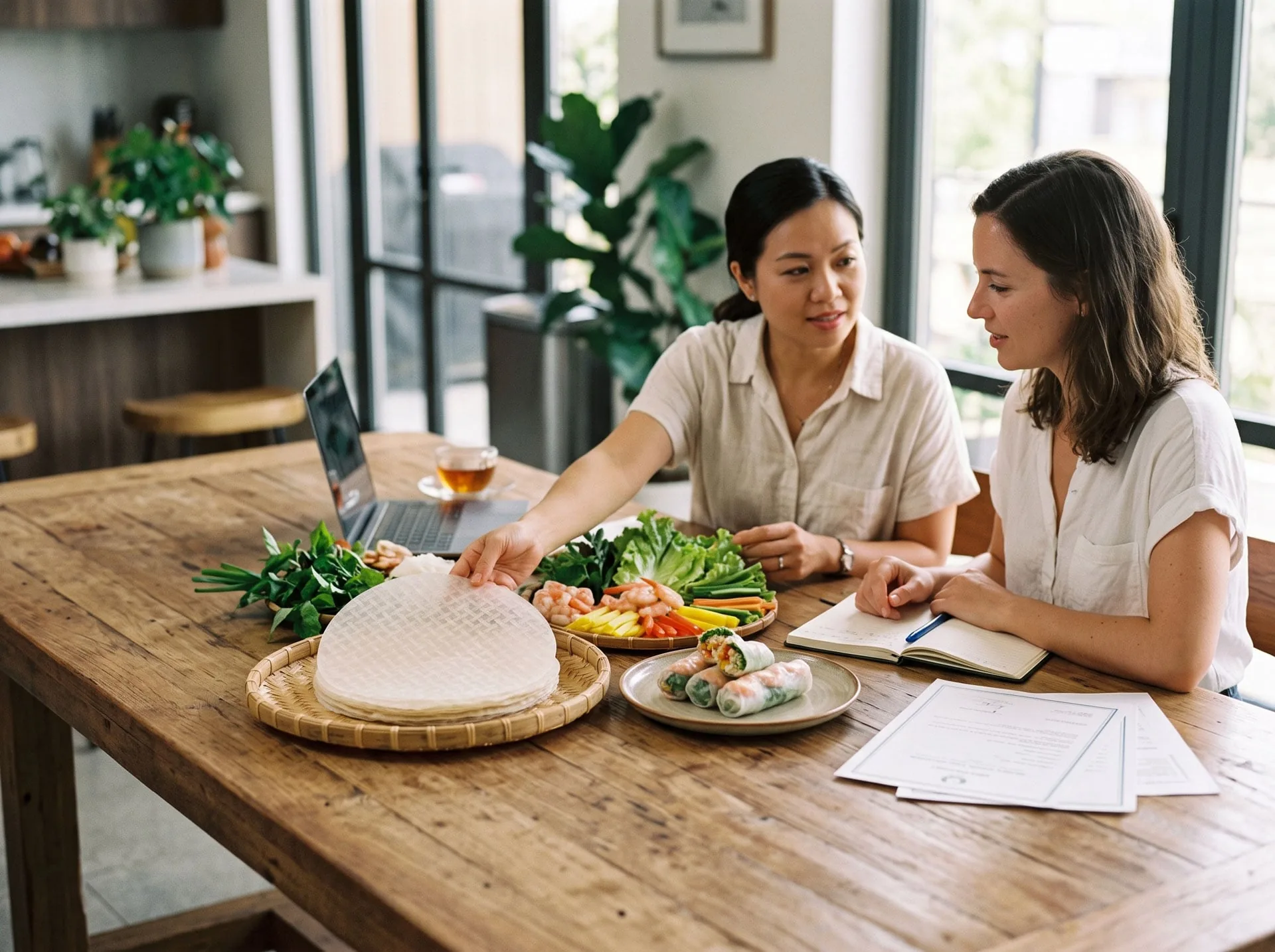
By use, rice paper falls into two main groups: rolling rice paper, which is soft and pliable and used for fresh rolls or other fresh wraps, and frying/grilling rice paper, which is crisper and used for fried spring rolls or other fried dishes.
Beyond these two basic types, today's market also offers several modern variations: vegetable rice paper, colored and flavored with turmeric, beetroot, or butterfly pea flower; organic rice paper for consumers who prioritize clean ingredients; and rice paper snacks, such as chili, sesame, or seaweed flavors, eaten straight as a snack. This variety shows that rice paper is no longer just a cooking ingredient, but has grown into a product category of its own.
What Is Rice Paper Used For? Applications in Vietnam and Around the World
In Vietnam, rice paper is tied to familiar dishes: fresh spring rolls, fried spring rolls, or wrapping grilled meat with fresh herbs and vegetables.
Outside Vietnam, rice paper is used in quite different ways. In Korea, it often replaces lettuce in hot pot and BBQ meals, used to wrap grilled meat, kimchi, and sauces. In Japan, some chefs use rice paper as a twist on sushi, creating a soft, slightly chewy texture different from traditional seaweed. In Europe, rice paper is layered and baked to create a croissant-like crispness, while in Russia it has been used as an edible decorative layer on wedding cakes. In the US, rice paper appears in fruit wraps and healthy dishes, and is used as a lower-carb alternative to tortillas.
Why Is Rice Paper Becoming a Global Food Trend?
What these uses have in common is that rice paper doesn't impose a fixed formula on a dish. It doesn't define the dish, it adapts to it. This quality, combined with the fact that rice paper is naturally gluten-free and made from plant-based ingredients, fits the growing global trend toward more flexible, less processed eating that works for vegans, vegetarians, and people avoiding gluten.
(See also: "5 Ways to Use Rice Paper")
Is Rice Paper Good for Your Health?
Rice paper is naturally gluten-free and made entirely from plant-based ingredients (rice, tapioca starch, salt), requiring no oil during production and no preservatives. Compared to tortillas or bread, which are usually made from refined wheat flour and contain added fat, rice paper is a lighter option for anyone looking to cut back on gluten or fat while keeping the convenience of a wrap.
These are general characteristics based on ingredients only, and do not include specific nutritional figures such as calorie count or glycemic index, which vary depending on the type of rice paper and how it's prepared.
Why Is Traditional Rice Paper Usually Round?
Many people assume the round shape of rice paper is an aesthetic choice. In reality, the shape comes directly from the traditional production method: the batter is steamed on a round cloth stretched over a pot, so the finished sheet takes on the round shape of that frame. The circular shape wasn't an intentional design from the start, it was simply a natural result of the technique.
Today, modern technology can produce square or rectangular rice paper to make better use of raw materials and reduce waste when cutting. But most consumers still associate rice paper with its familiar round shape, partly because in East Asian culture, circles are often linked to completeness, harmony, and reunion.
(See also: "Why Rice Paper Is Round")
The Origin of Rice Paper: Rooted in Vietnam's Rice Civilization
There are no records identifying a specific person as the inventor of rice paper. Like pho or Vietnamese bread in Vietnam, or tortillas in Mexico, rice paper belongs to a category of folk food that developed gradually over time, across generations, rather than coming from a proprietary recipe or a single chef.
The origin of rice paper is tied to Vietnam's rice-growing civilization, especially in the Central and Southern regions, where rice sat at the center of agricultural life. When people needed to preserve rice longer and create food that was easy to carry, they found a way to grind rice into a liquid batter, spread it thin, and dry it in the sun. That is how rice paper came about, alongside other rice-based foods such as rice vermicelli, pho noodles, and hu tieu noodles.
Famous Rice Paper-Making Regions
While there is no single inventor, Vietnam has several regions well known for traditional rice paper craftsmanship. Trang Bang, in Tay Ninh Province, is considered the most iconic, famous for its soft, dew-softened rice paper. Other notable regions include Cu Chi, Quang Nam, Binh Dinh, Ben Tre, and Dong Thap, each with its own distinct thickness, texture, and way of using it.
(See also: Why Rice Paper Is From Vietnam)
How Rice Paper Differs From Other Wraps
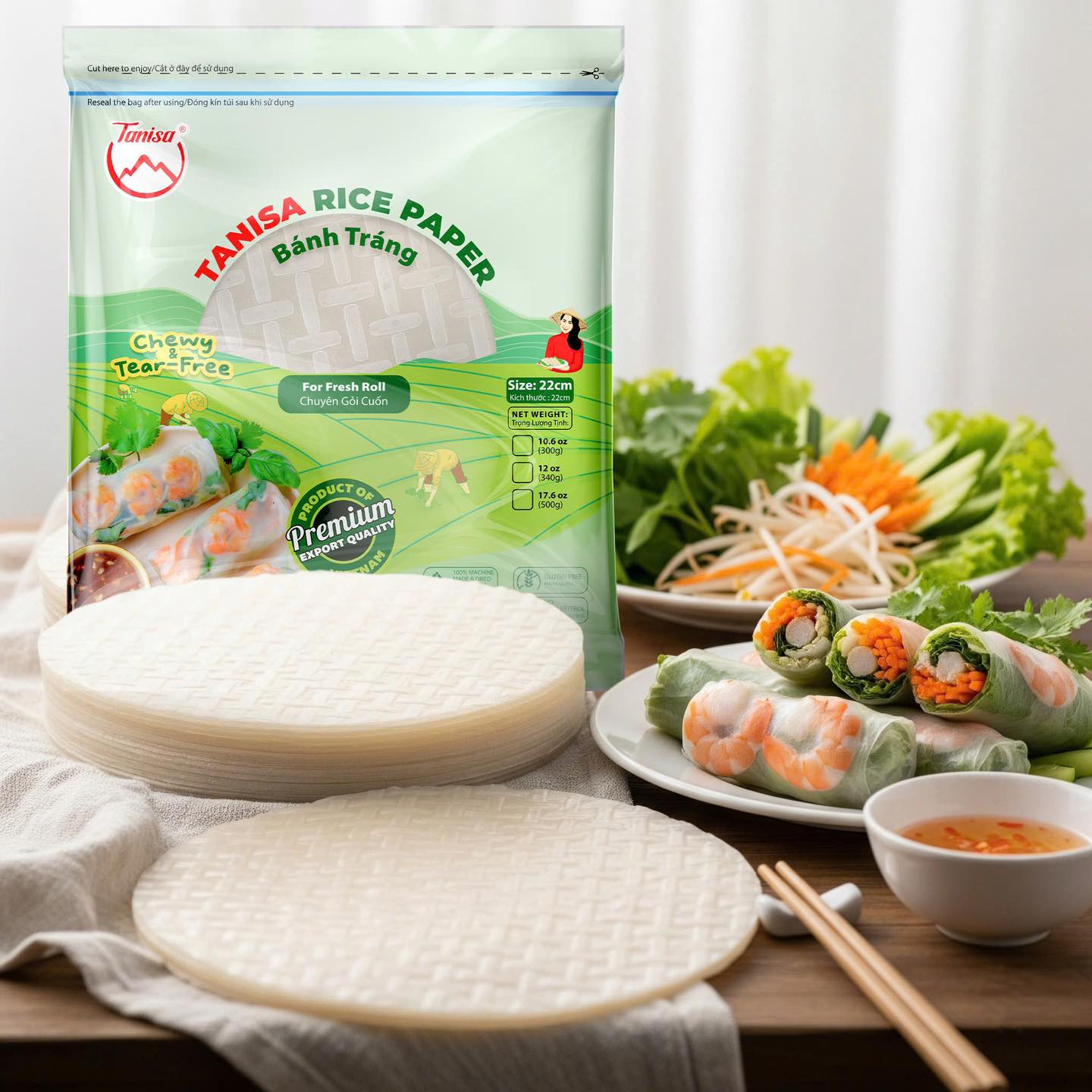
Both rice paper and tortillas are used to wrap food, but they solve two different problems. A tortilla is baked or cooked from wheat or corn flour, giving it a firm texture and its own distinct flavor. Rice paper only needs a quick soak in water before use and keeps a neutral taste, with almost no flavor of its own. That neutrality is exactly what lets rice paper blend easily into so many different cuisines, from Vietnamese and Korean to Japanese and American-style fusion dishes, without ever clashing.
Frequently Asked Questions About Rice Paper
What is the English word for "bánh tráng"? Rice paper.
Who invented rice paper? There is no record of a specific individual. Rice paper developed gradually across generations of Vietnamese people, tied to the rice civilization of Central and Southern Vietnam. Tay Ninh Province in Vietnam is well known for producing some of the finest rice paper.
How long does rice paper keep? Shelf life depends on the type of rice paper, how it's packaged, and storage conditions, so it's best to check the instructions printed on each product's packaging.
Can rice paper be eaten raw, without any preparation? Dry rice paper in its original form is quite hard and brittle, so it isn't eaten straight away. Rolling rice paper needs to be moistened in water before use, while frying or grilling rice paper needs heat to cook through and turn crisp.
How is rice paper different from banh da and banh pho? Banh da is usually thicker, often topped with sesame or other seeds, and is typically grilled or eaten alongside other dishes. Banh pho is a sheet of rice batter cut into noodles for pho and isn't used for wrapping. Rice paper is thinner than banh da and is mainly used for wrapping or frying.
Tanisa: A Vietnamese Rice Paper Brand Built for Global Export Standards
If you're looking for a rice paper manufacturer that meets export standards or a reliable ingredient supplier for your business, Tanisa Foods is a name worth considering. Founded in 2015, Tanisa develops rice-based products with a clean-label approach: gluten-free, non-GMO, free of preservatives, and vegan-friendly. The company currently exports to more than 30 countries, including the United States, Europe, South Korea, Japan, and Australia, holding certifications such as FSSC 22000, ISO 22000:2018, FDA (USA), KFDA (South Korea), and Halal.
TANISA FOODS JSC, a strong brand in the market for the production and distribution of specialty products (rice paper, rice noodles...) and spices (seasoning) which exported to some countries such as USA, France, South Korea, Japan, Russia, Brunei...
TANISA FOODS JSC
Factory add 1: 188 Lac Long Quan Street, Quarter 3, Tan Ninh Ward, Tay Ninh Province, Vietnam
Factory add 2: Phu Hoa Dong, Cu Chi, Ho Chi Minh City, Viet Nam
Office in HCMC: 18th Floor, Vincom Building, 72 Le Thanh Ton Street, District 1, Ho Chi Minh City, Vietnam
Warehouse in HCMC: 2/3 Binh Gia, Tan Binh District, Ho Chi Minh City, Vietnam
Hotline: +84 938 118 699 (WhatsApp/WeChat), +84 938 198 299 (Zalo)



Email: marketing@tanisagroup.com
Website: www.tanisagroup.com
Facebook: Tanisa Foods JSC
Instagram: @tanisa_foods
Youtube: Tanisa Kitchen

Xem thêm