


The History of Vietnamese Rice Paper: From Traditional Craft to a Global Wrap Trend
Discover the history of Vietnamese rice paper, from its origins in traditional rice culture to its rise as a modern global wrap trend. Learn why rice paper is becoming popular in healthy, fusion, and plant-based cuisine worldwide.
For many years, the global food market was largely familiar with one popular type of wrap: the tortilla.
But in recent years, a traditional ingredient from Vietnam has been appearing more and more in healthy, fusion, and plant-based dishes around the world: rice paper.
From Korean BBQ and Japanese fusion sushi to fruit wraps, salads, and creative snacks in the US and Europe, rice paper is gradually moving beyond its role as a traditional food and becoming a flexible food format for modern lifestyles.
What makes it interesting is this: rice paper was never created as a trend.
It has existed in Vietnamese daily life for hundreds of years.
Not because it is complicated.
But because… it simply works.
Where Did Rice Paper Originate?
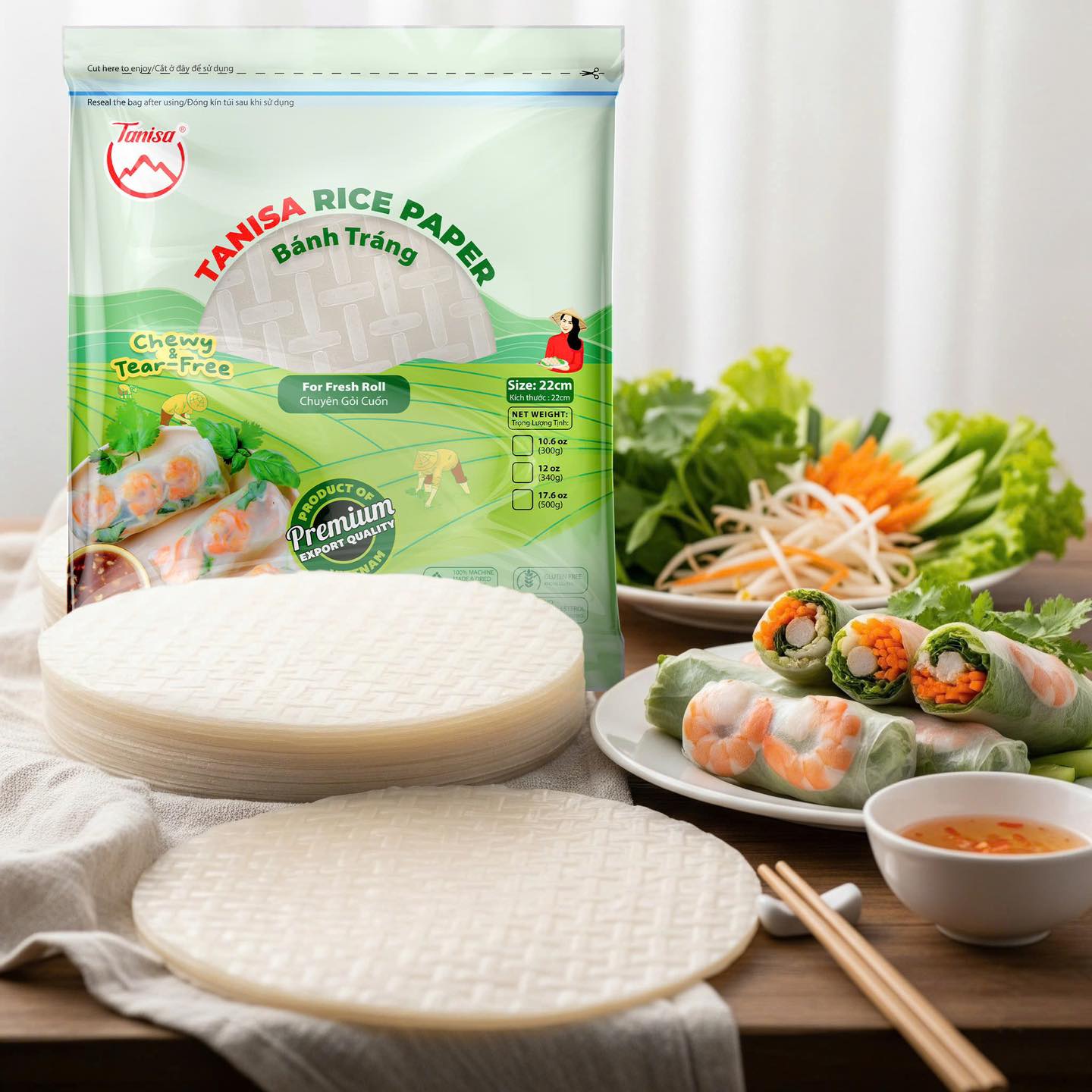
Rice paper originated in Vietnam and is deeply connected to the country’s rice civilization.
Hundreds of years ago, when Vietnamese people primarily lived by rice farming, they began finding ways to transform rice into different food forms that were easier to preserve, more flexible, and more convenient for daily use.
That is how many rice-based foods were created, including:
- rice noodles
- pho noodles
- hu tieu noodles
- and rice paper
There are no official records identifying a single person who “invented” rice paper.
And perhaps that is what makes it so unique.
Rice paper was not created by one individual.
It evolved through generations.
Using rice grown in the fertile Mekong region, Vietnamese people gradually developed methods to grind rice into liquid batter, steam it into thin sheets, and dry it under the sun to create a light, practical ingredient that could be used in many different meals.
It was not an invention that appeared overnight.
Instead, it was shaped by:
- natural conditions
- everyday living habits
- and the creativity of Vietnamese folk cuisine
Traditional Vietnamese Rice Paper Making
The traditional process of making rice paper is relatively simple, yet it requires considerable experience and skill.
Rice is soaked until softened and then ground into liquid batter. The batter is scooped with a ladle and spread thinly over a stretched cloth placed above a pot of boiling water.
The steam gradually cooks the batter, forming soft and delicate rice paper sheets.
Once cooked, the rice paper is carefully lifted using a thin bamboo stick and dried under the sun on long bamboo racks in village courtyards.
Although the recipe itself is not overly complicated, the texture, softness, and elasticity of rice paper depend on many different factors.
That is why each region in Vietnam has its own unique rice paper texture and flavor.
Why Is Rice Paper Round?
This is one of the most fascinating questions about rice paper.
Many people assume the round shape is simply a traditional or aesthetic design choice. In reality, the shape comes directly from the traditional production method.
Vietnamese rice paper was historically steamed on a round cloth stretched over boiling water. As a result, the finished rice paper naturally became round.
In other words, the circular shape of rice paper was not intentionally “designed.”
It was created by the traditional technique itself.
Over time, that shape became a familiar part of Vietnamese food culture.
Even more interestingly, in East Asian culture, the circle symbolizes:
- harmony
- completeness
- and reunion
Today, modern technology can easily produce rice paper in different shapes to optimize manufacturing efficiency. However, most consumers still associate rice paper with its traditional round form.
Because sometimes, even a simple shape can carry the memories and cultural identity of generations.
Famous Rice Paper Villages in Vietnam
Across Vietnam, many regions are well known for their traditional rice paper craftsmanship.
Among them, Trang Bang in Tay Ninh Province is perhaps the most famous, especially for its signature dew-softened rice paper.
Other well-known rice paper regions include:
- Cu Chi (Ho Chi Minh City)
- Quang Nam
- Binh Dinh
- Ben Tre
- Dong Thap
Each region has its own unique characteristics in terms of:
- thickness
- texture
- ingredients
- and serving style
This diversity is part of what gives Vietnamese rice paper culture its richness and depth.
Rice Paper in Vietnamese Food Culture
What makes rice paper truly special is not only how it is made.
It is how it is used.
Unlike many foods with fixed recipes, rice paper does not define the meal.
It adapts to the meal.
Vietnamese people use rice paper to:
- wrap vegetables and grilled meat
- make fresh spring rolls
- serve with grilled dishes
- grill it into crispy snacks
- or combine it with almost any available ingredients
There are no strict rules.
Long before the world began talking about:
- meal customization
- personalized food
- or flexible eating
…Vietnamese people were already eating this way.
And perhaps this flexibility is exactly why rice paper has been able to travel so naturally across global cuisines.
From Traditional Food to a Global Trend
For decades, the global market was dominated by wraps such as tortillas and bread-based products.
But consumer behavior is changing.
Modern consumers are increasingly looking for foods that are:
- lighter
- less processed
- gluten-free
- plant-based
- and adaptable to different eating styles
That is when rice paper began attracting more global attention.
What makes rice paper interesting is that it did not become global by preserving one rigid traditional recipe.
It became global through adaptability.
In Korea, rice paper is used in BBQ and hotpot meals.
In Japan, it appears in fusion sushi dishes.
In the US and Europe, rice paper is now commonly used for:
- salad wraps
- fruit wraps
- healthy snacks
- or as an alternative to tortillas in modern recipes
Rice paper is no longer just a Vietnamese food.
It is gradually becoming a next-generation wrap — lighter, more versatile, and better suited to modern lifestyles.
From Traditional Craftsmanship to Modern Production
As global demand for rice paper continues to grow, Vietnam’s rice paper industry has also evolved toward modern manufacturing.
Companies such as Tanisa Foods now apply:
- automated production lines
- modern drying systems
- strict hygiene control
- traceability systems
- and international food safety standards
This modernization allows rice paper to meet international quality expectations while aligning with the growing global demand for clean-label foods.
Tanisa – Bringing Vietnamese Rice Paper to Global Markets
Alongside the growth of Vietnam’s food industry, many companies are helping bring rice paper to international markets through modern production and export standards.
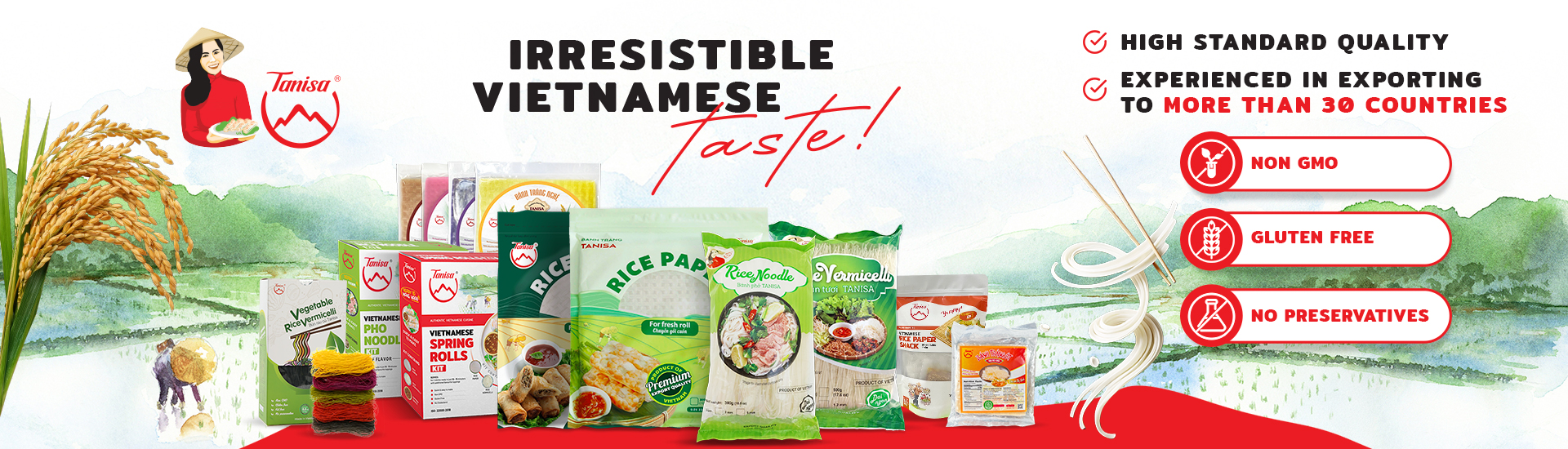
Tanisa Foods JSC specializes in manufacturing and exporting rice-based products such as:
- rice paper
- rice noodles
- pho noodles
- and rice vermicelli
Tanisa products are developed around modern food trends, including:
- no preservatives
- gluten-free
- non-GMO
- and plant-based lifestyles
The company also meets various international certifications and standards, including:
- FSSC 22000
- ISO 22000:2018
- FDA (United States)
- KFDA (Korea)
- and Halal certification
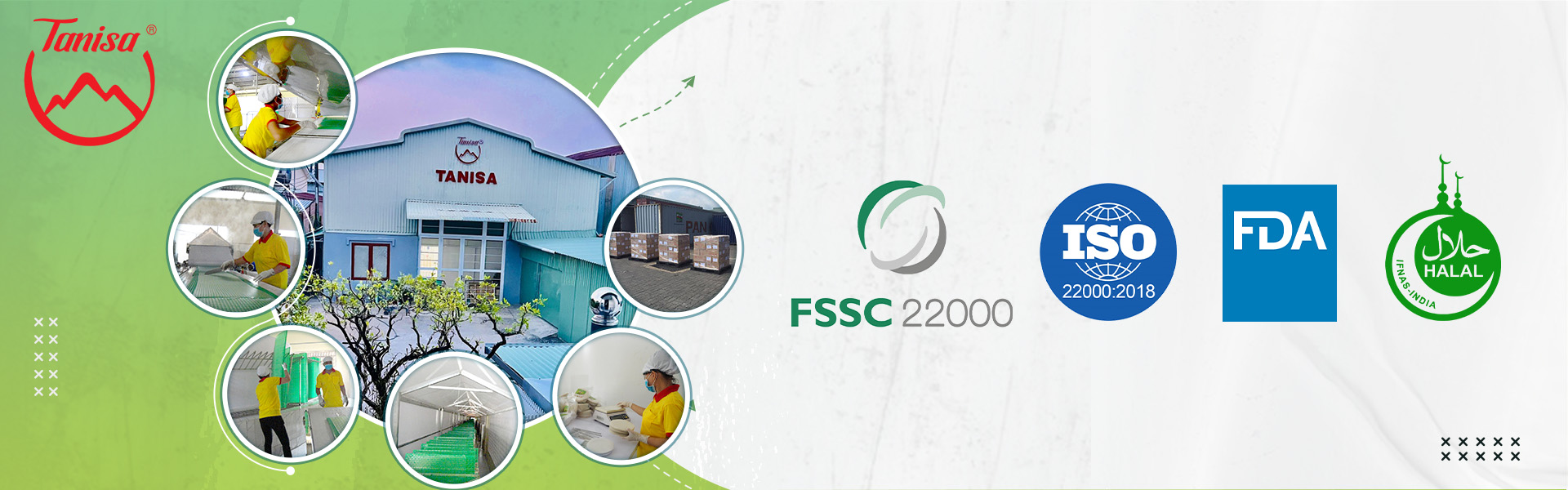
Today, Tanisa products are exported to more than 30 countries, serving retailers, distributors, and international food markets worldwide.
More importantly, Tanisa does not simply view rice paper as a traditional product.
The company sees it as a flexible food format that can continue adapting to the future of global eating habits.
Conclusion
Rice paper began from a very simple idea:
transforming rice into a more flexible and practical food.
But over time, it has grown far beyond the role of a traditional ingredient.
Today, rice paper is gradually becoming part of modern eating culture:
- lighter
- more flexible
- more personalized
- and more creative
And perhaps that is why a food shaped in Vietnamese villages hundreds of years ago…
is now slowly finding its place on dining tables around the world.
TANISA FOODS JSC, a strong brand in the market for the production and distribution of specialty products (rice paper, rice noodles...) and spices (seasoning) which exported to some countries such as USA, France, South Korea, Japan, Russia, Brunei...
TANISA FOODS JSC
Factory add 1: 188 Lac Long Quan Street, Quarter 3, Tan Ninh Ward, Tay Ninh Province, Vietnam
Factory add 2: Phu Hoa Dong, Cu Chi, Ho Chi Minh City, Viet Nam
Office in HCMC: 18th Floor, Vincom Building, 72 Le Thanh Ton Street, District 1, Ho Chi Minh City, Vietnam
Warehouse in HCMC: 2/3 Binh Gia, Tan Binh District, Ho Chi Minh City, Vietnam
Hotline: +84 938 118 699 (WhatsApp/WeChat), +84 938 198 299 (Zalo)




Email: marketing@tanisagroup.com
Website: www.tanisagroup.com
Facebook: Tanisa Foods JSC
Instagram: @tanisa_foods
Youtube: Tanisa Kitchen

Xem thêm