


Key Criteria for Choosing a Rice Paper Manufacturer for Export: 9 Factors Importers Should Evaluate
In recent years, Vietnamese rice paper has become increasingly popular in international markets. Dishes such as spring rolls, fresh rolls, and many fusion recipes have helped rice paper become a familiar ingredient in Asian restaurants, retail chains, and food processing industries across many countries.
Along with the globalization of cuisine, demand for rice-based products such as rice paper, rice noodles, and rice vermicelli has grown rapidly. This trend has opened up significant opportunities for food importers and distributors around the world.
However, for importers and distributors, finding a reliable rice paper manufacturer for export is not always easy.
An unsuitable supplier can lead to a variety of risks, such as:
- inconsistent product quality
- labeling that does not meet market regulations
- lack of food safety certifications
- delayed shipments or insufficient production capacity
In international food trade, selecting a supplier is not just about price. More importantly, it is about building a stable and long-term supply chain.
This article helps businesses understand the key criteria for selecting a rice paper manufacturer for export, allowing importers to reduce risks and identify suitable partners for long-term cooperation.
Why Choosing the Right Rice Paper Manufacturer for Export Matters
Rice Paper Is a Simple Product, but the Supply Chain Is Complex
At first glance, rice paper may appear to be a simple product. Its ingredients typically include only:
- rice flour
- salt
However, when rice paper is exported to markets such as the United States, Europe, South Korea, or Japan, it must comply with a wide range of regulatory requirements related to:
- food safety
- product labeling
- traceability
- packaging standards
Even a small issue in any of these areas can cause a shipment to be held at the port or require documentation revisions before it can be cleared.
For this reason, the supply chain behind rice paper exports is often more complex than it initially appears.
Choosing the Wrong Supplier Can Create Hidden Costs
In international trade, costs are not limited to the price of the product itself.
If a supplier lacks professionalism or experience, importers may face a number of operational problems, including:
- delayed container shipments
- product breakage during transportation
- inconsistent quality between production batches
- missing export documentation
These issues not only increase operational costs but can also damage the importer’s reputation with customers and distribution partners.
Therefore, selecting the right manufacturer from the beginning plays a critical role in building a reliable and sustainable supply chain.
9 Key Criteria When Choosing a Rice Paper Manufacturer for Export
Below are several important factors that importers and distributors typically evaluate when searching for a rice paper manufacturer or rice paper supplier in Vietnam.

1. Export Experience and Logistics Capability
One of the first factors to consider when selecting a rice paper manufacturer for export is the company’s real export experience.
Importers should begin by asking several fundamental questions:
- Has the factory exported products before?
- Which markets has the company supplied?
- Does the manufacturer have experience working with markets that have strict regulatory standards?
In many cases, the export markets of a factory can partially reflect its quality management capabilities and its ability to meet international standards.
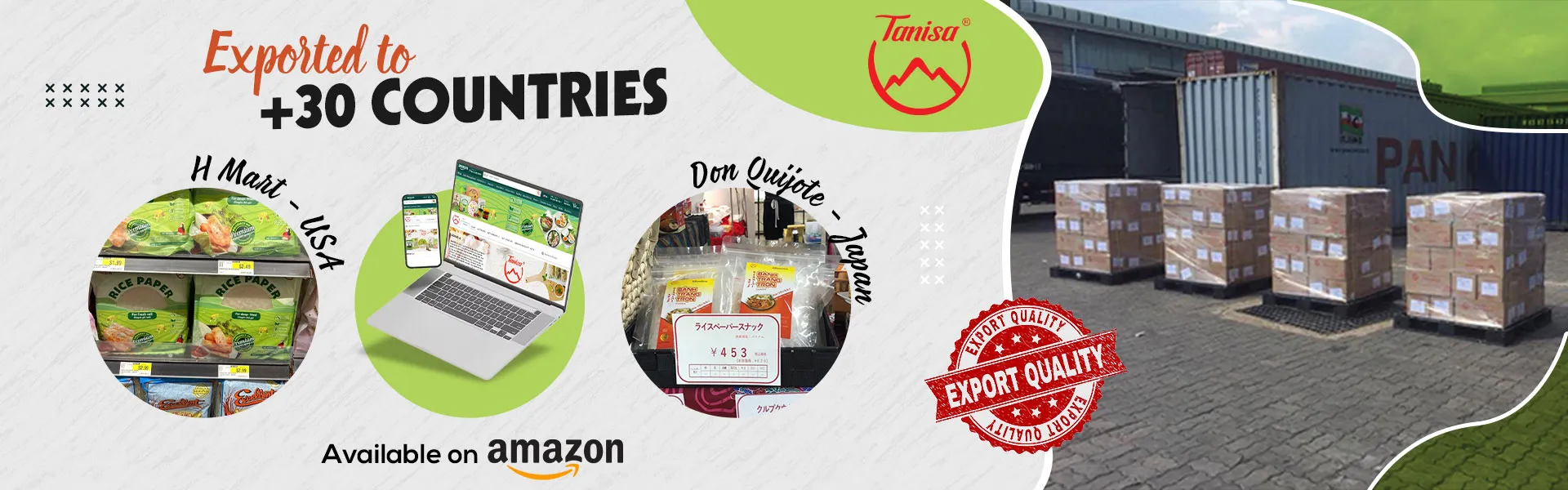
For example, if a manufacturer has successfully exported rice paper to markets with strict requirements such as Japan or the United States, it often indicates that the company is familiar with rigorous quality control standards and professional export procedures.
A manufacturer with strong export experience can make the trading process much smoother, especially in areas related to logistics coordination and international documentation.
Important factors to evaluate include:
- experience exporting to international markets
- ability to prepare export documentation accurately
- understanding of international trade terms (Incoterms)
- capability to coordinate container shipping and international logistics
In food export operations, common documents typically include:
- Commercial Invoice
- Packing List
- Bill of Lading
- Certificate of Origin (CO)
- Health Certificate
If a supplier is experienced with export procedures, they can assist buyers in preparing documentation efficiently, reducing errors and minimizing risks during international shipping.
This is particularly important for importers that are building a stable and long-term supply chain.
2. Food Safety Certifications
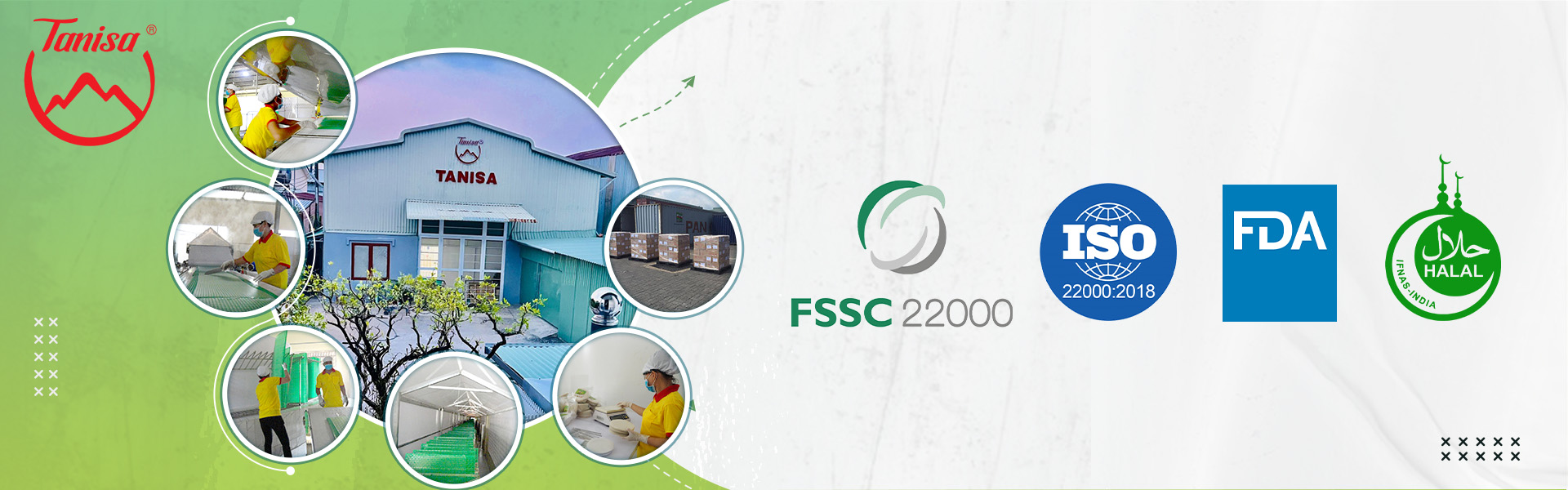
When evaluating a rice paper manufacturer for export, importers should carefully examine the certifications held by the factory and confirm whether the company is a genuine manufacturing facility.
In the food industry, food safety certification systems are among the most important indicators of a factory’s professionalism.
A professional export-oriented manufacturer typically holds international certifications such as:
- FSSC 22000
- ISO 22000
- HACCP
- FDA Registration (for the United States market)
- Halal Certification (for Muslim markets)
These certifications indicate that the factory has implemented internationally recognized food safety management systems that control everything from raw materials and production processes to finished product quality.
For example, in the United States market, many importers require suppliers to have FDA registration to ensure that products can be cleared smoothly through U.S. customs.
If a manufacturer does not possess the necessary certifications, importers may face several potential risks, including:
- difficulties during customs clearance
- legal risks related to food safety compliance
- reduced product credibility in the target market
Therefore, verifying the certification system of a factory is an essential step in selecting a trustworthy supplier that meets the standards of the target market.
3. Production Capacity and Scalability
In addition to certifications and export experience, importers should also evaluate the actual production capacity of the manufacturing facility.
One of the key questions to ask is how much the factory can produce per day or per month.
For food distributors—especially large retail chains or major distributors—ensuring a stable supply is extremely important.
Key factors to consider when assessing production capacity include:
- the factory’s production output (for example, daily or monthly capacity)
- average lead time for an order
- the ability to produce according to customer specifications
- the ability to increase production when market demand rises
Among these factors, lead time is particularly important.
Lead time refers to the period from order confirmation to the completion of production and readiness for shipment.
If lead times are too long or inconsistent, importers may face difficulties managing inventory and distribution planning.
In addition, a professional export manufacturer should be able to prepare all necessary shipping documents for each order, such as:
- Commercial Invoice
- Certificate of Origin (CO)
- Bill of Lading (BL)
- Health Certificate
These documents are essential for customs clearance and international transportation.
In practice, some factories may perform well when handling small-scale production but encounter difficulties when order volumes increase significantly or when strict delivery schedules must be met.
For importers and distributors, selecting a manufacturer with stable production capacity and the ability to scale output when needed is a key factor in building a resilient supply chain.
4. Ability to Meet Import Market Regulations
Each market has its own regulations regarding imported food products.
For example:
United States market
- FDA registration
- labeling compliant with FDA standards
- compliance with FSMA regulations
European market
- clear traceability
- strict labeling requirements
- control of ingredients and food additives
A manufacturer with export experience will typically understand these requirements and be able to assist buyers in preparing appropriate documentation.
This support can help ensure that the import process runs smoothly and reduce the risk of encountering problems during customs clearance.
5. Consistency of Product Quality Across Batches
One of the most common challenges in food import operations is inconsistency between production batches.
For rice paper, several technical factors must be carefully controlled, including:
- thickness of the rice paper
- product moisture level
- flexibility when wrapping
- crispness when fried
- color and flavor consistency
For example, a restaurant specializing in fresh spring rolls may face operational difficulties if the rice paper from a new batch tears more easily than the previous one.
Inconsistent product quality can affect not only food preparation but also customer experience and brand reputation. Therefore, importers should evaluate whether a supplier has a reliable quality control system to ensure stable product performance across different production batches.
6. Product Customization for Different Markets
Different markets often require different product specifications.
A flexible manufacturer should be able to customize several aspects of the product, including:
- rice paper size
- shape (round or square)
- thickness
- packaging format
- private label branding
For instance, some retail chains in Europe prefer smaller packaging formats suitable for supermarket shelves.
On the other hand, foodservice distributors typically prefer larger packaging sizes in order to optimize costs and logistics efficiency.
A supplier that offers product customization allows importers to adapt their offerings more effectively to the preferences and requirements of their target markets.
7. Accurate Product Labeling and Nutritional Information
In international food trade, product labeling is not only a marketing tool but also a legal requirement in many markets.
A professional manufacturer should be able to support buyers in preparing complete and accurate label information, including:
- ingredient lists
- nutrition facts tables
- allergen declarations
- gluten-free or non-GMO claims (when applicable)
- barcode and packaging information
For example, if a company imports rice paper into the United States, the product label must comply with the FDA Nutrition Facts Label requirements.
Meanwhile, in the European market, product labels must clearly display information such as:
- ingredients
- country of origin
- nutritional values
- expiration or best-before date
If a supplier is unfamiliar with these regulatory requirements, importers may have to revise product labels multiple times, resulting in additional costs and delays in bringing products to market.
8. Transparency and Professional Working Style
In B2B relationships, the way a supplier communicates and operates can be just as important as the product itself.
A reliable supplier often demonstrates professionalism through behaviors such as:
- responding to emails quickly and clearly
- providing transparent quotations
- supplying complete product documentation
- being willing to send product samples for evaluation
For example, a professional supplier can typically provide supporting materials such as:
- product specifications
- product catalogues
- factory images
- quality certifications
These documents allow buyers to assess a supplier’s capabilities more efficiently and build trust early in the business relationship.
9. Ability to Develop Long-Term Partnerships
In international trade, relationships between buyers and suppliers often last for many years.
For this reason, beyond technical and operational factors, companies should also evaluate the supplier’s ability to support long-term collaboration.
A strong manufacturer does not simply sell products. They can also support buyers in areas such as:
- new product development
- packaging customization
- expanding product portfolios
- providing market insights or marketing support
For example, many importers initially start by purchasing rice paper but later expand their product range to include other rice-based products such as:
- rice vermicelli
- rice noodles
- meal kits
If a supplier has a diverse product portfolio and the capability to develop new products, expanding the business relationship can become significantly easier.
Common Mistakes When Choosing a Rice Paper Manufacturer for Export
Even experienced importers can make mistakes when selecting a new supplier.
Understanding these common pitfalls can help businesses avoid costly problems in the future.
Focusing Only on Price
Price is an important factor, but it should not be the only criterion.
A supplier offering a lower price but inconsistent quality can ultimately cause greater losses compared with choosing a slightly higher-priced supplier that provides reliable products and services.
Not Verifying Actual Production Capacity
Some suppliers may provide excellent product samples but lack the ability to produce at large scale.
This can lead to several issues, including:
- inconsistent product quality
- delayed deliveries
- insufficient production capacity
For importers working with large distributors or retail chains, such problems can disrupt the entire supply chain.
Ignoring Export Experience
Suppliers without export experience may struggle with preparing documents and managing logistics.
As a result, importers may encounter issues such as:
- incomplete documentation
- containers being held at ports
- shipment delays
Working with an experienced exporter can significantly reduce these risks.
Not Evaluating the Quality Control System
A professional export-oriented factory should have a clear quality control system covering the entire production process, from raw materials to finished products.
Without such a system, the risk of quality problems increases significantly.
Checklist: Questions Importers Should Ask Before Buying Rice Paper
Before signing a contract with a rice paper manufacturer for export, importers should ask several key questions to evaluate the supplier’s capabilities.
For example:
- What food safety certifications does the factory have?
- Which markets has the supplier previously exported to?
- What is the factory’s monthly production capacity?
- What is the average lead time for an order?
- Does the supplier support private label or OEM production?
- Can the supplier provide product samples and product specifications?
- Does the supplier support packaging design for the target market?
These questions can help businesses better understand the supplier’s production capacity, export experience, and level of professionalism.
Tanisa – A Trusted Rice Paper Manufacturer from Vietnam
As global demand for rice-based products continues to grow, selecting a manufacturer with export experience and internationally recognized production standards becomes increasingly important for food importers.
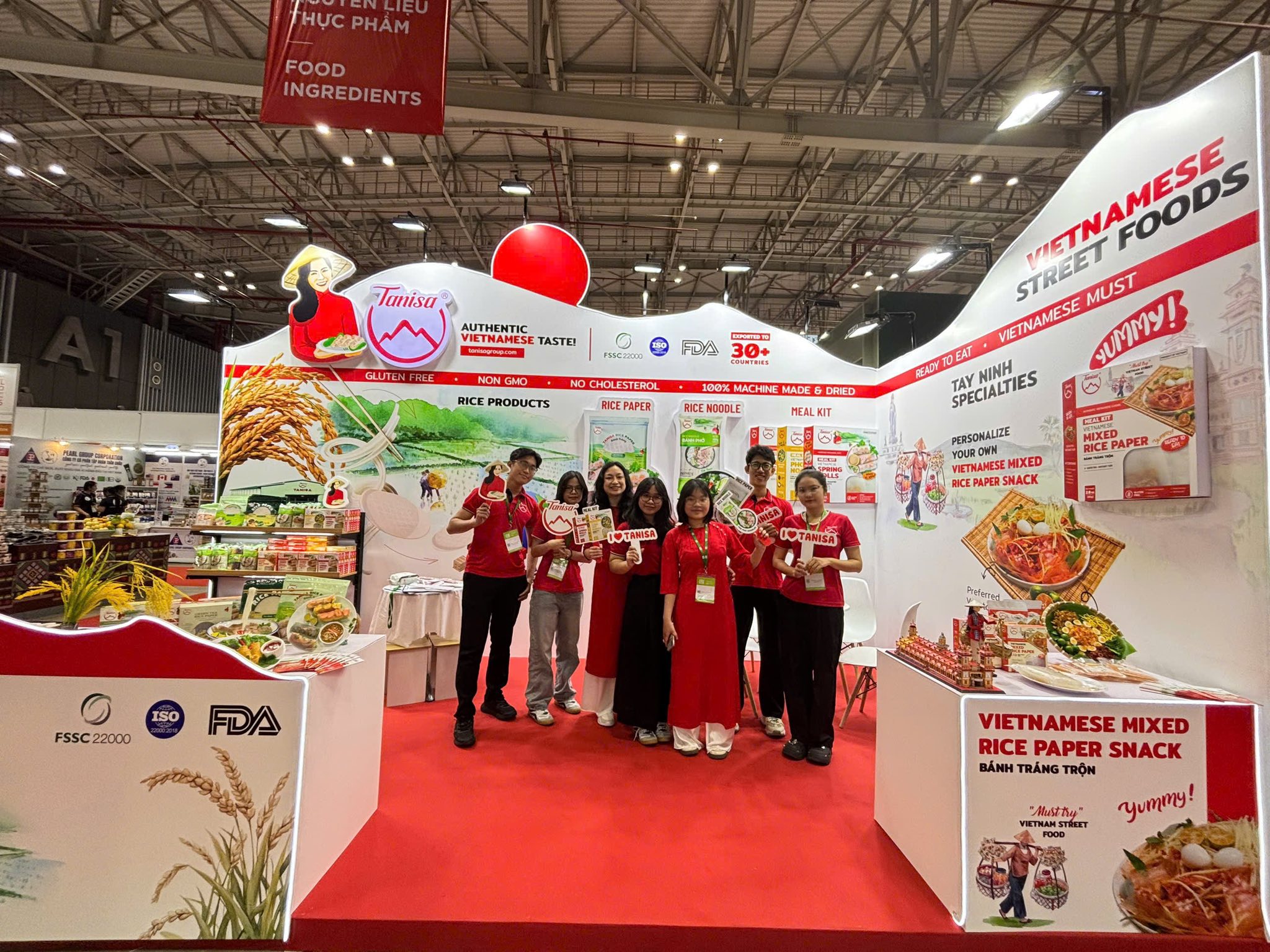
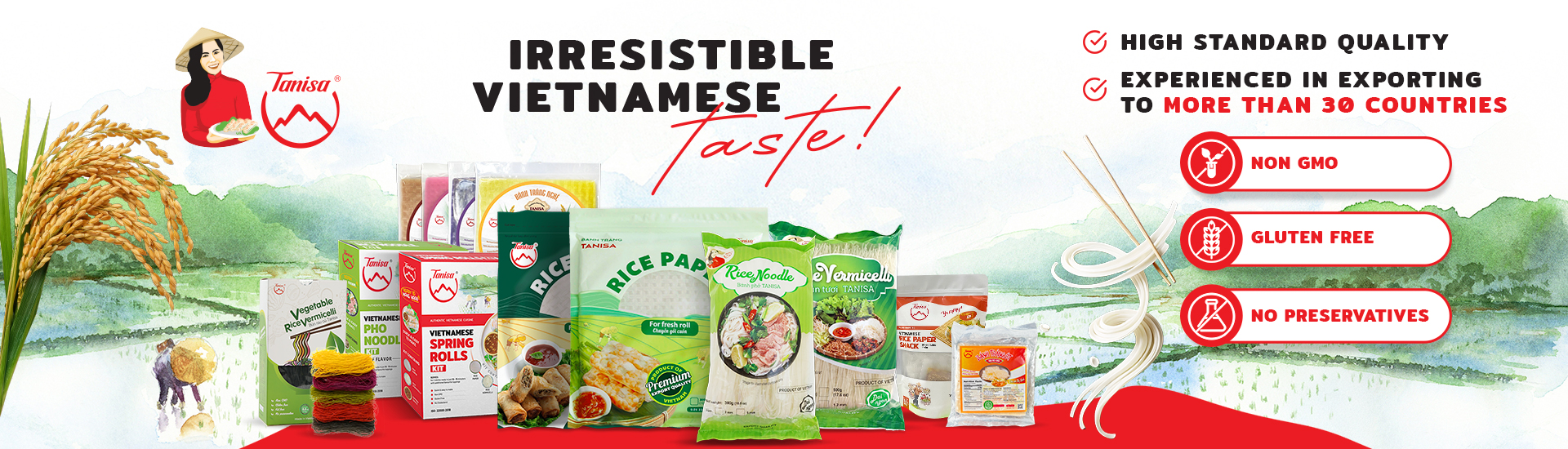
Tanisa Foods is one of the Vietnamese manufacturers specializing in rice paper and rice-based food products, currently supplying products to more than 30 countries worldwide.
With a commitment to international quality standards, Tanisa has invested in modern production systems and implemented globally recognized food safety management certifications, including:
- FSSC 22000
- ISO 22000:2018
- FDA registration (United States)
- KFDA registration (South Korea)
- Halal certification
Tanisa’s products are made from high-quality rice ingredients and follow strict production standards with key characteristics such as:
- no preservatives
- gluten-free
- non-GMO
These attributes align with the growing global demand for healthier and plant-based food products.
Today, Tanisa exports its products to more than 30 countries, supplying food distributors, retail chains, and businesses in the international culinary industry.
The company’s product portfolio includes:
- rice paper
- rice vermicelli
- rice noodles
- meal kits
Tanisa also supports OEM and private label production tailored to specific markets, allowing partners to develop their own branded products for different regions.
With extensive manufacturing experience, internationally certified quality management systems, and a broad export network, Tanisa aims to become a reliable partner for businesses seeking a rice paper manufacturer from Vietnam.
TANISA FOODS JSC, a strong brand in the market for the production and distribution of specialty products (rice paper, rice noodles...) and spices (seasoning) which exported to some countries such as USA, France, South Korea, Japan, Russia, Brunei...
TANISA FOODS JSC
Factory add 1: 188 Lac Long Quan Street, Quarter 3, Tan Ninh Ward, Tay Ninh Province, Vietnam
Factory add 2: Phu Hoa Dong, Cu Chi, Ho Chi Minh City, Viet Nam
Office in HCMC: 18th Floor, Vincom Building, 72 Le Thanh Ton Street, District 1, Ho Chi Minh City, Vietnam
Warehouse in HCMC: 2/3 Binh Gia, Tan Binh District, Ho Chi Minh City, Vietnam
Hotline: +84 938 118 699 (WhatsApp/WeChat), +84 938 198 299 (Zalo)




Email: marketing@tanisagroup.com
Website: www.tanisagroup.com
Facebook: Tanisa Foods JSC
Instagram: @tanisa_foods
Youtube: Tanisa Kitchen

Xem thêm