


Gluten-Free Rice Paper Manufacturer: A Buyer's Guide
Not all rice paper is truly gluten-free. See how a certified gluten-free rice paper manufacturer controls sourcing, cross-contact, and lab testing.
Rice paper is made from rice flour, tapioca starch, water, and salt, so in theory it should always be gluten-free. In practice, that is not quite the case. Some manufacturers mix in wheat starch to cut costs or add chewiness, and others produce gluten-free rice paper on the same line as gluten-containing products without separating the two. For an importer building a gluten-free product line, the real question is not whether rice paper can be gluten-free, but whether the specific manufacturer behind your shipment actually keeps it that way.
Is All Rice Paper on the Market Really Gluten-Free?
Traditional rice paper is made from just four ingredients: rice flour, tapioca starch, water, and salt. None of them contain wheat, barley, or rye, the three grains that carry gluten. That is why rice paper is seen as a naturally gluten-free wrap, often mentioned alongside gluten-free tortilla alternatives.
That reputation does not always match the actual product on the shelf. Two issues come up repeatedly when buyers look closely into a supplier's real process:
- Added wheat starch. Some lower-cost manufacturers mix in wheat starch because it is cheaper than tapioca starch and makes the sheet chewier. The finished product still looks and behaves like regular rice paper, but it no longer meets the gluten-free standard.
- Cross-contact at the factory. Even if the recipe is 100% rice and tapioca, rice paper can still pick up gluten if it is dried, packed, or stored in the same area as wheat-based noodles, wheat crackers, or other gluten-containing products made in the same plant.
For an importer placing a full container order under a gluten-free label, this is a risk that only comes to light after the shipment has already left.
What "Gluten-Free" Legally Means for a Manufacturer
In the United States, this is not just a marketing term. Under FDA rule 21 CFR 101.91, a food can only be labeled "gluten-free" if it contains fewer than 20 parts per million (ppm) of gluten, the lowest level current testing methods can reliably detect. The rule took official effect in 2013 and remains the standard in force today. It applies to the finished product on the shelf, not to the recipe written on a spec sheet.
How a Gluten-Free Rice Paper Manufacturer Actually Controls Cross-Contact
Certification is the end result. The process behind it is what buyers need to ask about directly, because a number on a certificate does not explain whether it is maintained consistently batch after batch. The three practical questions below help tell apart a manufacturer that treats gluten-free as a process from one that treats it as just a label:
- Is gluten-free rice paper made on a dedicated line, or on a shared line with controlled cleaning procedures between runs? A dedicated line removes the cross-contact risk entirely. A shared line can still work well, but only with documented cleaning and testing procedures between product changeovers.
- Can the factory trace its rice flour and tapioca starch back to a specific supplier and batch? Traceability is what allows a manufacturer to recall exactly one lot, instead of an entire month of production, if a problem is found later.
- How often is the finished product tested, and can the factory provide a certificate of analysis (COA) for the exact batch an order ships from? A COA tied to a specific lot number is worth far more.
None of this comes automatically. Buyers have to actively ask for it, and verify it through real documentation, not just a verbal assurance on a sales call.
Why Demand for Gluten-Free Rice Paper Is Rising Among Importers and Private-Label Brands
The gluten-free food industry is no longer a small niche segment. Market research firms estimate the global gluten-free food market in 2026 at somewhere between 9 and 12 billion USD, growing roughly 9 to 10 percent a year, with North America accounting for more than half of that demand. The exact figure varies depending on which research firm is cited, but the overall trend is consistent across sources: this segment continues to grow faster than the packaged food industry as a whole.
Rice paper holds a fairly unique position within this trend. Unlike gluten-free bread or noodles, it does not need a long list of starches and binding agents to replace the structure gluten usually provides, because it was never built around gluten in the first place. That is part of why retail chains and foodservice distributors looking to add a gluten-free wrap to their private-label lineup are increasingly turning to rice paper manufacturers, rather than reformulating a wheat-based product.
Gluten-Free Rice Paper vs. Other Gluten-Free Wraps
Most gluten-free tortillas on the market are reformulated versions of the original recipe. Removing wheat flour means replacing the protein that holds the dough together, which usually calls for added xanthan gum, rice flour blends, or other binding agents to keep the wrap from falling apart when it is rolled or folded.
Rice paper does not face this problem in the same way. Its original recipe was never built around wheat, so a well-run factory does not need to "design around" the absence of gluten, only control for its unintended presence. For a brand building a gluten-free wrap line, that difference can mean a shorter ingredient list and fewer additives to explain on the label.
Frequently Asked Questions (FAQ)
Is rice paper naturally gluten-free? Yes, when it is made only from rice flour, tapioca starch, water, and salt. The risk lies in added wheat starch or cross-contact during production, not in the original recipe.
Does all rice paper contain wheat? No. Traditional rice paper does not contain wheat. Some lower-cost versions add wheat starch to cut costs or change the texture, which is why checking the ingredient list and certification still matters.
Can gluten-free rice paper be used for private label or OEM products? Yes. Many manufacturers that produce certified gluten-free rice paper also support private label and OEM programs, including custom packaging and sizing for specific markets.
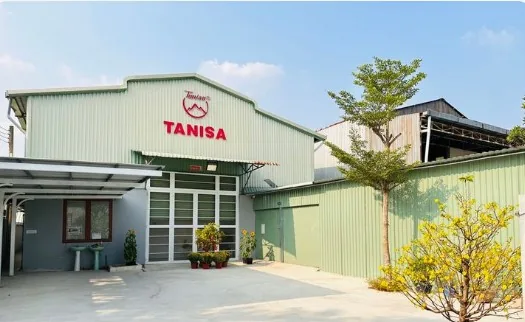
What kind of rice paper is Tanisa rice paper? Tanisa rice paper is gluten-free, produced at Tanisa's factory in Tay Ninh, Vietnam, a region well known for its rice paper tradition and the quality of its raw materials for making rice paper.
Tanisa: A Gluten-Free Rice Paper Manufacturer Built to Export Standards
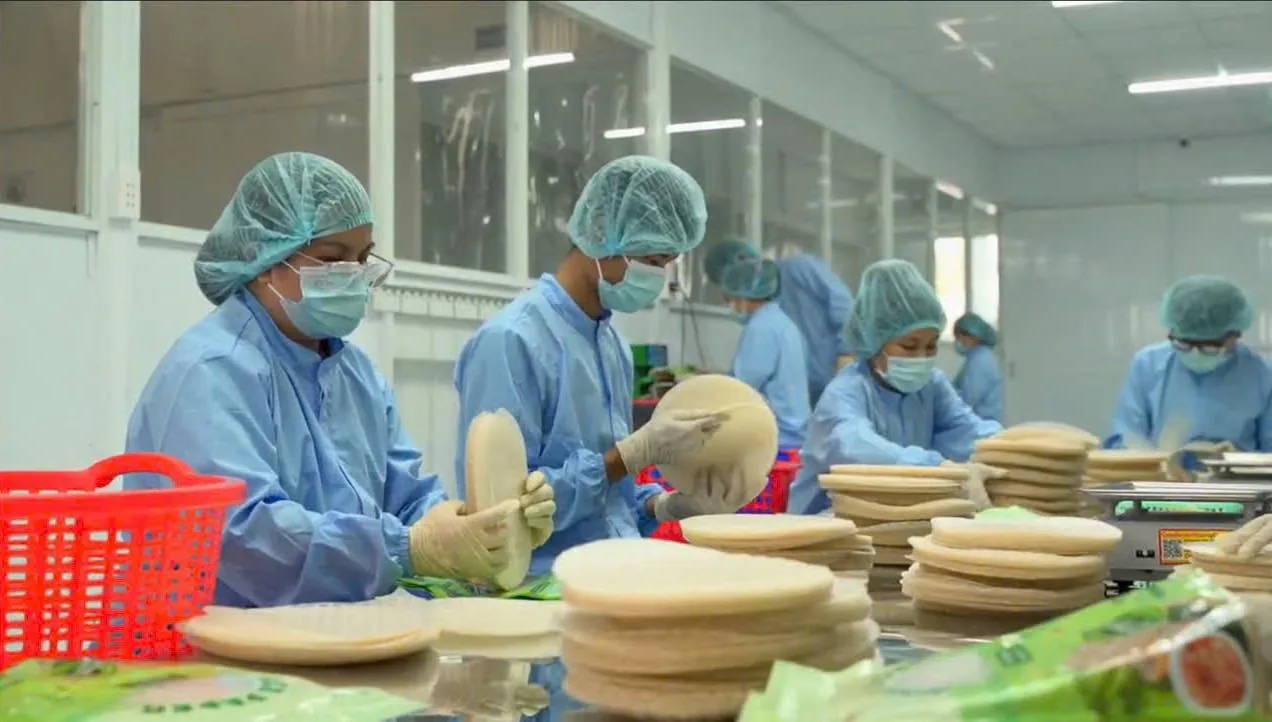
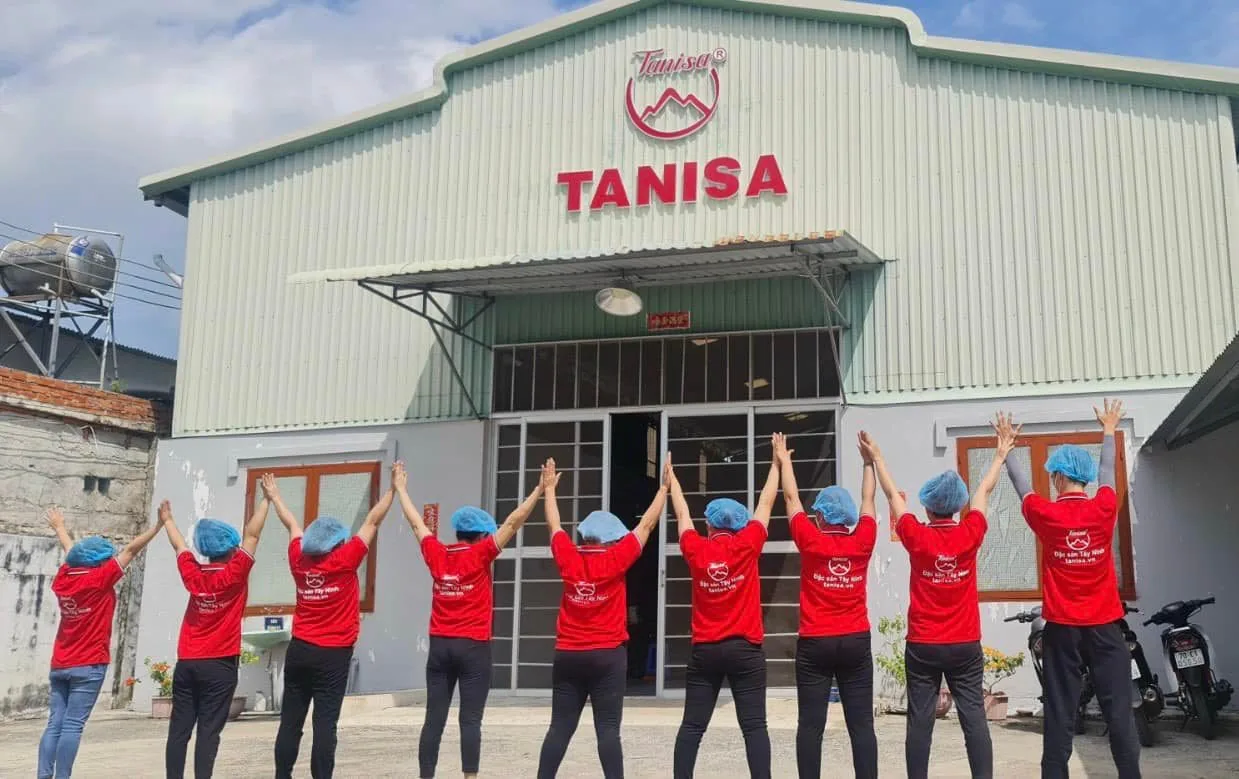
Tanisa is a leading rice paper manufacturer in Vietnam, producing rice paper that is gluten-free, non-GMO, and free of preservatives. The product is built around what the company calls a "chewy and tear-free" standard: sheets that are thin yet strong, reduce waste, roll easily, and stay flexible after soaking without cracking, even in recipes that call for an egg dip and a tight roll.
The factory holds FSSC 22000, ISO 22000, FDA, KFDA, and Halal certifications, and currently exports to more than 35 countries, including the United States, Japan, and South Korea. For importers and private-label brands evaluating a gluten-free rice paper manufacturer, Tanisa's certification base and export experience are worth a direct conversation.
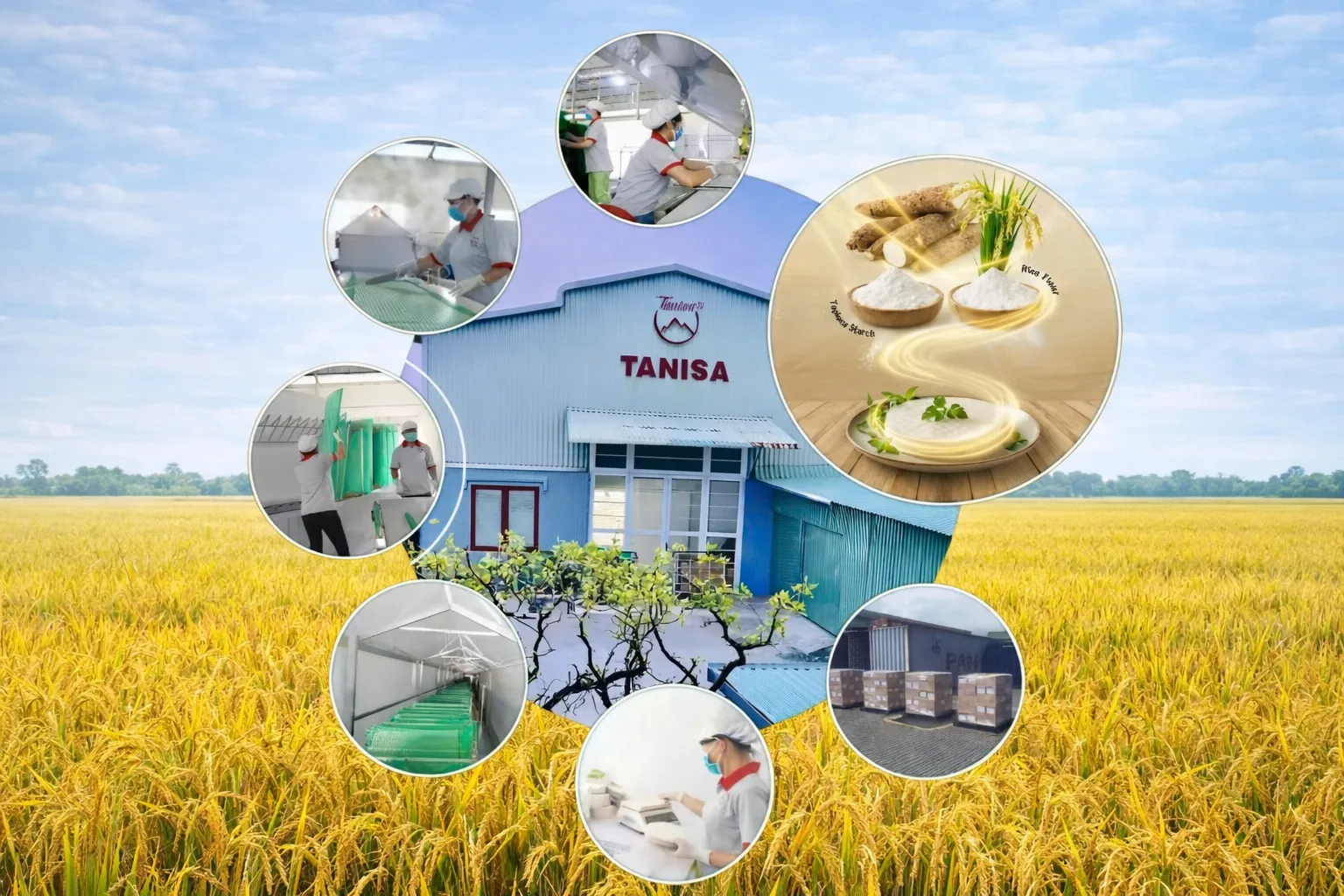
TANISA FOODS JSC, a strong brand in the market for the production and distribution of specialty products (rice paper, rice noodles...) and spices (seasoning) which exported to some countries such as USA, France, South Korea, Japan, Russia, Brunei...
TANISA FOODS JSC
Factory add 1: 188 Lac Long Quan Street, Quarter 3, Tan Ninh Ward, Tay Ninh Province, Vietnam
Factory add 2: Phu Hoa Dong, Cu Chi, Ho Chi Minh City, Viet Nam
Office in HCMC: 18th Floor, Vincom Building, 72 Le Thanh Ton Street, District 1, Ho Chi Minh City, Vietnam
Warehouse in HCMC: 2/3 Binh Gia, Tan Binh District, Ho Chi Minh City, Vietnam
Hotline: +84 938 118 699 (WhatsApp/WeChat), +84 938 198 299 (Zalo)



Email: marketing@tanisagroup.com
Website: www.tanisagroup.com
Facebook: Tanisa Foods JSC
Instagram: @tanisa_foods
Youtube: Tanisa Kitchen

Xem thêm