


Tanisa Pho Noodles: Exported to Taiwan
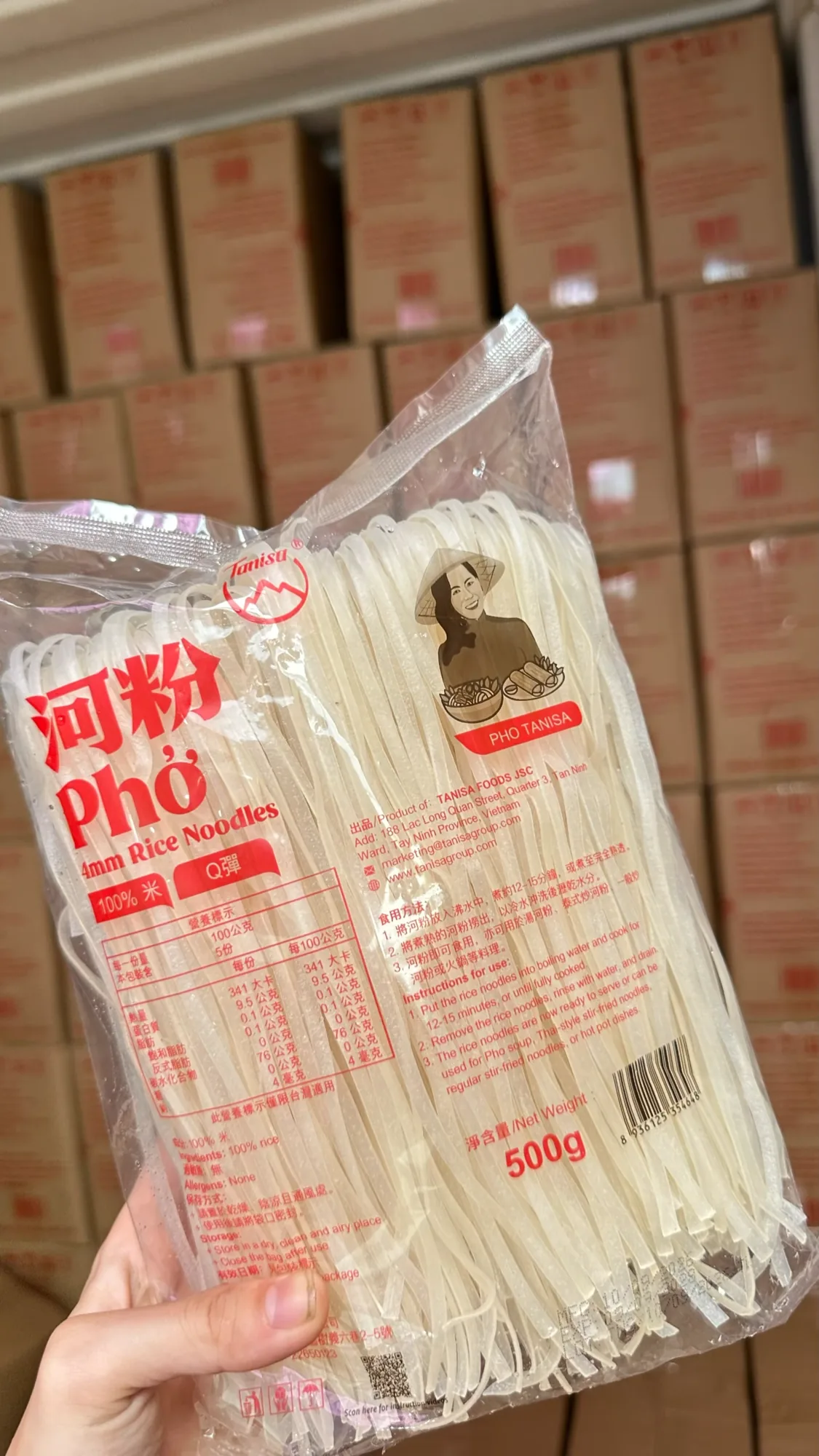
Tanisa Pho Noodles are dried rice noodles made from 100% Vietnamese rice, certified by FSSC 22000, FDA and KFDA, and exported to more than 35 countries.
This past October 20, a container of Tanisa's dried pho noodles left the factory in Vietnam, crossed the sea to Taiwan, and ended its journey in a hot bowl of pho in Taichung. The noodles inside were Tanisa Pho Noodles, made from 100% Vietnamese rice. What catches the attention of importers and restaurant kitchens has less to do with origin and more to do with three practical factors: consistent chewiness, even size, and a short cooking time.
This article explains what Pho Noodles are, how to cook them without turning them mushy, and why a Vietnamese restaurant chain in Taiwan chose to import this product.

What Makes Tanisa Pho Noodles Different From Regular Dried Noodles?
In the export market for dried pho and vermicelli, most products compete mainly on price. Tanisa Pho Noodles compete on three other points instead: a taste close to fresh pho noodles, chewiness that stays consistent from batch to batch, and a short cooking time suited to high-volume kitchens.
A Taste Close to Fresh Pho, Made From 100% Vietnamese Rice
The rice is grown in the Mekong Delta, one of Vietnam's high-quality rice-growing regions. The ingredient list contains rice alone, with no other flour blended in to cut costs. This is why the noodles keep a taste close to fresh banh pho once cooked.
Consistent Chewiness and Even Size Across Batches
For importers, the biggest risk is rarely poor quality in a single batch, but inconsistent quality between batches. Tanisa makes and dries its noodles by machine, under a controlled process rather than by hand, so size and chewiness vary less from one container to the next.
Quick Cooking, Suited to High-Volume Restaurant Kitchens
A shorter cooking time helps restaurants cut down customer wait time and reduces loss from overcooking, a common problem with lower-quality dried pho noodles.
From Rice Grain to Noodle: How Tanisa Pho Noodles Are Made
Rice Sourced From the Mekong Delta
The rice is sourced from the Mekong Delta, the region that supplies most of Vietnam's rice exports.
Machine-Dried for Food Safety and Consistency
The entire process of making and drying the noodles is done by machine, skipping the traditional sun-drying step. The product contains no preservatives and is non-GMO, making it suitable for vegan diets or anyone who needs gluten-free food.
Certified for International Export
The Tanisa factory holds FSSC 22000, ISO 22000:2018, FDA (USA), KFDA (Korea) and Halal certification. These are the credentials most importers in the US, Europe and Korea require before signing a long-term contract.
How to Cook Tanisa Pho Noodles the Right Way Without Turning Them Mushy
Boil Briefly, Don't Overcook
After soaking, boiling the noodles for just 3 minutes is enough. Boiling longer breaks down their chewiness and makes them fall apart once added to hot broth. A little cooking oil added to the boiling water keeps the strands from sticking together.
Common Mistakes When Cooking Dried Pho Noodles
The most common mistake is skipping the soaking step, or boiling too long on the assumption that dried noodles need more time than fresh ones. The opposite is true: once properly soaked, dried pho noodles only need a short boil.
Where Are Tanisa Pho Noodles Found Around the World?
The Story of a Container Bound for Taiwan
One concrete example: this past October 20, Tanisa's dried pho noodles were packed into a container at the factory in Vietnam, inspected and sealed before shipping to Taiwan. The destination was Yu Viet Cuisine, a Taiwanese-owned Vietnamese restaurant chain based in Taichung. There, chefs combine Tanisa noodles with broth and other ingredients to serve local diners.
Main Export Markets
Beyond Taiwan, Tanisa's rice-based products, including dried pho noodles, are exported to more than 30 countries, with the US, Europe, South Korea, Japan and Australia as the main markets. At THAIFEX-Anuga Asia 2026, one of Asia's major food trade shows, Tanisa showcased an expanded range of dried pho and rice noodles, a sign that the company continues to invest in this export line.
From Restaurant Kitchens to Retail Shelves
Tanisa's customers are not limited to restaurants. Part of its output is distributed through retail channels and B2B importers, serving the home-cooking needs of both people of Asian heritage and Western consumers who want to cook Vietnamese dishes.
Dried Pho, Vermicelli, or Rice Noodles: Which Should You Choose?
Telling Apart Banh Pho, Bun, and Pad Thai-Style Rice Noodles
Banh pho is a flat noodle made mainly from rice, used for pho. Bun is round and thinner, typically used for dishes like bun cha or bun bo. Pad Thai-style rice noodles are usually thicker than banh pho but thinner than Thai rice noodles. For importers and restaurants, matching the noodle to the dish matters more than matching it to the lowest price.
Frequently Asked Questions About Tanisa Pho Noodles
- What are Tanisa Pho Noodles made of? The product is made from rice grown in the Mekong Delta, with no texture-enhancing additives and no preservatives.
- Are Tanisa's dried pho noodles gluten-free? Yes. The product is gluten-free and non-GMO, suitable for vegan diets.
- Can restaurants or importers place bulk orders? Yes. Tanisa accepts orders ranging from small restaurants to large distributors.
The container that reached Taiwan is just one of many shipments Tanisa has exported over more than a decade. For restaurants or importers looking for a dried pho noodle supplier with consistent quality and export certification, Tanisa Pho Noodles is worth a closer look. Contact Tanisa for more details.
TANISA FOODS JSC, a strong brand in the market for the production and distribution of specialty products (rice paper, rice noodles...) and spices (seasoning) which exported to some countries such as USA, France, South Korea, Japan, Russia, Brunei...
TANISA FOODS JSC
Factory add 1: 188 Lac Long Quan Street, Quarter 3, Tan Ninh Ward, Tay Ninh Province, Vietnam
Factory add 2: Phu Hoa Dong, Cu Chi, Ho Chi Minh City, Viet Nam
Office in HCMC: 18th Floor, Vincom Building, 72 Le Thanh Ton Street, District 1, Ho Chi Minh City, Vietnam
Warehouse in HCMC: 2/3 Binh Gia, Tan Binh District, Ho Chi Minh City, Vietnam
Hotline: +84 938 118 699 (WhatsApp/WeChat), +84 938 198 299 (Zalo)




Email: marketing@tanisagroup.com
Website: www.tanisagroup.com
Facebook: Tanisa Foods JSC
Instagram: @tanisa_foods
Youtube: Tanisa Kitchen

Xem thêm