


Rice Noodles for Pho: What Restaurant Chains & Food Service Buyers Should Prioritize
For many customers, pho is all about the broth.
But in commercial food service operations, experienced restaurant owners understand something different:
👉 noodle quality often determines whether a pho experience feels premium or inconsistent.
In busy restaurant kitchens, rice noodles for pho must do much more than simply “taste good.”
They need to:
- maintain texture during service,
- work consistently across batches,
- perform well under pressure,
- and support operational efficiency.
This is why many restaurant chains, distributors, and food service buyers now pay much closer attention to selecting the right pho noodle supplier.
Why Pho Noodle Quality Directly Impacts Customer Experience
Pho is a texture-sensitive dish.
Customers immediately notice when noodles:
- become too soft,
- break apart,
- stick together,
- or lose elasticity in hot broth.
Even when broth quality is excellent, poor noodle performance can negatively affect the entire dining experience.
For restaurants operating at high volume, consistency becomes even more important because:
- multiple staff members handle preparation,
- cooking speed varies,
- and service pressure is constant.
As a result, noodles that work well in small-scale testing may fail during real restaurant operations.
Pho is a texture-sensitive dish.
What Restaurants Need From Pho Noodles
1. Cooking stability
In commercial kitchens, noodles must remain stable under repeated cooking cycles.
If noodles over-soften too quickly:
- serving quality decreases,
- food waste increases,
- and kitchen operations slow down.
This becomes especially problematic during peak service hours.
2. Texture retention in broth
Good pho noodles should maintain:
- smooth texture,
- moderate elasticity,
- and structural integrity inside hot broth.
Noodles that absorb broth too aggressively often become swollen and fragile after only a short time.
For restaurant chains, maintaining consistent texture is critical for customer satisfaction.
3. Consistency across batches
Many food service operators struggle with inconsistent noodle quality between shipments.
When noodle thickness or moisture levels change:
- cooking time changes,
- recipe standardization becomes difficult,
- and staff training becomes less effective.
This is one reason why professional buyers increasingly prefer working directly with experienced rice noodle manufacturers instead of sourcing through multiple trading channels.
In busy restaurant kitchens, rice noodles for pho must do much more than simply “taste good.”
Common Operational Problems Restaurants Face
Noodles breaking during preparation
This often happens when:
- noodle structure is too fragile,
- drying processes are inconsistent,
- or transportation conditions affect product stability.
Broken noodles reduce presentation quality and increase waste.
Over-softening during service
Some noodles perform well during initial preparation but lose texture rapidly during continuous service.
For busy pho restaurants, this creates:
- inconsistent bowls,
- slower kitchen speed,
- and customer complaints.
Uneven noodle thickness
When noodle thickness varies:
- cooking results become unpredictable,
- portion control becomes inconsistent,
- and operational efficiency decreases.
This is a major issue for restaurant chains attempting to standardize multiple locations.
Fresh vs Dried Pho Noodles for Commercial Kitchens
Fresh pho noodles
Advantages:
- softer texture,
- traditional mouthfeel,
- premium positioning.
Challenges:
- shorter shelf life,
- cold-chain logistics requirements,
- higher operational risk.
Fresh noodles are more suitable for:
- local restaurants,
- premium dining concepts,
- or regional distribution.
Dried pho noodles
Advantages:
- longer shelf life,
- easier international shipping,
- more stable inventory management.
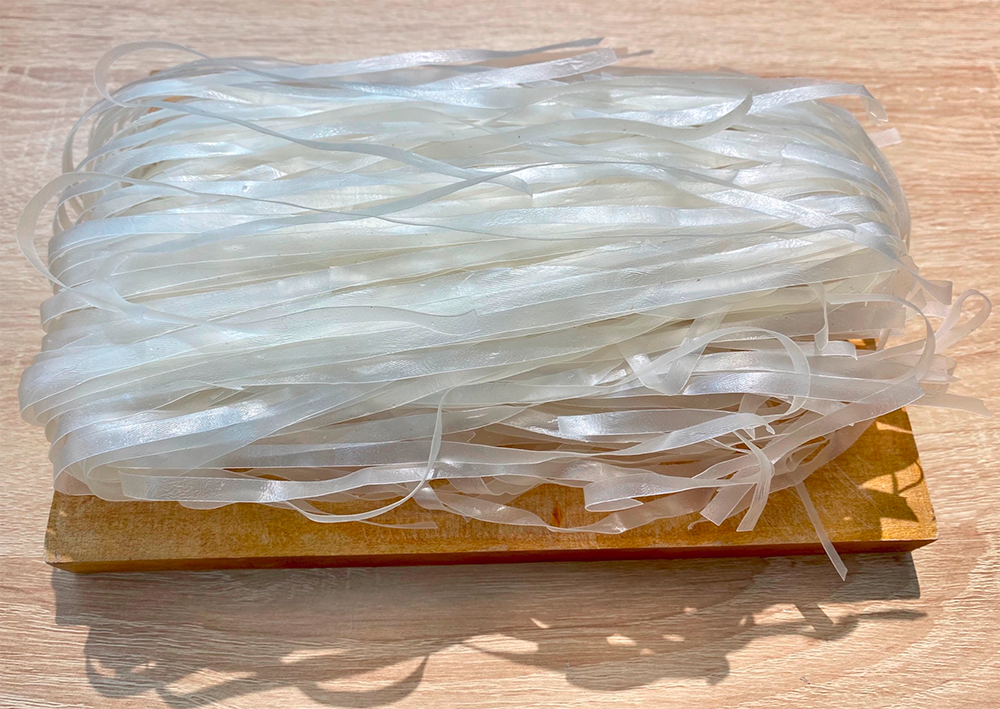
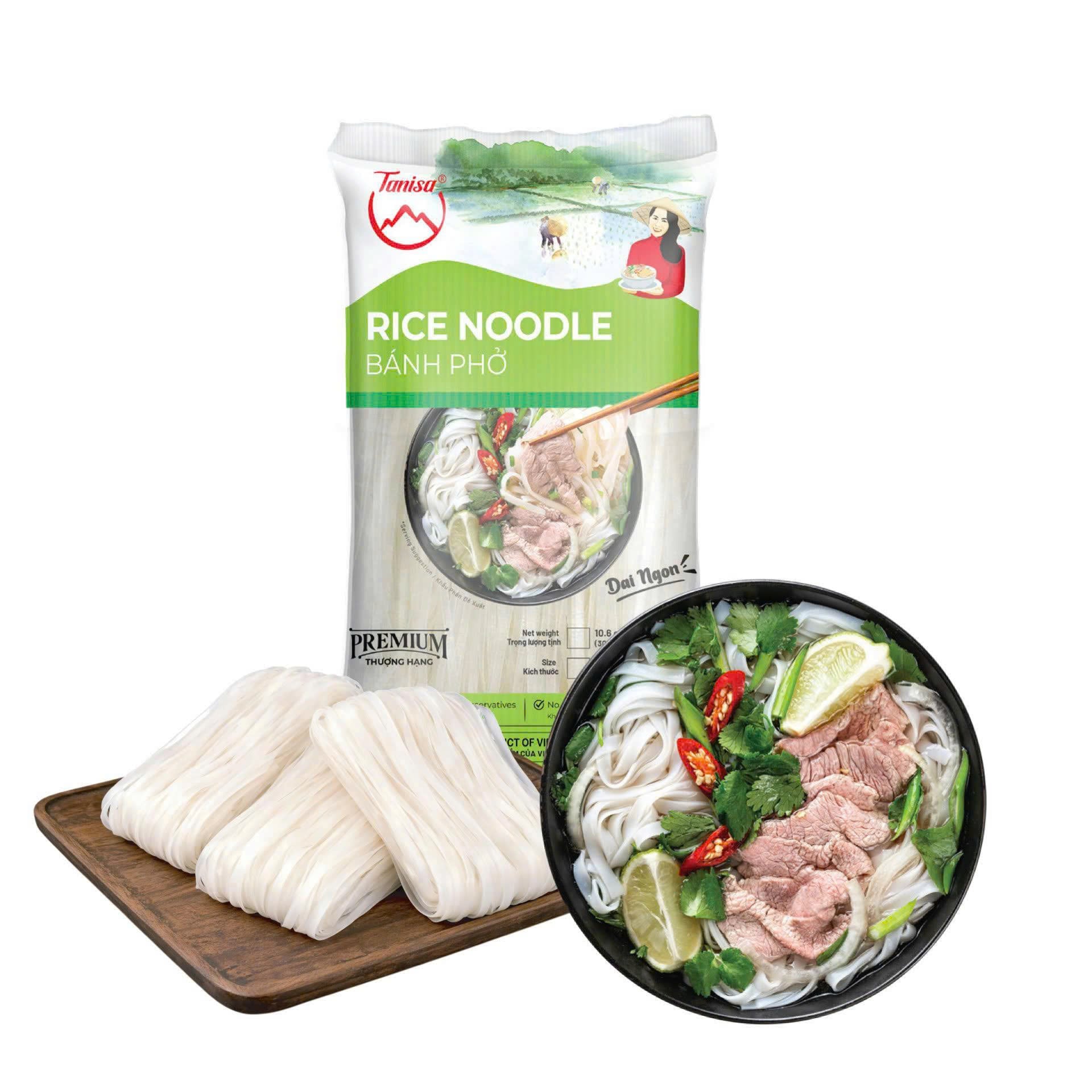
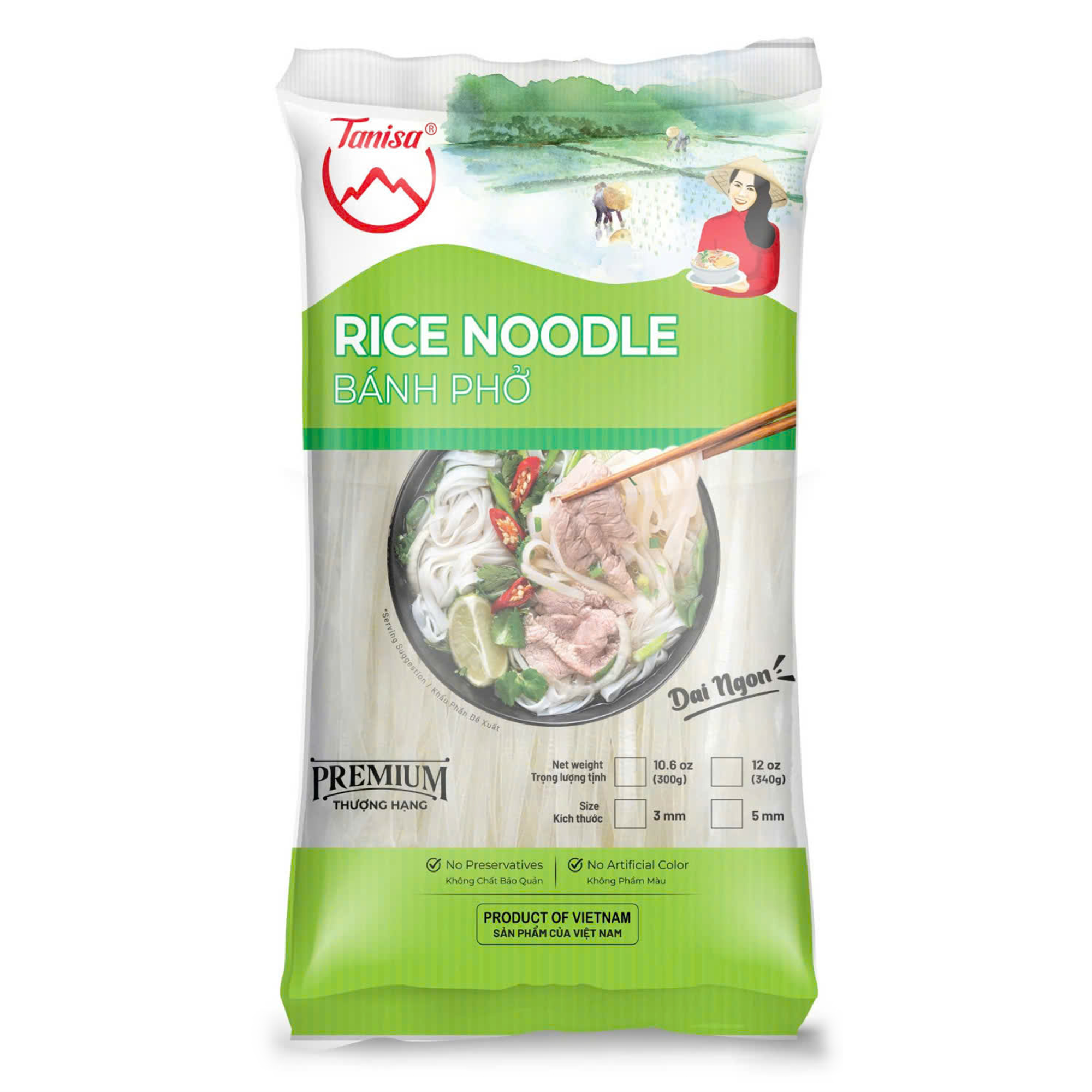
Today, many high-quality dried pho noodles can achieve texture performance close to fresh noodles when manufactured correctly.
This makes them highly suitable for:
- export markets,
- retail distribution,
- and scalable food service operations.
Today, many high-quality dried pho noodles can achieve texture performance close to fresh noodles when manufactured correctly.
How Distributors Evaluate Pho Noodle Suppliers
Professional buyers rarely evaluate noodles based only on price.
Instead, they focus on:
- cooking consistency,
- operational reliability,
- packaging performance,
- export standards,
- and supply stability.
Distributors also evaluate whether suppliers can support:
- OEM packaging,
- private label programs,
- and large-scale production growth.
This is especially important for restaurant groups and food service chains expanding internationally.
Packaging & Logistics Considerations
Pho noodles must withstand:
- long-distance transportation,
- warehouse storage,
- humidity changes,
- and repeated handling.
Weak packaging often causes:
- breakage,
- moisture exposure,
- and product deformation.
Reliable suppliers invest heavily in:
- moisture control,
- export-grade packaging,
- and logistics optimization.
Why Vietnamese Manufacturers Are Preferred for Pho Noodles
Vietnam remains one of the strongest sourcing destinations for pho noodles because of:
- deep expertise in rice noodle production,
- strong rice raw material supply,
- export-focused manufacturing systems,
- and competitive production costs.
Many global buyers now source directly from rice noodle factory Vietnam partners to improve:
- quality consistency,
- operational reliability,
- and long-term supply chain stability.
In addition, Vietnamese manufacturers increasingly support:
- OEM production,
- custom specifications,
- and private label development.
How Tanisa Supports Food Service Buyers
Tanisa Foods JSC supports a wide range of international partners including:
- importers,
- restaurant chains,
- foodservice distributors,
- supermarket systems,
- and private label food brands.
With experience exporting to more than 30 countries and regions, Tanisa understands the operational requirements of global food service supply chains, where:
- product consistency,
- stable lead times,
- and reliable logistics are critical for long-term business performance.
The company focuses on:
- export-standard manufacturing,
- scalable production systems,
- and flexible packaging solutions for different international markets.
All products are manufactured using modern machine-made and drying systems to help ensure:
- stable texture and quality,
- batch-to-batch consistency,
- and reliable performance in food service environments.
Tanisa also holds international certifications including:
- FSSC 22000,
- ISO 22000:2018,
- FDA (USA),
- KFDA (Korea),
- and Halal certification,
supporting compliance with international food safety and retail requirements.
In addition, Tanisa products align with modern market trends through features such as:
- Gluten Free,
- Non-GMO,
- No Preservatives,
- and Plant-Based positioning.
Beyond manufacturing capability, Tanisa also supports:
👉 private label and customized product solutions tailored to different market requirements, allowing partners to develop their own branded products for various food service and retail channels worldwide.
By understanding sourcing challenges in international food service operations, Tanisa helps buyers:
- reduce supply chain risk,
- improve product consistency,
- and build more stable long-term partnerships.
Conclusion
For pho restaurants and food service businesses, noodles are not just an ingredient.
They directly impact:
- operational efficiency,
- customer experience,
- product consistency,
- and brand reputation.
Choosing the right rice noodles for pho helps businesses:
- reduce operational problems,
- improve consistency,
- and build stronger customer trust over time.
Learn More
Contact Tanisa
If you are looking for:
- a pho noodle supplier,
- or a reliable Vietnamese export partner,
👉 contact Tanisa for tailored sourcing and food service solutions.
TANISA FOODS JSC, a strong brand in the market for the production and distribution of specialty products (rice paper, rice noodles...) and spices (seasoning) which exported to some countries such as USA, France, South Korea, Japan, Russia, Brunei...
TANISA FOODS JSC
Factory add 1: 188 Lac Long Quan Street, Quarter 3, Tan Ninh Ward, Tay Ninh Province, Vietnam
Factory add 2: Phu Hoa Dong, Cu Chi, Ho Chi Minh City, Viet Nam
Office in HCMC: 18th Floor, Vincom Building, 72 Le Thanh Ton Street, District 1, Ho Chi Minh City, Vietnam
Warehouse in HCMC: 2/3 Binh Gia, Tan Binh District, Ho Chi Minh City, Vietnam
Hotline: +84 938 118 699 (WhatsApp/WeChat), +84 938 198 299 (Zalo)




Email: marketing@tanisagroup.com
Website: www.tanisagroup.com
Facebook: Tanisa Foods JSC
Instagram: @tanisa_foods
Youtube: Tanisa Kitchen

Xem thêm