


Best Rice Noodles for Pho: How Professional Buyers Evaluate Quality & Consistency
In the food service industry, especially in Vietnamese cuisine, pho is one of the most globally recognized dishes.
However, experienced buyers understand a key insight:
👉 “best rice noodles for pho” is not about personal taste preference.
For:
- restaurant chains
- food service distributors
- importers
- private label brands
“best” means:
- operational stability,
- batch consistency,
- cooking performance at scale,
- and long-term supply reliability.
A noodle that tastes good in a small test may still fail in real commercial kitchen conditions.
Why “Best” Does Not Mean “Most Delicious”
In consumer perception, “best” often means:
- softer texture,
- better taste,
- preferred mouthfeel.
But in B2B food operations, “best” means something different.
A noodle is only considered “best” if it can:
- perform consistently under high-volume cooking,
- maintain texture during service time,
- and standardize results across multiple batches.
👉 In other words, performance matters more than perception.
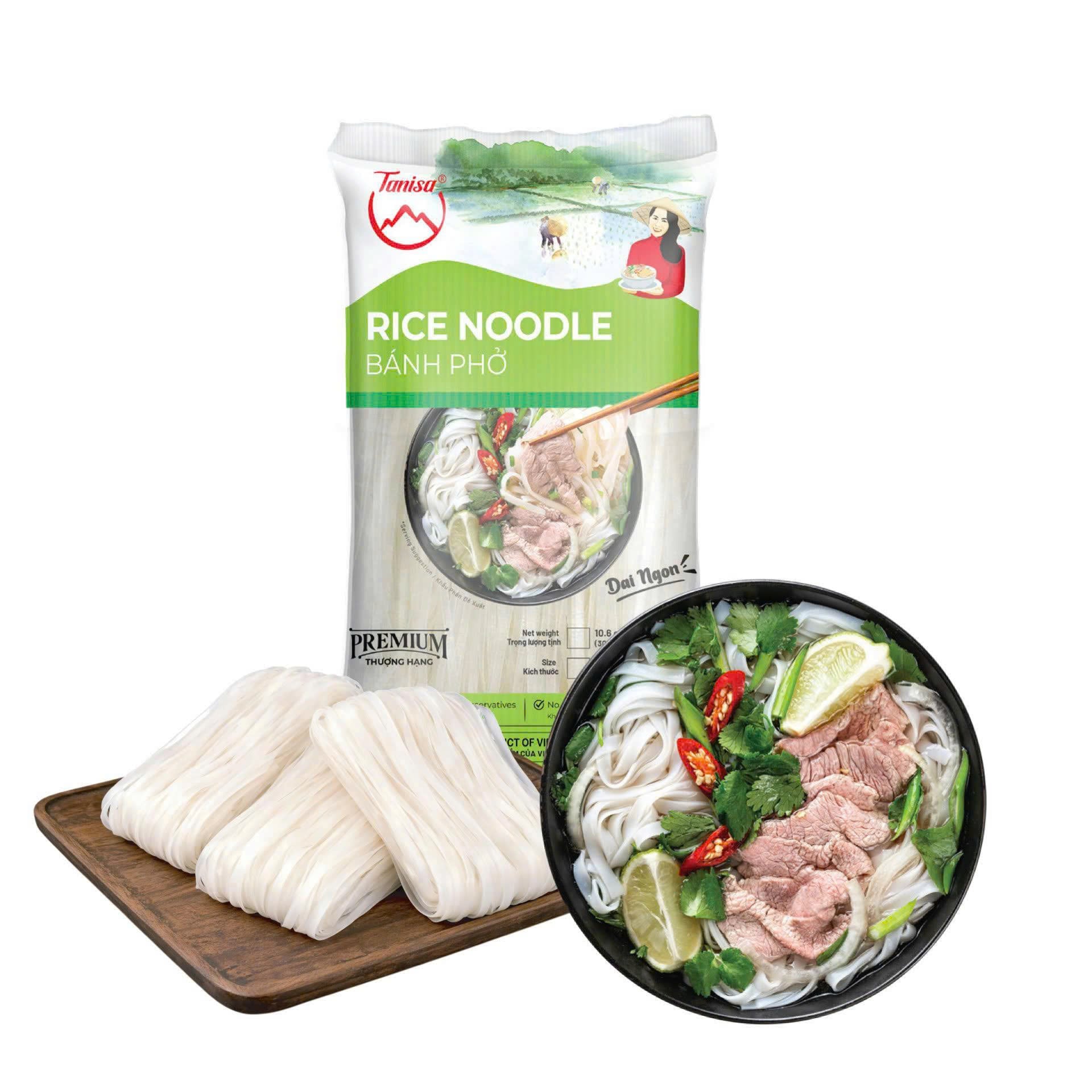
In the food service industry, especially in Vietnamese cuisine, pho is one of the most globally recognized dishes.
Key Criteria for Evaluating Pho Noodles in Commercial Use
1. Cooking performance
High-quality pho noodles must:
- cook evenly,
- avoid clumping,
- maintain structure under boiling conditions,
- support fast kitchen workflows.
In restaurant environments, inconsistent cooking performance leads to slower service and higher food waste.
2. Texture stability
Texture stability is the most important quality indicator.
Good pho noodles should:
- maintain elasticity after cooking,
- avoid becoming overly soft too quickly,
- retain structure in hot broth over time.
If texture breaks down too fast, customer experience becomes inconsistent.
3. Interaction with broth
Pho noodles are always served in broth, which creates a unique performance challenge.
A high-quality noodle must:
- absorb broth moderately,
- avoid excessive swelling,
- maintain structure without dissolving.
This directly affects the signature taste of pho in restaurants.
4. Batch consistency
For food service operators and importers, consistency is critical.
If each shipment differs:
- cooking time changes,
- kitchen staff must adjust procedures,
- and standardization becomes impossible.
This is why buyers prefer experienced rice noodle manufacturers with strict QC systems.
Low-Cost vs Premium Pho Noodles (Operational View)
Low-cost noodles
- inconsistent texture
- high breakage rate
- unstable cooking results
- unsuitable for chain restaurants
Premium commercial noodles
- stable cooking performance
- consistent texture across batches
- suitable for scaling operations
- optimized for food service environments
👉 The difference is not “taste quality” but “operational reliability”.
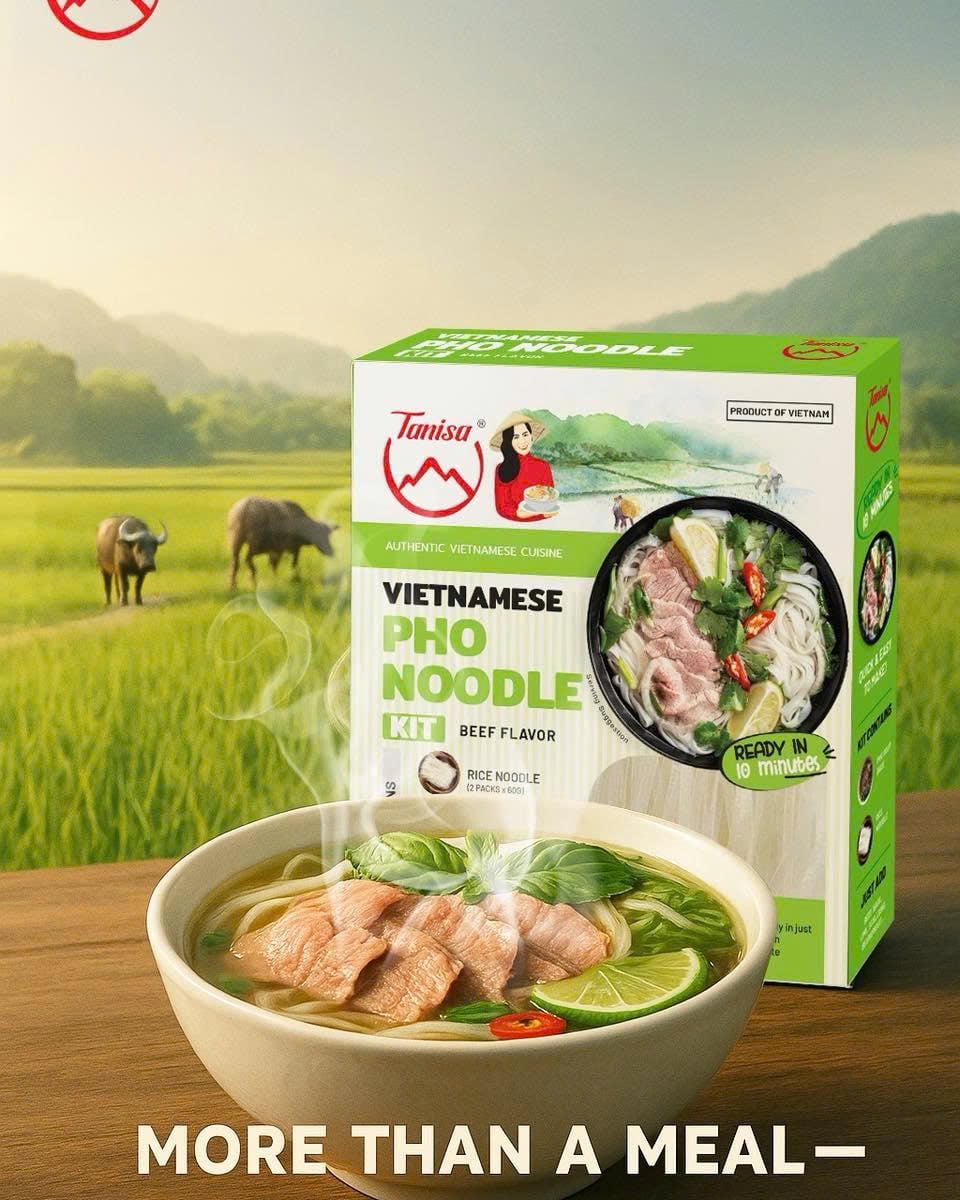
Best Rice Noodles for Pho
How Professional Buyers Test Pho Noodles
Before large-scale purchasing, importers and distributors typically run structured tests:
1. Cooking test
- multiple batches
- different cooking times
- boiling stability check
2. Holding test
- noodles left in broth for 10–30 minutes
- evaluation of texture degradation
3. Service simulation test
- high-volume kitchen conditions
- peak-hour service simulation
4. Logistics test
- packaging durability
- humidity resistance
- post-shipment quality check
Why Vietnam Is a Key Sourcing Market for Pho Noodles
Vietnam is one of the most established sourcing hubs for rice noodles due to:
- strong rice supply chain,
- long manufacturing expertise,
- competitive production cost,
- export-oriented factories.
Today, many global buyers prefer sourcing directly from Vietnam rice noodle factories to:
- improve supply stability,
- reduce sourcing risk,
- and ensure long-term scalability.
Application of Pho Noodles in Modern Food Business
Pho noodles are no longer limited to traditional restaurants.
They are widely used in:
- restaurant chains
- ready-to-eat meals
- frozen food systems
- meal kit products
- retail Asian food brands
This expansion increases demand for:
👉 export-grade consistency + packaging durability + OEM flexibility
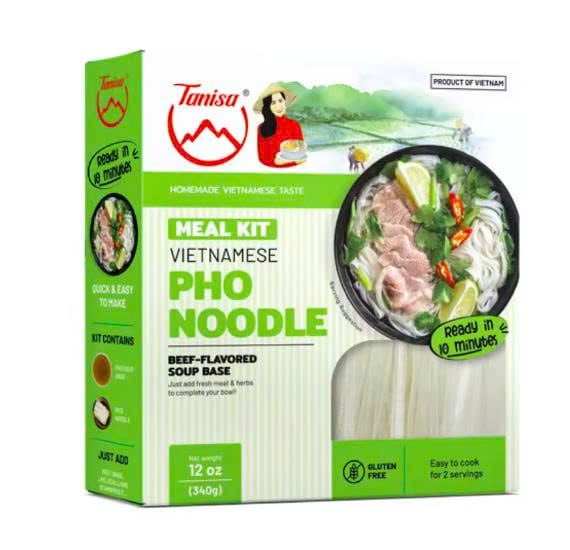
Pho noodles
How Tanisa Supports Global Buyers
Tanisa Foods JSC is a Vietnamese manufacturer specializing in rice noodles, vermicelli, and rice paper for international food markets.
Founded in 2015, Tanisa has expanded its export network to more than 30 countries and regions including:
- the USA,
- Europe,
- Australia,
- Japan,
- and Korea.
The company supplies products to:
- foodservice distributors,
- restaurant groups,
- supermarket chains,
- and global import partners.
Tanisa operates with modern machine-made and drying systems to help ensure:
- stable noodle texture,
- consistent cooking performance,
- and reliable batch quality for commercial food operations.
The company also holds international certifications including:
- FSSC 22000,
- ISO 22000:2018,
- FDA (USA),
- KFDA (Korea),
- and Halal certification.
Tanisa rice noodles are produced with:
- 100% rice ingredients,
- no preservatives,
- no additives,
- and gluten-free positioning,
making them suitable for modern food service and retail markets.
In addition, Tanisa supports:
👉 customized specifications and private label solutions tailored to different market requirements, helping partners develop products for various international distribution channels.
Conclusion
“Best rice noodles for pho” is not defined by taste alone.
For professional buyers, it is defined by:
- consistency,
- scalability,
- and operational performance.
These factors directly affect:
- restaurant efficiency,
- customer experience,
- and brand reputation.
Choosing the right supplier is therefore a strategic business decision, not just a product selection.
Learn More
Contact Tanisa
If you are looking for:
- pho noodle supplier,
- or stable Vietnam export partner,
👉 Tanisa can support your sourcing and product development needs.
TANISA FOODS JSC, a strong brand in the market for the production and distribution of specialty products (rice paper, rice noodles...) and spices (seasoning) which exported to some countries such as USA, France, South Korea, Japan, Russia, Brunei...
TANISA FOODS JSC
Factory add 1: 188 Lac Long Quan Street, Quarter 3, Tan Ninh Ward, Tay Ninh Province, Vietnam
Factory add 2: Phu Hoa Dong, Cu Chi, Ho Chi Minh City, Viet Nam
Office in HCMC: 18th Floor, Vincom Building, 72 Le Thanh Ton Street, District 1, Ho Chi Minh City, Vietnam
Warehouse in HCMC: 2/3 Binh Gia, Tan Binh District, Ho Chi Minh City, Vietnam
Hotline: +84 938 118 699 (WhatsApp/WeChat), +84 938 198 299 (Zalo)




Email: marketing@tanisagroup.com
Website: www.tanisagroup.com
Facebook: Tanisa Foods JSC
Instagram: @tanisa_foods
Youtube: Tanisa Kitchen

Xem thêm