



Rice Paper Tteokbokki: The Viral Recipe That Skips the Rice Cake
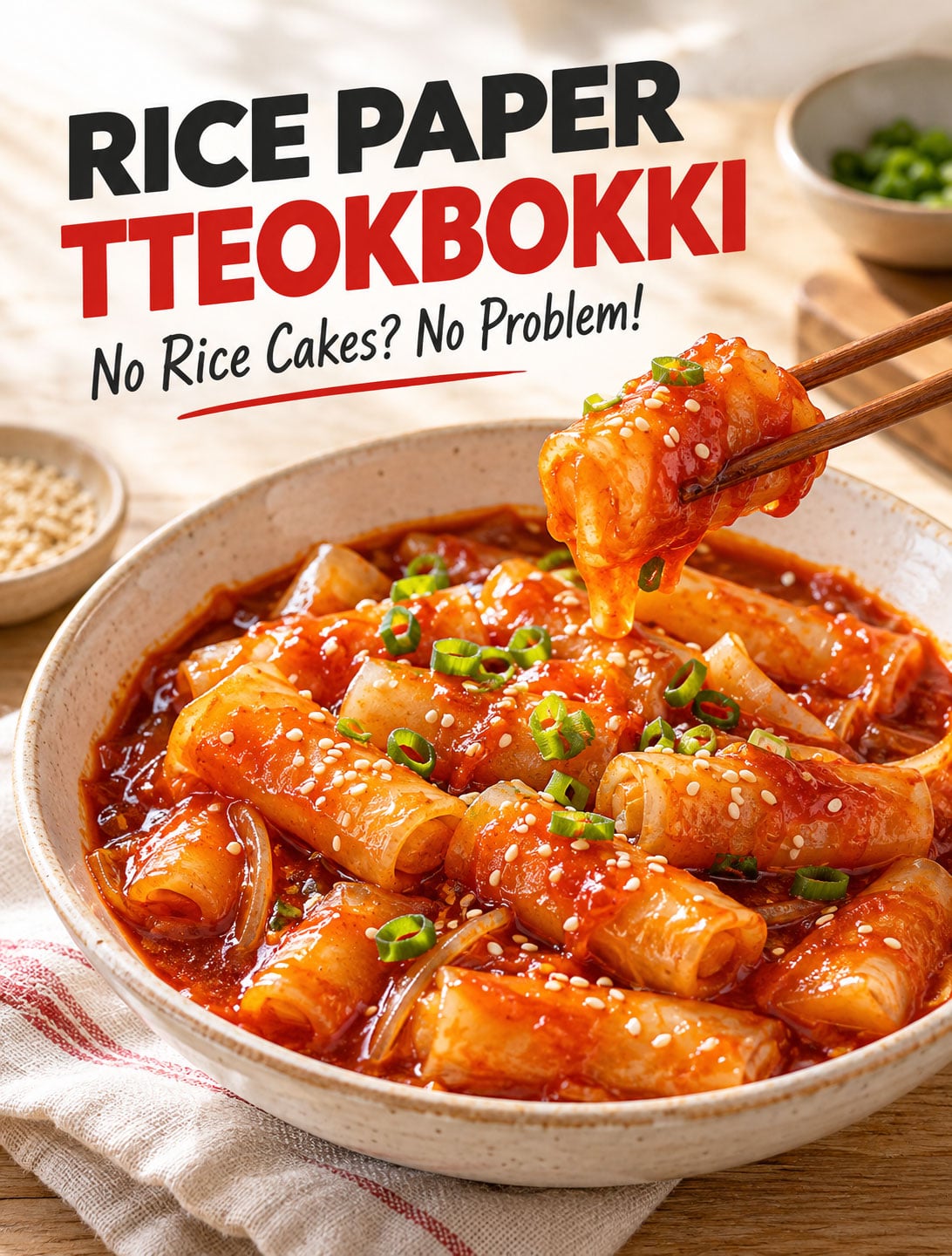
Traditional tteokbokki is made with ssal-tteok, dense Korean rice cakes simmered in a spicy, sweet gochujang sauce. Rice paper tteokbokki replaces those rice cakes with softened rice paper, rolled tight and cooked the same way. The method cuts prep time dramatically, skips the need to hunt down a specialty ingredient, and still delivers the chewy bite that makes the dish what it is.
What Is Rice Paper Tteokbokki?
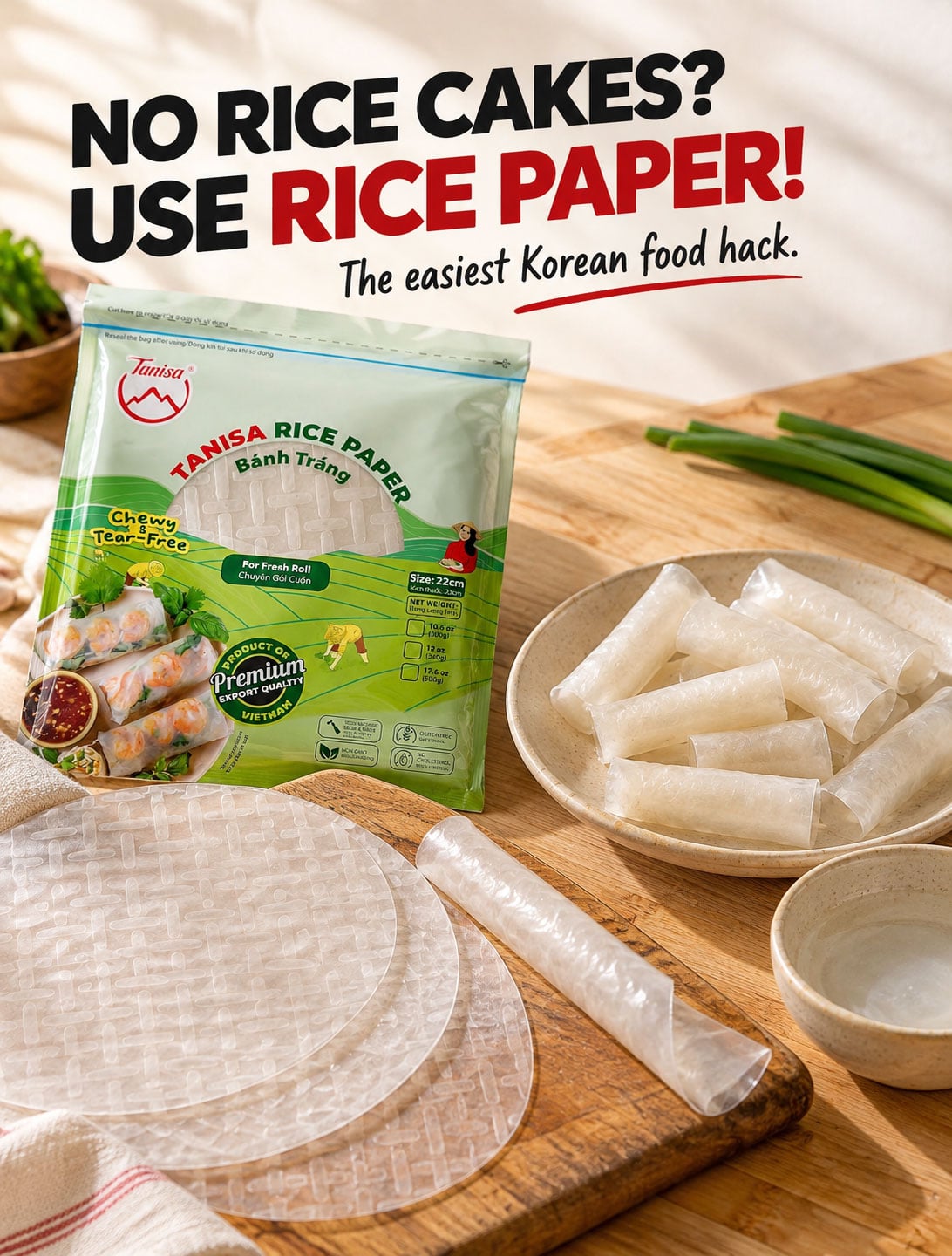
Rice paper tteokbokki is a home cook's workaround for a simple problem: real tteok is hard to find outside Korean grocery stores, and fresh tteok dries out fast once opened. The fix is rice paper, the same thin sheets used for Vietnamese spring rolls. Soaked briefly in water, rolled into tight logs, and simmered in the usual sweet-spicy sauce, the rolls firm up into something close enough to tteok that most people can't tell the difference by sight.
Rice Paper, an Ingredient Rooted in Vietnam
Here's what's interesting: the ingredient behind this "purely Korean" dish doesn't come from Korea at all. Rice paper is a long-standing traditional ingredient in Vietnam, a staple in spring rolls, fresh rolls, and bánh tráng trộn for decades. The "swap rice paper for tteok" hack itself is believed to have started among home cooks in Vietnam before spreading to Korea and eventually taking over TikTok worldwide. In other words, a dish that reads as entirely Korean is actually built on a very Vietnamese ingredient.
Why This TikTok Hack Went Viral
The trend took off because it removes the biggest barrier to making tteokbokki at home: sourcing rice cakes. Rice paper, by contrast, sits on the shelf for months and comes at a reasonable price. Creators on TikTok also leaned into the chew itself. Rolled tightly and cooked right, rice paper tteok has a springy, almost rubbery bite that holds up well on camera and on a microphone, which is part of why so many versions of this recipe show up as close-up chewing shots. Add a cheese-stuffed variation, and the format had everything a food video needs: an easy technique, a satisfying sound, and a payoff when the cheese pulls.
Rice Paper Tteok vs. Real Tteok: What Actually Changes
Texture and chew
Real tteok has a firm, dense chew, closer to al dente pasta or mochi. Rice paper tteok is chewier and a bit springier once cooked, with a texture some cooks compare to a thicker glass noodle. It's not identical to the original, but it lands close enough that the dish still reads as tteokbokki.
How the sauce behaves
This is the detail most recipes skip. Real rice cakes release starch as they cook, which naturally thickens the sauce. Rice paper doesn't do this, so the sauce stays thinner unless you help it along. Two fixes work well: reduce the sauce a little longer before adding the rolls, or stir in a small cornstarch slurry near the end. Rice paper also soaks up sauce differently than tteok. Tteok stays firm and gets coated on the outside; rice paper absorbs more of the sauce into itself, so the flavor comes through evenly in every bite rather than hitting hardest on the first bite.
Ingredients
Makes about 2 servings
-
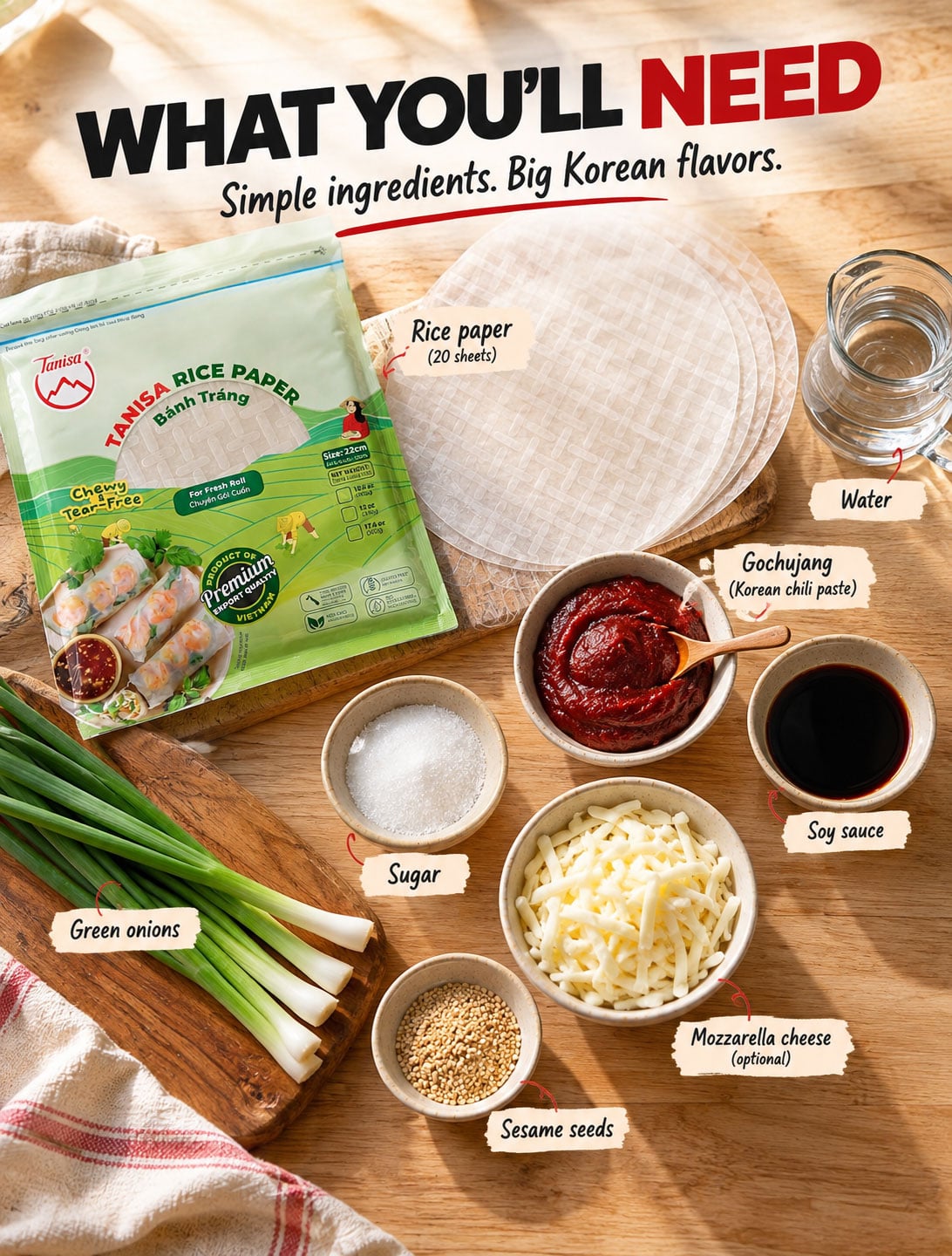
200g mozzarella, cut into sticks (use dairy or plant-based mozzarella)
-
1 cup vegetable broth (or water with a bit of dashi or anchovy stock for more depth)
-
½ tbsp gochujang (Korean chili paste)
-
1 tsp gochugaru (Korean chili flakes)
-
1 tsp sugar or your preferred sweetener
-
1 tbsp soy sauce
-
Sesame seeds and sliced scallions, for garnish
A note on quantities: start the soy sauce at 1 tablespoon and adjust to taste once the sauce has reduced. If you want a sauce closer to restaurant tteokbokki, adding one minced garlic clove to the broth is a common addition in other rice paper tteokbokki recipes and rounds out the flavor well.
How to Make Rice Paper Tteokbokki
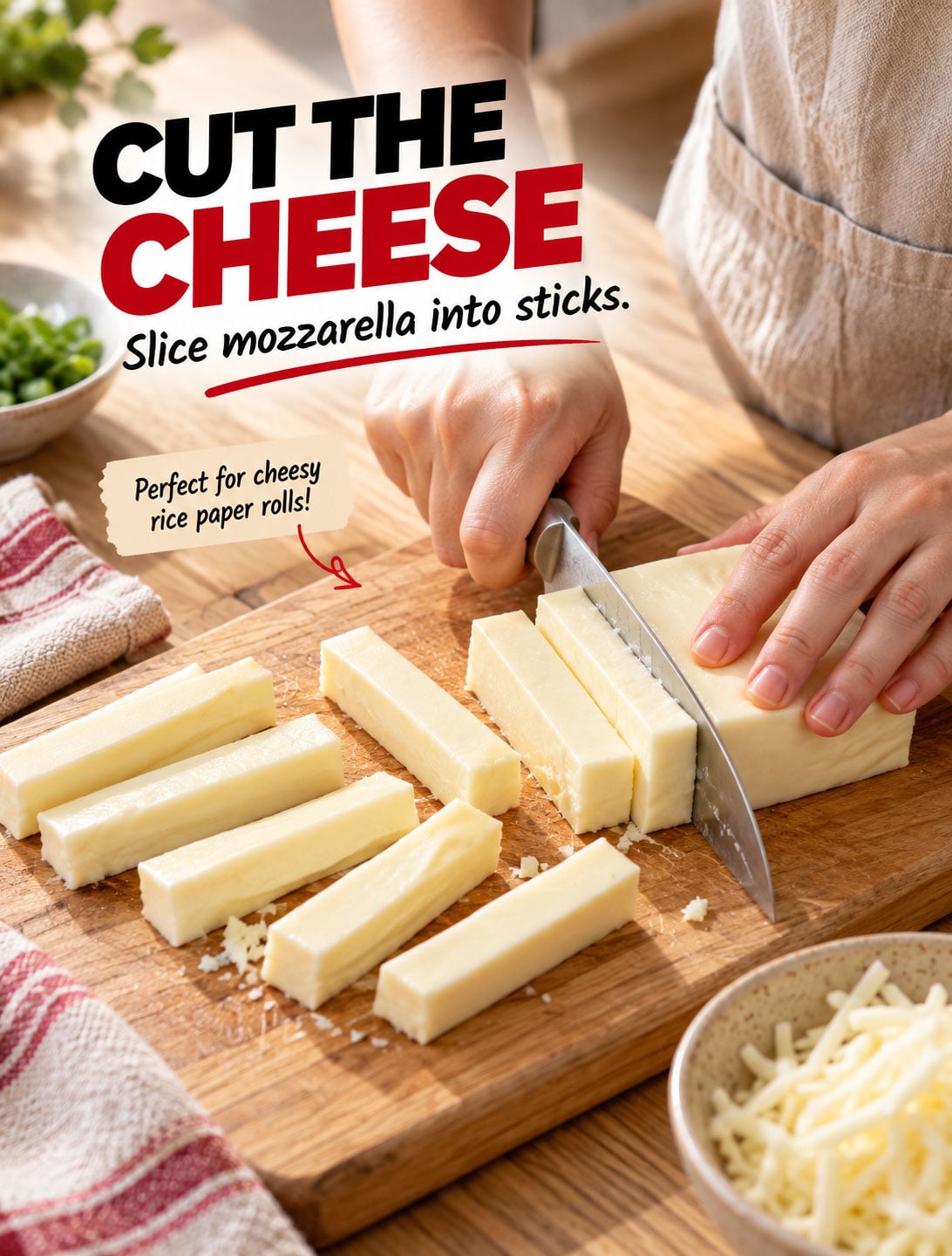
Step 1: Prepare the ingredients and slice the cheese.
Step 2: Soften the rice paper
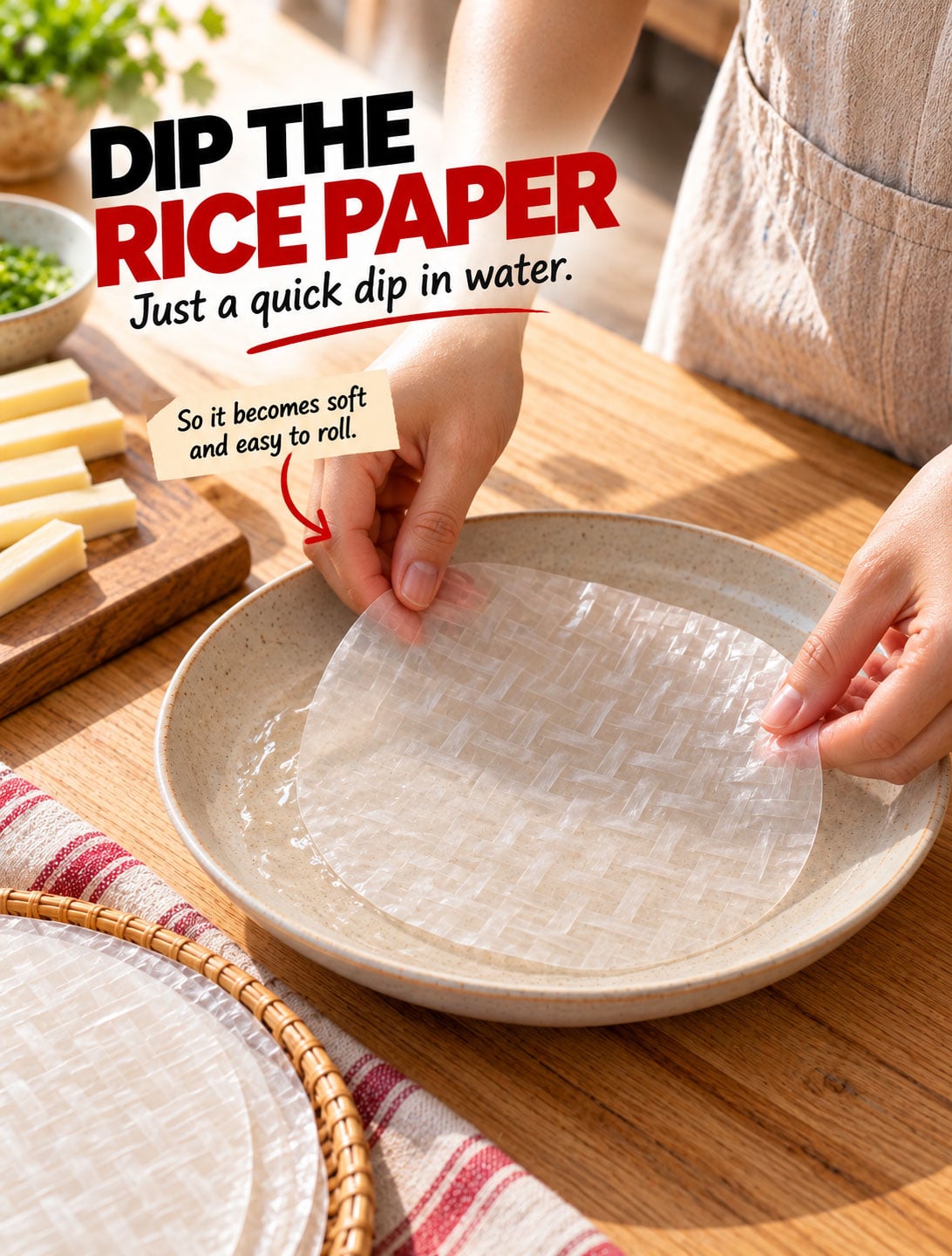
Dip one sheet at a time into a bowl of cold water for just a couple of seconds, not longer, then lay it flat on a cutting board. Oversoaking is the single biggest reason rice paper tteok turns out mushy instead of chewy. The sheet should still feel slightly stiff when you lift it out; it finishes softening on the board while you work.
Step 3: Roll the "tteok" (plain and cheese-stuffed)
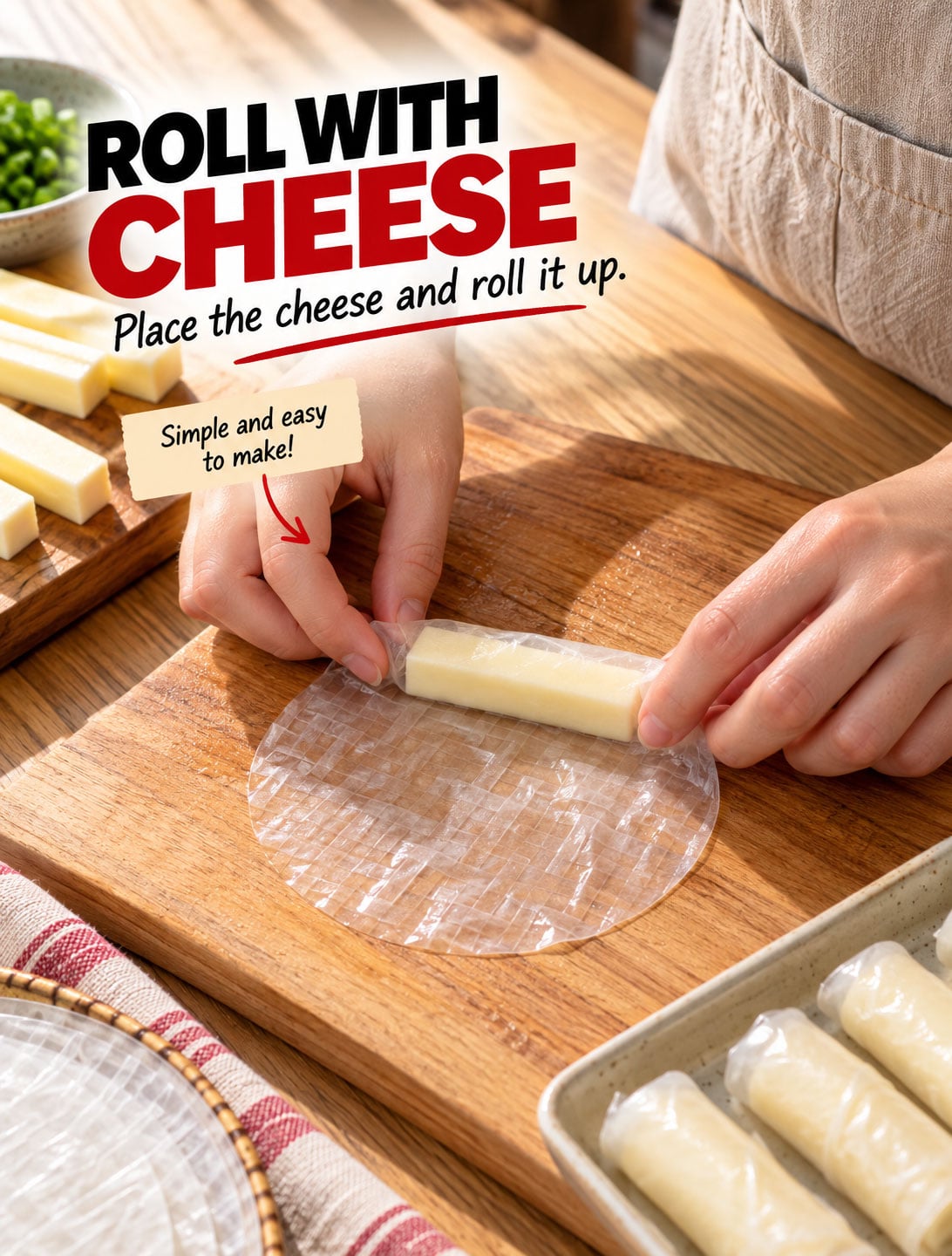
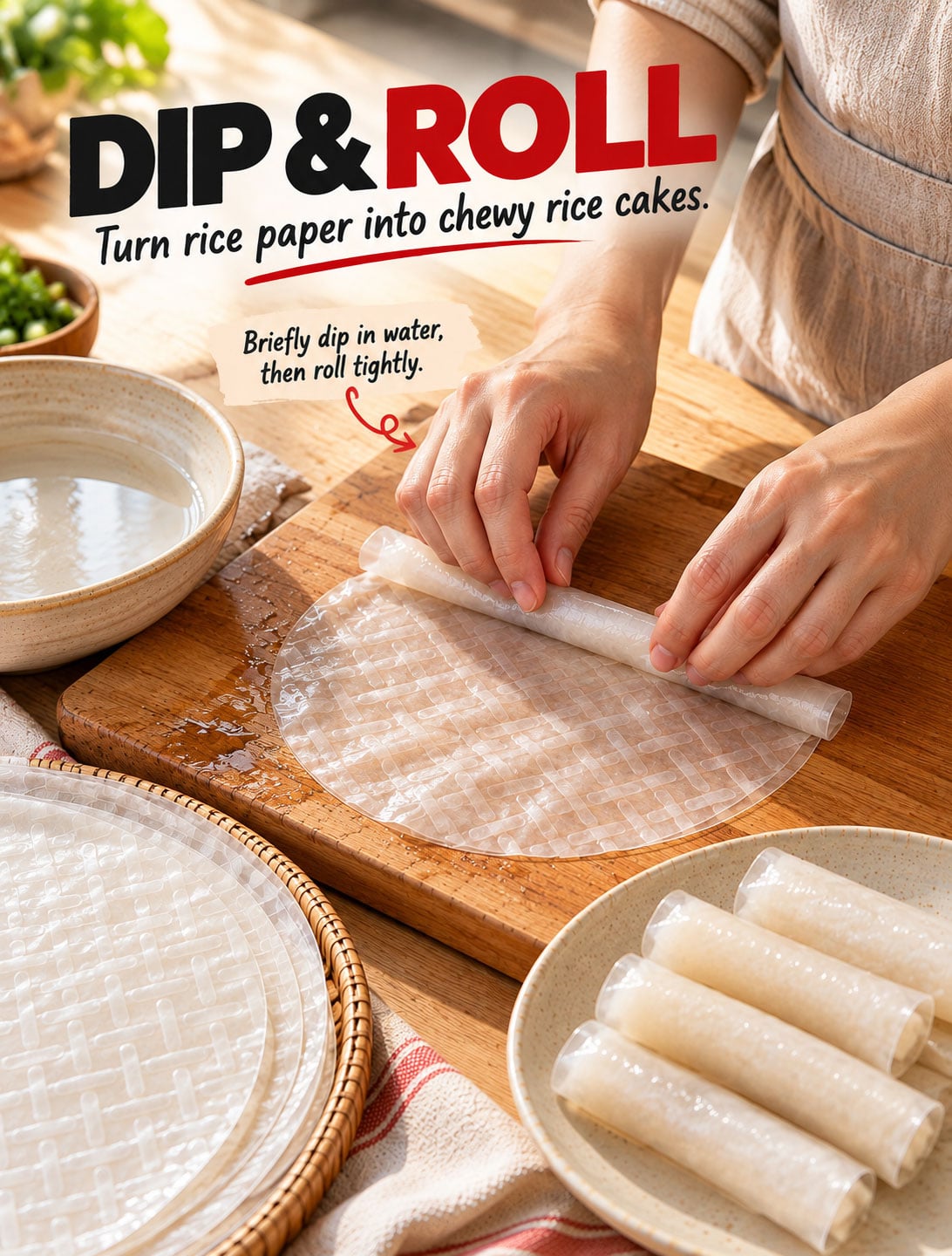
For the cheese version, place one mozzarella stick along the bottom edge of a softened sheet, fold in the sides, then roll it up tightly, the same motion you'd use for a spring roll. For the plain version, stack two softened sheets on top of each other and roll them tightly together without any filling. Rolling tightly matters here: a loose roll falls apart in the sauce and won't develop the same chew.
Step 4: Build the gochujang sauce
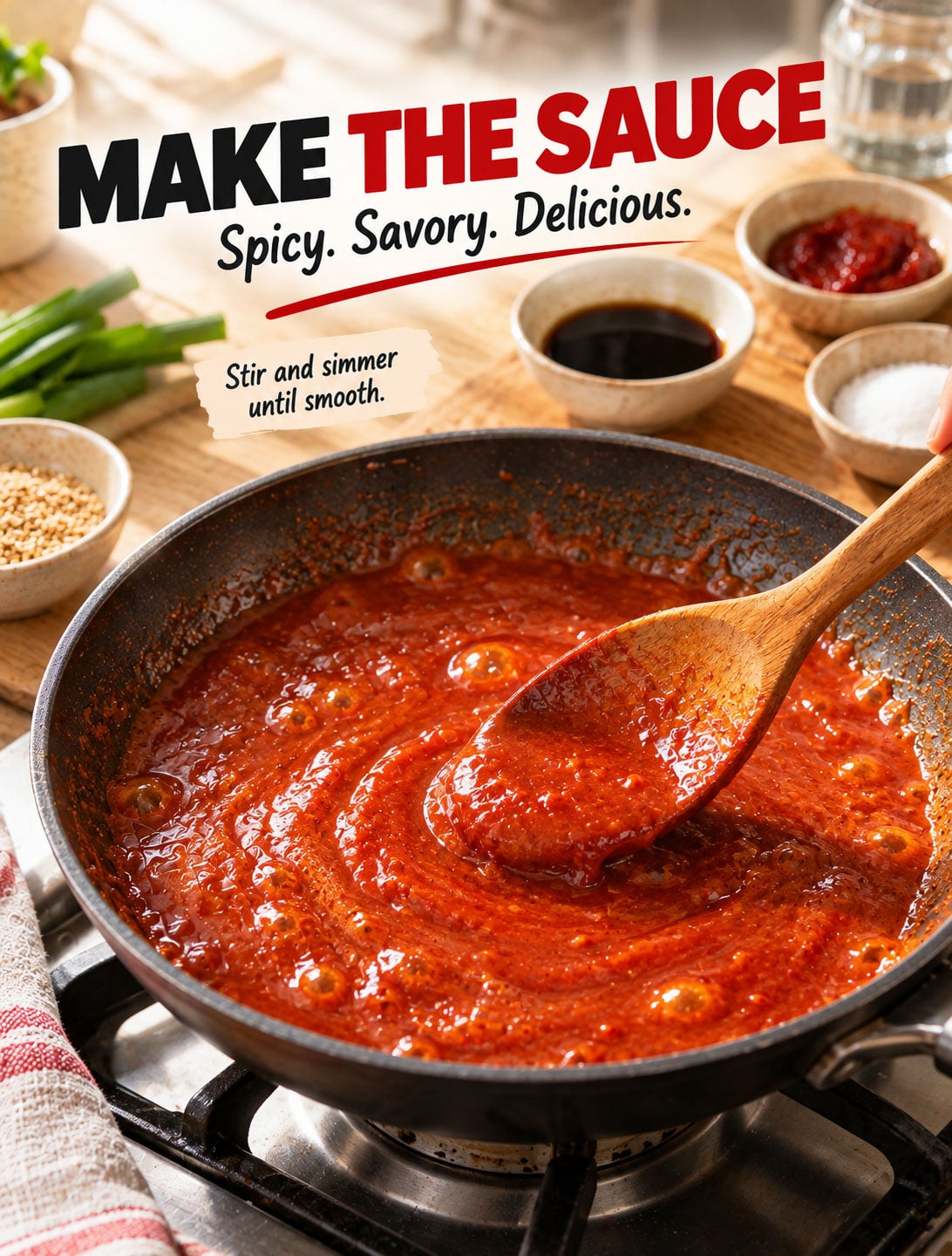
Add the vegetable broth and gochujang to a wide pan or shallow pot and bring it to a boil over high heat. Stir until the gochujang fully dissolves into the broth before adding anything else.
Step 5: Simmer and finish
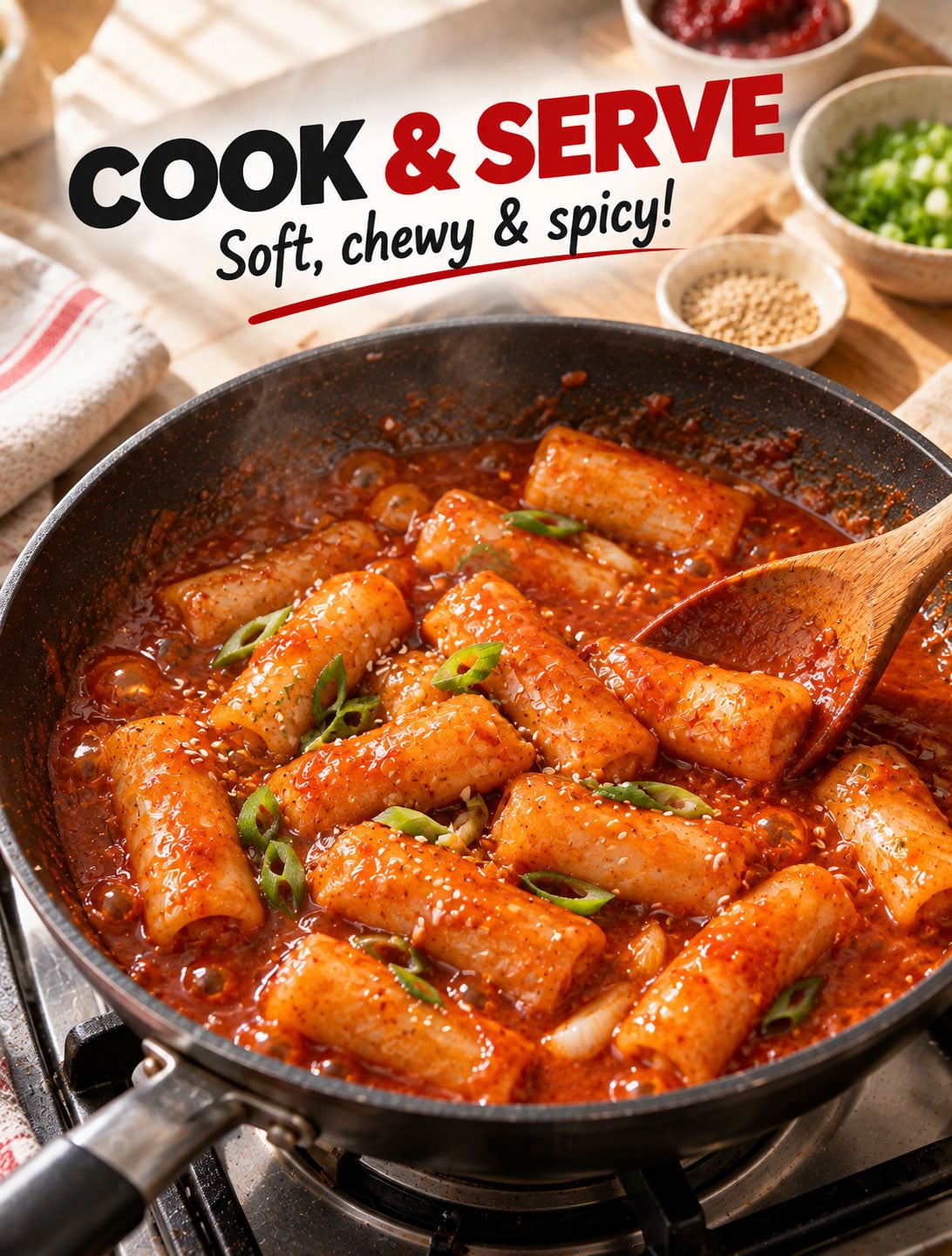
Add the rice paper rolls to the pan and cook over high heat for about 5 minutes, turning them occasionally so every side touches the sauce. Add a splash more broth if the pan looks dry. Stir in the soy sauce, gochugaru, and sugar, mix well, and turn off the heat. Finish with sesame seeds and scallions, and serve immediately while the rolls are still hot and glossy.
Common Mistakes (and How to Avoid Them)
-
Soaking the rice paper too long. It turns gummy before it even hits the pan. A quick dip is enough; the sheet keeps softening on its own once it's out of the water.
-
Rolling too loosely. A loose roll unravels in the sauce. Roll firmly, the way you would a spring roll you don't want falling apart.
-
Cooking at low heat for too long. Rice paper breaks down the longer it sits in liquid. High heat and a short cook time (around 5 minutes) keep the chew intact; a slow simmer turns the rolls soft and slippery.
-
Expecting a thick sauce without help. Since rice paper doesn't release starch, the sauce needs a longer reduction or a small cornstarch slurry if you want it clinging to the rolls rather than pooling around them.
Variations Worth Trying
-
Cheese-stuffed: the version in this recipe, using mozzarella sticks rolled inside the rice paper.
-
Vegan: swap in plant-based mozzarella and use vegetable broth instead of anchovy or beef stock.
-
Rabokki: add cooked ramen noodles to the pan in the last two minutes for a rice paper take on the classic ramen-tteokbokki mashup.
-
Rosé style: stir in a splash of cream or coconut milk at the end for a milder, rosé-sauce version.
FAQs
How many rice paper sheets equal one tteok?
Two sheets rolled together make one roll close in size to a single piece of tteok. A single sheet is too thin and tends to split in the sauce.
Can I make rice paper tteokbokki ahead of time?
Roll the rice paper "tteok" up to a few hours ahead and keep them covered so they don't dry out, but cook them just before serving. Like regular tteok, they turn chewy and tough once reheated.
Is rice paper tteokbokki healthier than regular tteokbokki?
Rice paper is lower in calories and carbs per piece than real rice cake, so a serving tends to be lighter. It's also naturally gluten-free, since rice paper is made from rice flour, water, and salt.
Can I use spring roll rice paper for this?
Yes. Standard round rice paper sheets sold for spring rolls and fresh rolls work for this recipe; there's no separate "tteokbokki" rice paper.
If you're making this often enough to notice the difference, the quality of the rice paper itself matters more than most recipes mention. Thinner, inconsistent sheets tear mid-roll or turn gummy the moment they hit water, which is usually the real reason a batch falls apart in the pan rather than anything wrong with the technique.
On the subject of quality rice paper, Tanisa Foods is one of the Vietnamese manufacturers producing rice paper to international export standards. Its facility is certified under FSSC 22000, ISO 22000, Halal, FDA (US), and KFDA (Korea), and the company currently exports to more than 30 countries. The product is non-GMO and gluten-free, sturdy enough to handle the kind of careful rolling this recipe calls for without tearing or turning gummy halfway through. It's a reasonable place to start if this recipe keeps falling apart with whatever's sitting in the pantry.
TANISA FOODS JSC, a strong brand in the market for the production and distribution of specialty products (rice paper, rice noodles...) and spices (seasoning) which exported to some countries such as USA, France, South Korea, Japan, Russia, Brunei...
TANISA FOODS JSC
Factory add 1: 188 Lac Long Quan Street, Quarter 3, Tan Ninh Ward, Tay Ninh Province, Vietnam
Factory add 2: Phu Hoa Dong, Cu Chi, Ho Chi Minh City, Viet Nam
Office in HCMC: 18th Floor, Vincom Building, 72 Le Thanh Ton Street, District 1, Ho Chi Minh City, Vietnam
Warehouse in HCMC: 2/3 Binh Gia, Tan Binh District, Ho Chi Minh City, Vietnam
Hotline: +84 938 118 699 (WhatsApp/WeChat), +84 938 198 299 (Zalo)




Email: marketing@tanisagroup.com
Website: www.tanisagroup.com
Facebook: Tanisa Foods JSC
Instagram: @tanisa_foods
Youtube: Tanisa Kitchen

Xem thêm