


Gluten Free Rice Paper Manufacturer: Why Rice Paper Naturally Fits the Trend
Rice paper doesn’t need a separate gluten-free version. The only version that has ever existed is the gluten-free one: rice flour, water, and salt, with no wheat at any stage of the process.
That single fact alone explains much of why global demand for rice paper has grown alongside the gluten-free and plant-based food wave. But “naturally gluten-free” and “reliably made by a trustworthy manufacturer” are two entirely different questions, and buyers sourcing at scale need to check both.
Is Rice Paper Really Gluten-Free?
Yes. Traditional rice paper is made from rice flour, water, and salt. No wheat, no gluten-containing grains of any kind. This is different from many Western wraps, which are typically made from refined wheat flour with added fat. That single-ingredient simplicity is exactly why rice paper has become attractive to:
Consumers avoiding gluten for health or dietary reasons
Brands building clean-label or allergen-friendly product lines
Retailers expanding their “better-for-you” wrap and snack categories
Why Gluten-Free Demand Is Driving Interest in Rice Paper
Global consumers are increasingly looking for food that’s lighter, less processed, and free of common allergens, without giving up convenience. Rice paper checks several of these boxes at once:
Naturally gluten-free, with no need to be “reformulated” like many substitute products
Plant-based, built from a single main ingredient rather than a blended substitute
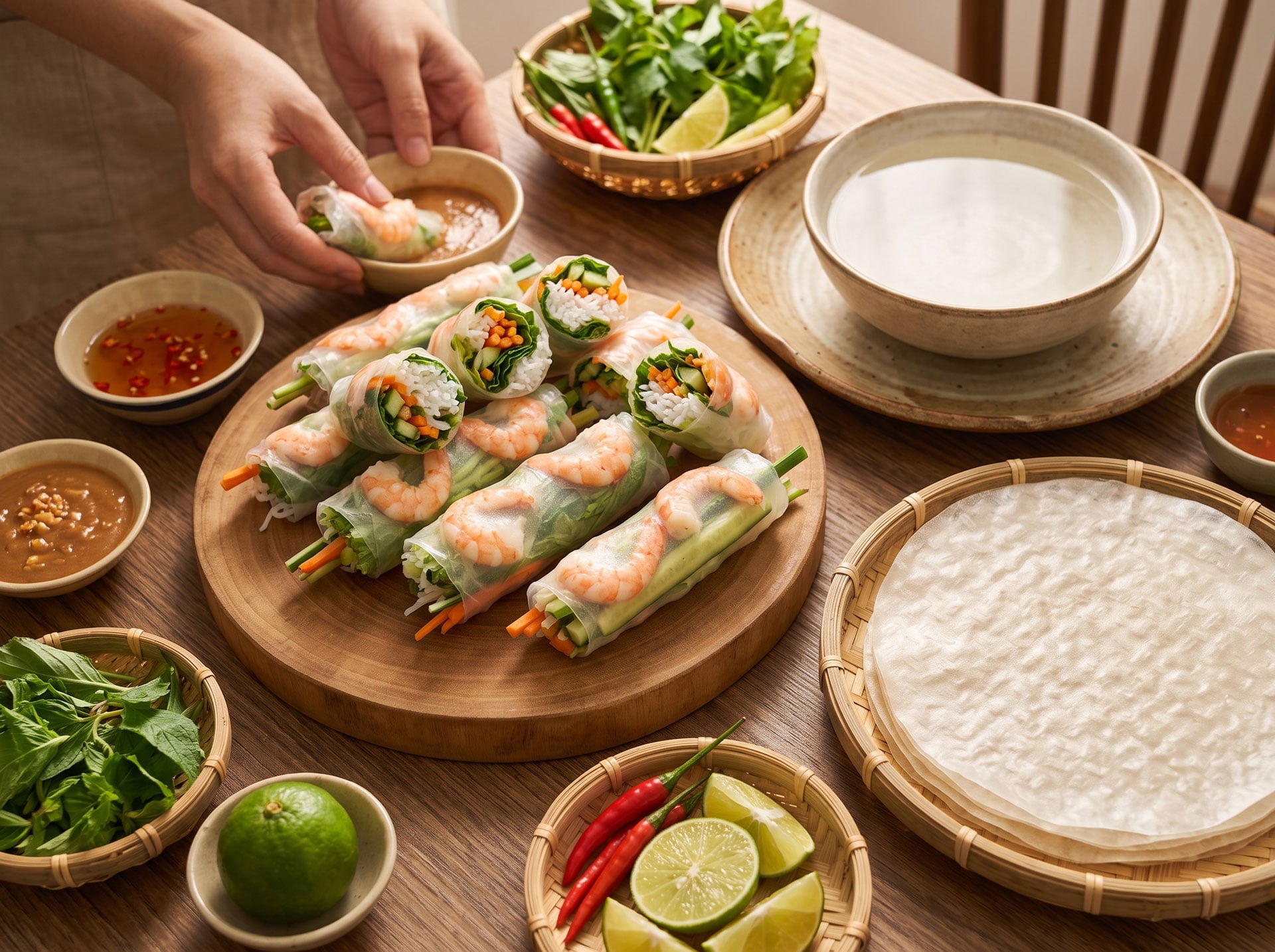
Versatile texture, soft when soaked, crispy when fried, so it works across fresh wraps, snacks, and fusion dishes instead of serving just one purpose
This is also why rice paper has moved beyond Vietnamese cuisine, showing up in Korean BBQ wraps, Japanese fusion sushi, and gluten-free snack lines now developing in the US and Europe.
What “Gluten-Free” Should Actually Mean From a Manufacturer
A manufacturer calling its product gluten-free needs to prove that with more than marketing language. Buyers sourcing for retail or foodservice should check four things.
Ingredient transparency. The full ingredient list should be disclosed and consistent: no undisclosed wheat-based additives or anti-caking agents.
Accurate labeling. In markets like the US, labels need to meet FDA Nutrition Facts requirements, including allergen declarations. In the EU, labels must clearly show ingredients, origin, and nutritional values. A manufacturer with export experience should already understand these differences.
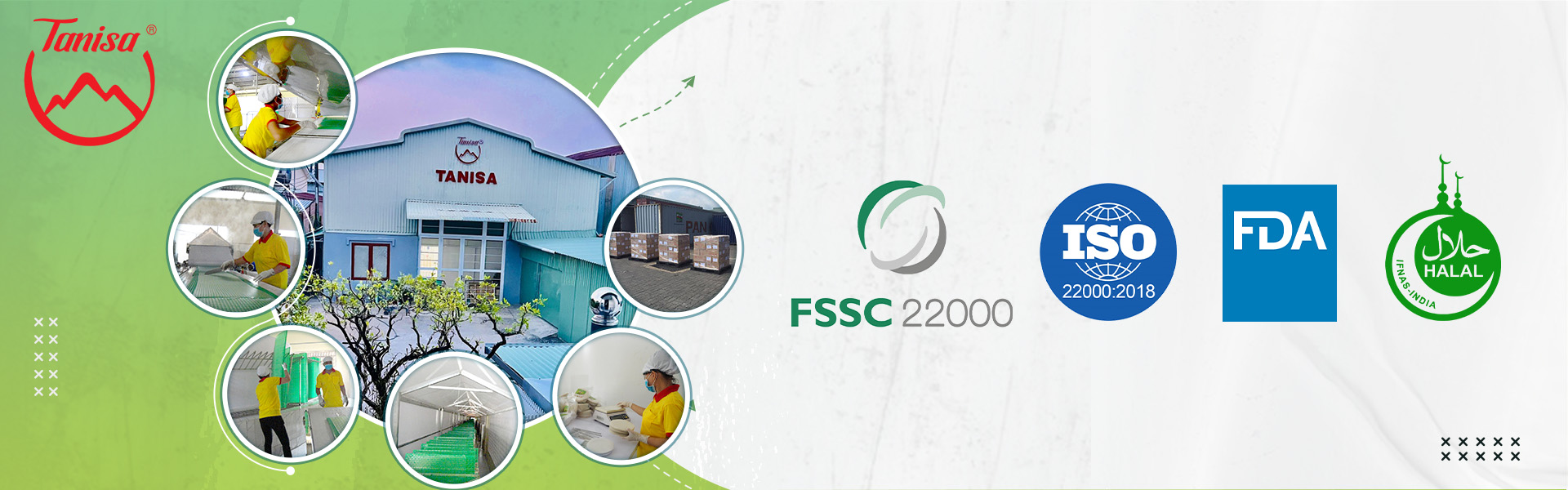
Consistency across certifications. Food safety systems like FSSC 22000 or ISO 22000 don’t certify “gluten-free” specifically, but they do show a factory with enough quality control discipline to keep label claims consistent across every production batch.
How to Vet a Gluten-Free Rice Paper Manufacturer
Request the full ingredient list, not just a marketing summary
Review a sample label against your target market’s regulatory requirements
Check whether the manufacturer holds recognized food safety certifications (FSSC 22000, ISO 22000, FDA registration)
FAQ
Does rice paper contain gluten?
No. Traditional rice paper is made from rice flour, water, and salt. It contains no wheat and is naturally gluten-free.
Is all rice paper automatically “clean label”?
Not necessarily. Some products contain added stabilizers or preservatives. Buyers looking for a genuinely clean-label product should check for claims like no preservatives and non-GMO alongside gluten-free.
Tanisa Foods develops its rice paper around clean-label principles: gluten-free, non-GMO, no cholesterol, and free of preservatives, manufactured entirely within a rice-based product line (rice paper, rice noodles, and rice vermicelli, with no wheat-based products running through the same facility) under FSSC 22000 and ISO 22000:2018 systems, with FDA and KFDA registration supporting label accuracy for the US and South Korean markets.
TANISA FOODS JSC, a strong brand in the market for the production and distribution of specialty products (rice paper, rice noodles...) and spices (seasoning) which exported to some countries such as USA, France, South Korea, Japan, Russia, Brunei...
TANISA FOODS JSC
Factory add 1: 188 Lac Long Quan Street, Quarter 3, Tan Ninh Ward, Tay Ninh Province, Vietnam
Factory add 2: Phu Hoa Dong, Cu Chi, Ho Chi Minh City, Viet Nam
Office in HCMC: 18th Floor, Vincom Building, 72 Le Thanh Ton Street, District 1, Ho Chi Minh City, Vietnam
Warehouse in HCMC: 2/3 Binh Gia, Tan Binh District, Ho Chi Minh City, Vietnam
Hotline: +84 938 118 699 (WhatsApp/WeChat), +84 938 198 299 (Zalo)




Email: marketing@tanisagroup.com
Website: www.tanisagroup.com
Facebook: Tanisa Foods JSC
Instagram: @tanisa_foods
Youtube: Tanisa Kitchen

Xem thêm