



Rice Paper Croissant Recipe: Easy, No Kneading Required
Can you make croissants without flour, yeast, or kneading dough? With just rice paper, eggs, milk, and butter, you can make a croissant-inspired treat right in your own kitchen.
These rice paper croissants are rolled into the familiar crescent shape and baked until golden. The outside can turn lightly crisp, while the thin layers of rice paper inside create a texture that's quite different from a traditional croissant.
The key is knowing how to soften, cut, and shape the rice paper without tearing it.
Follow this step-by-step rice paper croissant recipe, along with practical tips to help you shape the pastries and get the texture right.
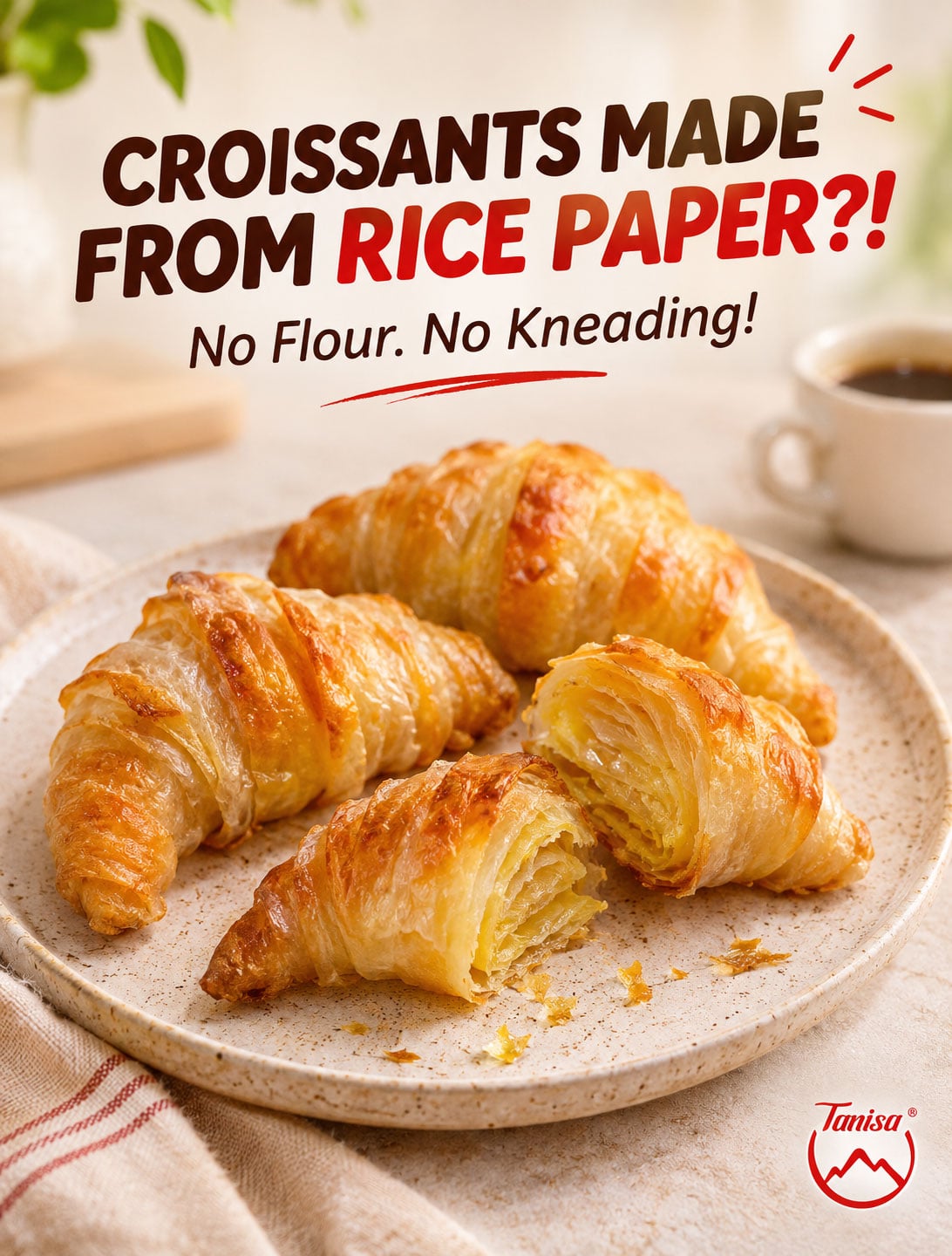
Rice Paper Croissant Recipe at a Glance
|
Recipe Details |
Information |
|
Recipe |
Rice Paper Croissants |
|
Yield |
3 croissants |
|
Main Ingredient |
Rice paper |
|
Cooking Method |
Oven baking |
|
Oven Temperature |
350°F / 175°C |
|
Baking Time |
30–35 minutes |
|
Kneading Required |
No |
|
Difficulty |
Easy to moderate |
What Is a Rice Paper Croissant?
A rice paper croissant is a creative take on the traditional croissant, using rice paper instead of wheat flour. The rice paper sheets are dipped into an egg mixture, stacked in layers, cut into sections, and rolled into the familiar crescent shape.
Tanisa Rice Paper is made from rice and is gluten-free, non-GMO, and free from preservatives, making it an alternative to conventional wheat-based wrappers.
Unlike traditional French croissants, which require layers of dough and butter to be repeatedly folded and rolled, this version uses thin rice paper sheets to create overlapping layers.
The preparation is much simpler because there's no need to knead, proof, or laminate dough.
However, the finished texture is different. Traditional croissants have a light, airy interior with delicate, flaky layers. Rice paper croissants tend to have a denser, slightly chewy center with a lightly crisp exterior.
If you enjoy experimenting with rice paper beyond traditional Vietnamese spring rolls, this is a recipe worth trying.
Ingredients for Rice Paper Croissants
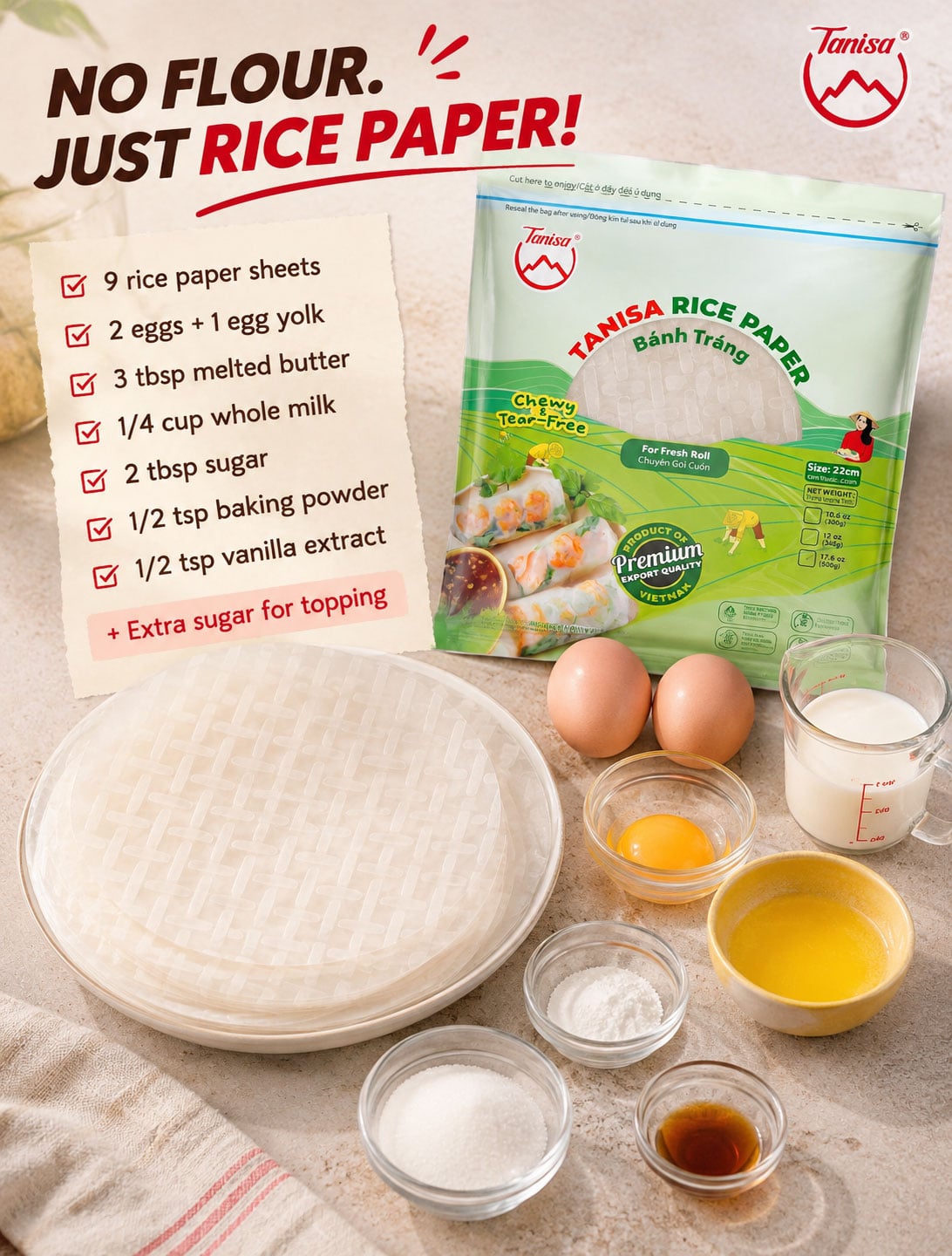
Makes 3 croissants
-
9 round rice paper sheets
-
2 large eggs
-
1 egg yolk
-
3 tablespoons melted butter
-
¼ cup whole milk (approximately 60 ml)
-
2 tablespoons sugar
-
½ teaspoon baking powder
-
½ teaspoon vanilla extract
-
A little extra sugar for topping (optional)
What Type of Rice Paper Should You Use?
Round rice paper sheets work well for this recipe because they can easily be cut into the sections needed to create the croissant shape.
You can use Tanisa Rice Paper to make these croissants.
While preparing the recipe, keep any unused rice paper sheets in their packaging or covered to prevent them from becoming too dry, brittle, or prone to cracking.
How to Make Rice Paper Croissants
The recipe involves five main steps: preparing the egg mixture, dipping and stacking the rice paper, cutting the sheets, shaping the croissants, and baking.
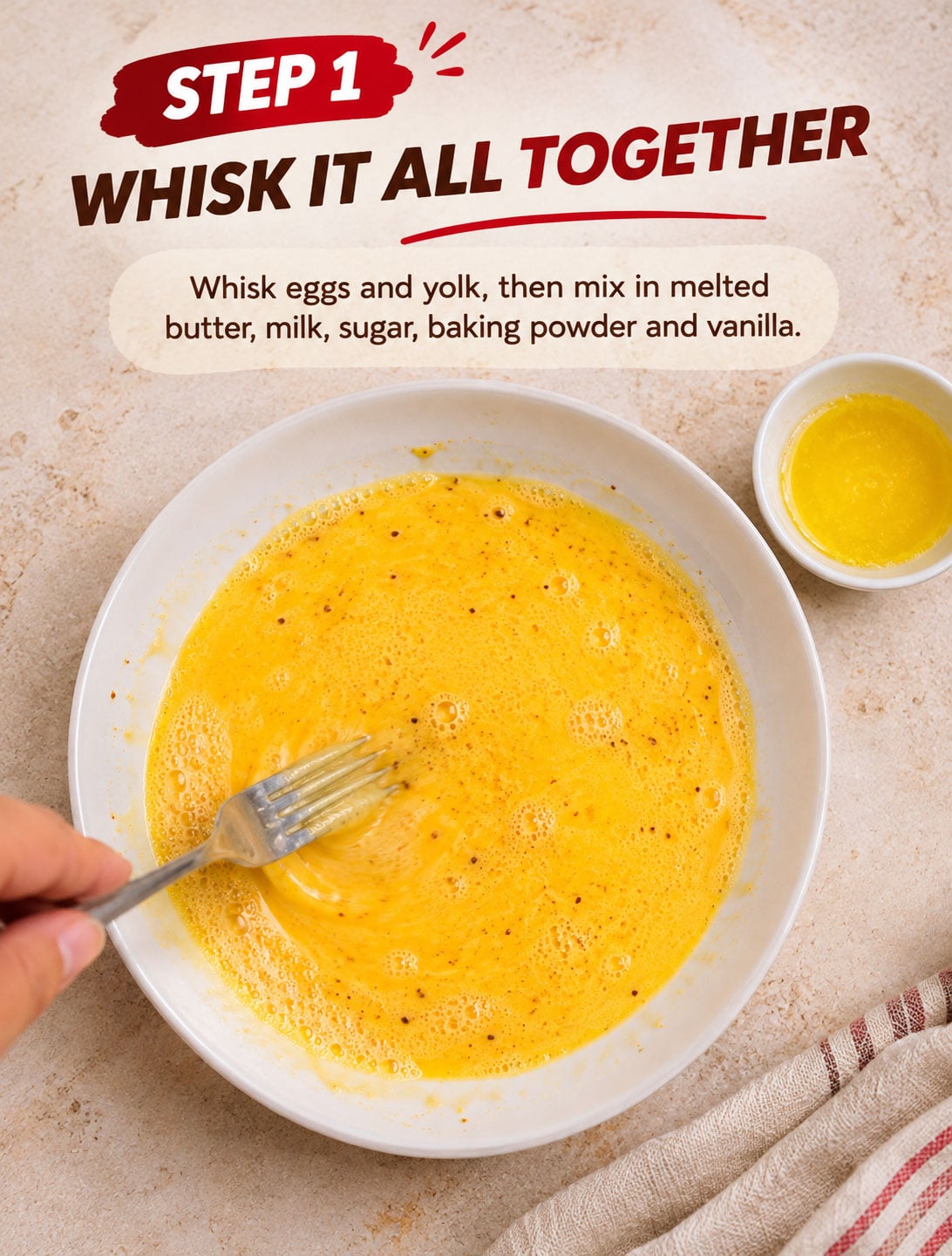
Step 1: Prepare the Egg Mixture
Crack two eggs into a wide bowl, then add one egg yolk.
Whisk until the yolks and whites are fully combined.
Add the melted butter, whole milk, sugar, baking powder, and vanilla extract.
Continue whisking until the ingredients are well incorporated and the mixture is relatively smooth.
Choose a bowl wide enough to dip the rice paper sheets without folding them.
Tip: Allow the melted butter to cool slightly before adding it to the eggs. If the butter is too hot, it may begin cooking the eggs before the mixture is ready.
Step 2: Dip and Stack Three Rice Paper Sheets
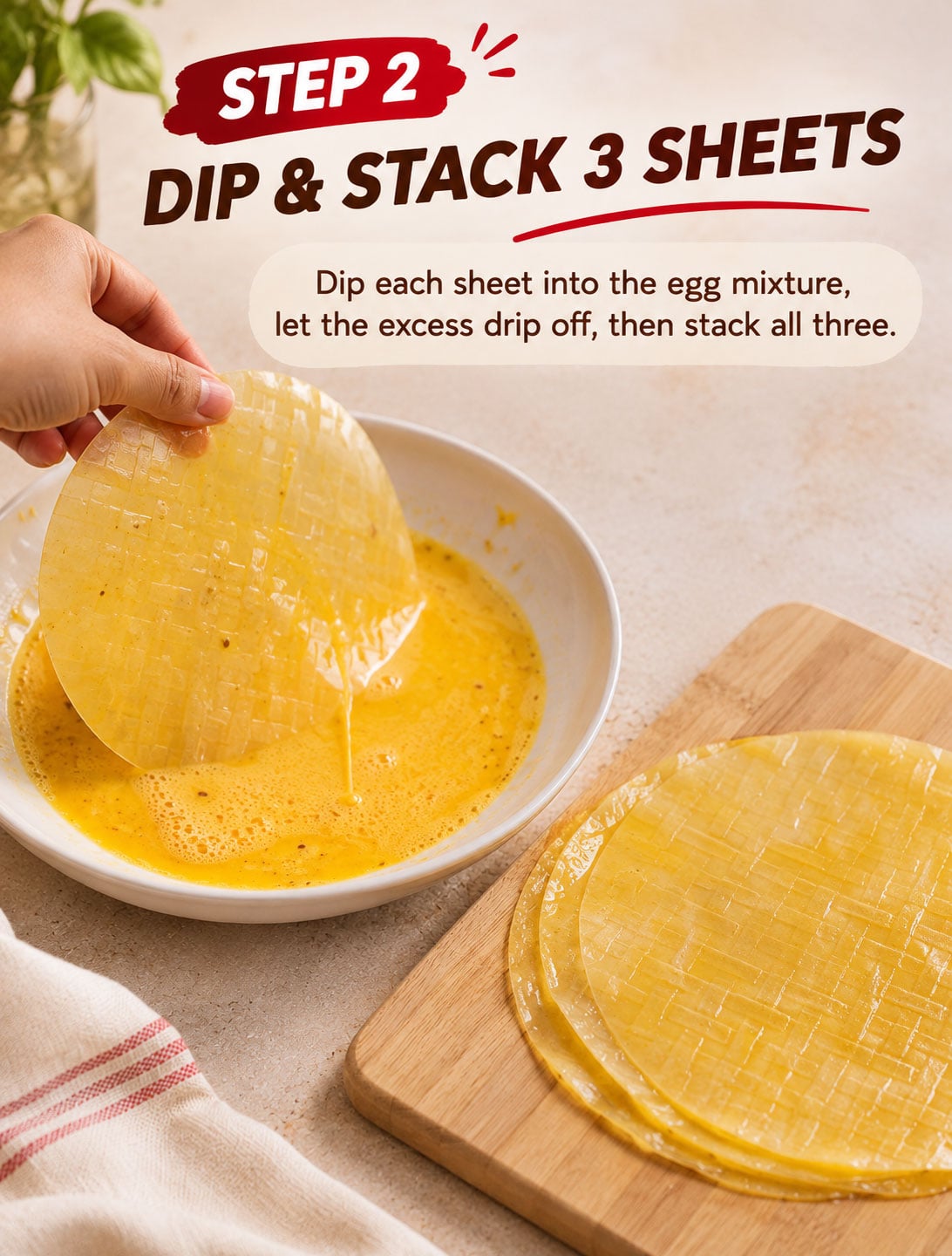
Take one round rice paper sheet and dip it into the prepared egg mixture.
Gently turn the sheet so both sides are evenly coated. Lift it out and allow any excess mixture to drip back into the bowl.
Place the softened rice paper on a clean cutting board or another flat, food-safe surface.
Repeat with two more rice paper sheets, placing each one directly on top of the first.
You should now have a stack of three softened rice paper sheets.
Try to align the edges as closely as possible to make cutting and shaping easier.
The rice paper should be soft enough to cut and roll, but not so wet that it loses its shape.
Tip: Dip each sheet individually. Soaking rice paper in the egg mixture for too long can make it overly soft and more likely to tear when lifted.
Step 3: Cut the Rice Paper into Three Pieces
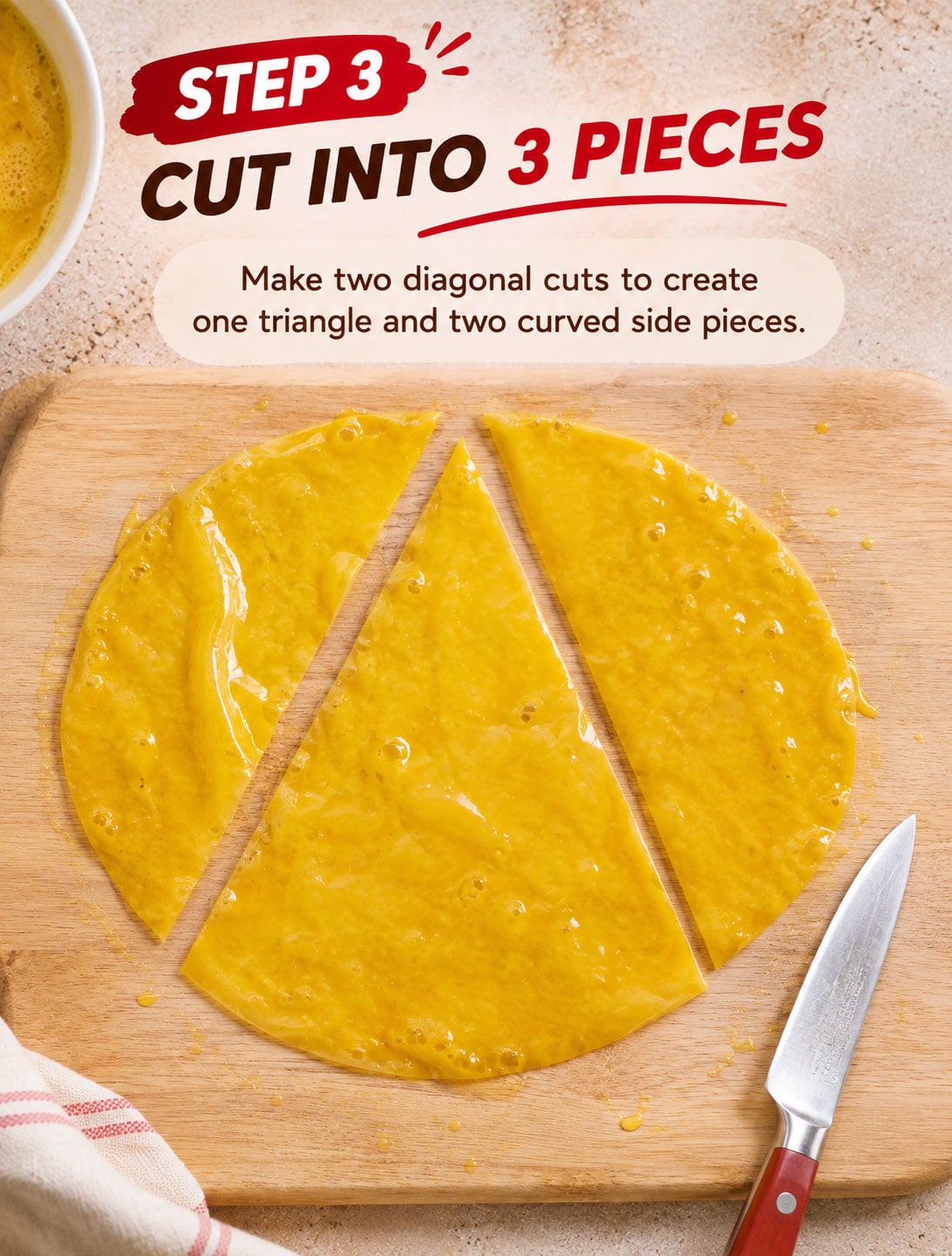
Place the three-layer stack flat on a cutting board.
Using a sharp knife or kitchen scissors, make two diagonal cuts to divide the stack into three sections:
-
One long triangular piece in the center, with its pointed tip facing upward.
-
One curved piece on the left.
-
One curved piece on the right.
Keep all three pieces, as you'll need them to shape one croissant.
Gently separate the pieces slightly so you can clearly see the cut edges.
Tip: Cut through all three rice paper layers at once. If the sheets begin to shift, use your other hand to hold the stack gently in place.
Step 4: Arrange and Roll into a Croissant Shape
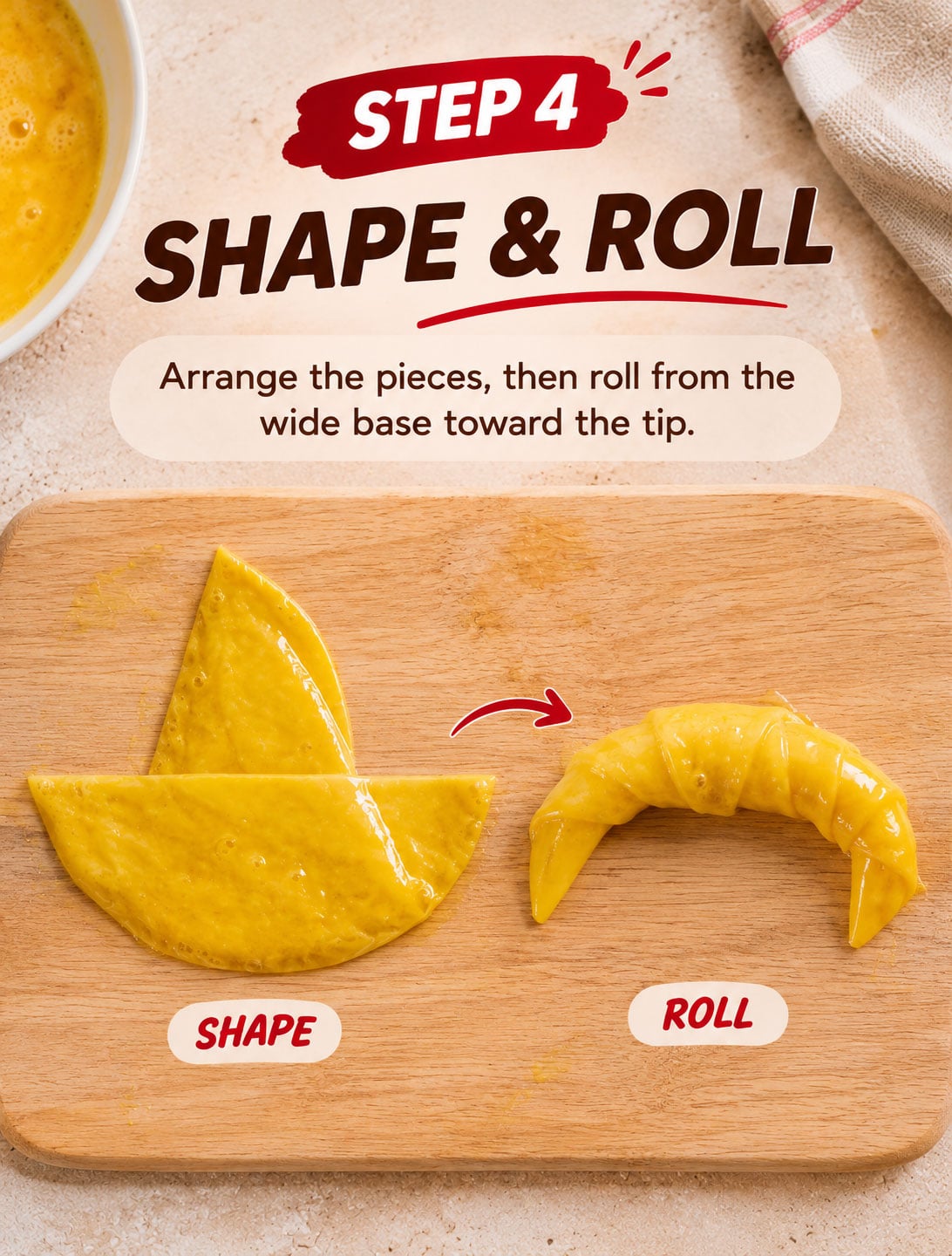
This is the step that gives the pastry its distinctive crescent shape.
First, place the long triangular piece vertically on your cutting board, with the pointed tip facing away from you.
Next, arrange the two curved pieces horizontally across the lower part of the triangle, overlapping them to create a wider base.
The arrangement should resemble a small sailboat, with the triangle forming the sail and the curved pieces forming the boat's hull.
Once the pieces are in position, start rolling from the wide base toward the pointed tip of the triangle.
Roll gently but firmly enough to keep the layers together.
When you reach the tip, position the croissant so the loose end is underneath.
Gently curve both ends inward to create the classic crescent shape.
Repeat with the remaining six rice paper sheets to make two more croissants.
Tip: If the softened rice paper starts sticking to your fingers, adjust your grip rather than pulling hard. The sheets can tear when stretched.
Step 5: Bake Until Golden and Crisp
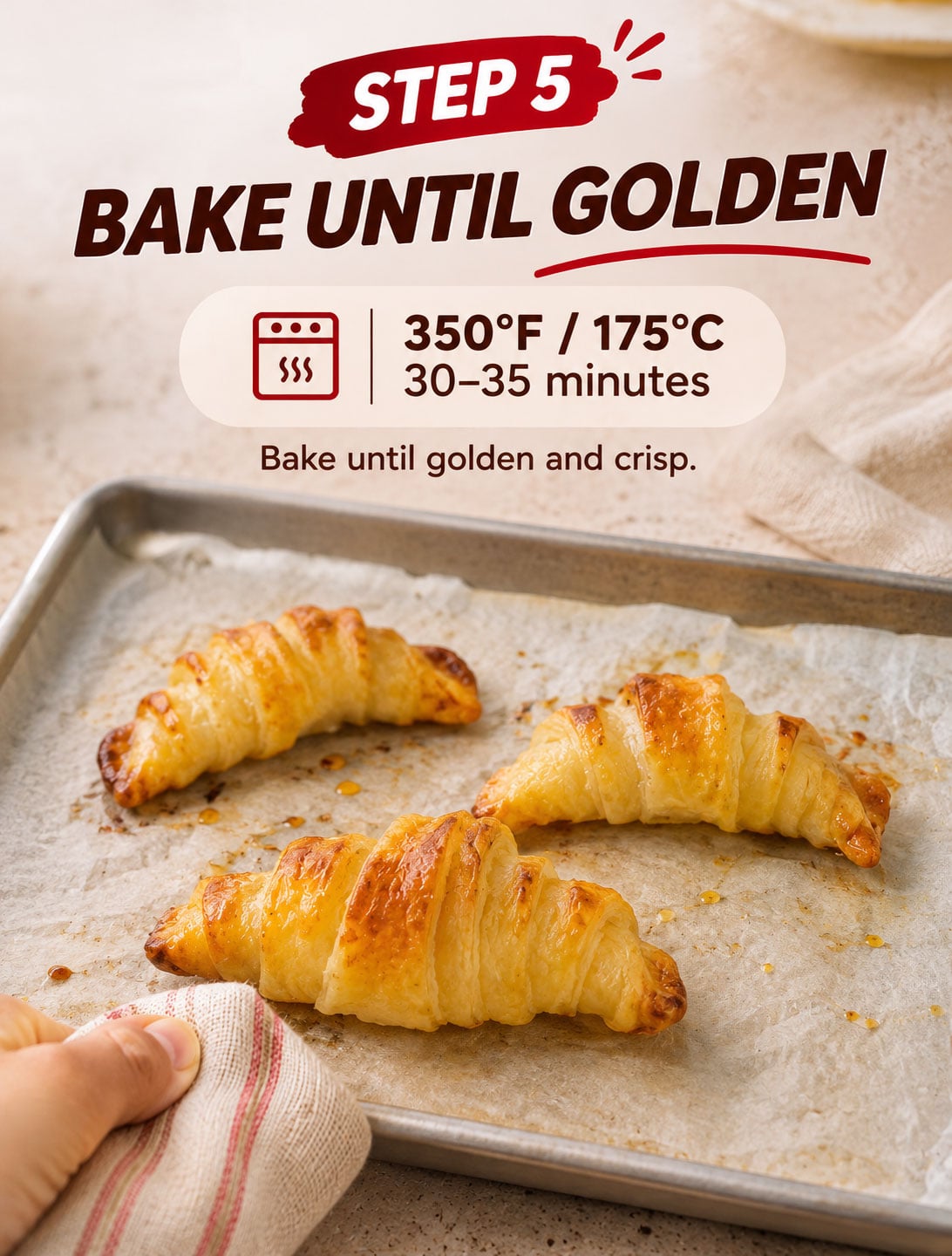
Preheat your oven to 350°F (175°C).
Line a baking tray with parchment paper.
Place the three shaped croissants on the tray, leaving some space between them.
If desired, sprinkle a little sugar over the tops.
Bake for approximately 30–35 minutes, or until the croissants turn golden brown and the outer layersappear set.
Check the croissants during the final few minutes, as oven temperatures can vary.
Remove the tray from the oven and let the croissants cool slightly before serving.
As they cool, the outer layers will have time to firm up.
5 Tips for Better Rice Paper Croissants
1. Use Three Rice Paper Sheets for Each Croissant
Stacking three rice paper sheets creates enough thickness to cut, arrange, and roll them into a croissant shape.
Using only one sheet would produce a much thinner roll with a different texture.
2. Don't Soak the Rice Paper for Too Long
The rice paper needs to soften while remaining firm enough to handle.
If it becomes too wet, it may stretch, tear, or stick to the cutting board.
Dip each sheet separately and allow the excess egg mixture to drip off before stacking.
3. Keep All Three Pieces After Cutting
The center triangle and the two curved side pieces are all needed to shape one croissant.
Don't discard the curved pieces.
They help create the wider base needed for rolling.
4. Roll from the Wide Base
As with traditional croissant shaping, start at the widest part and roll toward the pointed tip.
Starting from the narrow end makes it harder to achieve the desired crescent shape.
5. Don't Expect the Same Texture as a Traditional Croissant
Rice paper behaves differently from wheat-based laminated dough.
The finished croissants may have crisp edges and visible rolled layers, but they won't develop the same airy, flaky interior as traditional French croissants.
For the best texture, enjoy them fresh after they've cooled slightly.
Common Rice Paper Croissant Problems and How to Fix Them
Why Does My Rice Paper Tear?
The rice paper may have absorbed too much egg mixture and become overly soft.
Try reducing the dipping time, lifting each sheet carefully, and placing it on a flat surface before adding the next layer.
Also, check that the dry rice paper sheets aren't cracked or broken before using them.
Why Are My Rice Paper Croissants Chewy Instead of Crispy?
Rice paper naturally has a different texture from puff pastry.
A slightly chewy center doesn't necessarily mean the recipe has failed.
However, too much moisture or tightly packed layers can affect how the croissants bake.
To improve the exterior texture, allow excess egg mixture to drip off before stacking and make sure the oven is fully preheated.
Why Do My Croissants Unroll or Lose Their Shape?
The pieces may not have been overlapped securely, or the croissants may have been rolled too loosely.
When shaping, keep the widest section at the bottom and roll toward the pointed tip.
Place the finished croissants seam-side down on the baking tray to help them hold their shape.
Why Are My Croissants Browning Too Quickly?
Sugar and eggs can cause the surface to brown more quickly during baking.
If the croissants become too dark before they're fully baked, check your oven temperature and consider using less sugar on top.
Frequently Asked Questions About Rice Paper Croissants
Can You Make Croissants Without Flour?
Yes. This recipe doesn't require wheat flour or traditional puff pastry dough.
The rice paper sheets provide the main structure, while the egg mixture softens and coats the layers before baking.
Are Rice Paper Croissants Gluten-Free?
This Tanisa rice paper croissant recipe uses ingredients that are naturally gluten-free. Choosing a quality rice paper product, such as Tanisa Rice Paper, is important.
If you need to avoid gluten, check the labels of the vanilla extract and other ingredients before preparing the recipe.
Can I Use 22 cm Rice Paper?
Yes. Round rice paper sheets measuring 22 cm in diameter are suitable for the cutting and shaping method described in this recipe.
They produce relatively small croissants that are convenient for individual servings.
Do Rice Paper Croissants Taste Like Traditional Croissants?
Not exactly.
Both versions can have a buttery flavor and a golden exterior, but their internal textures are different.
Traditional croissants are made from laminated wheat dough, while rice paper croissants contain thin, overlapping layers of rice paper. The outside may become crisp, while the inside tends to remain slightly chewy.
Can I Make Rice Paper Croissants in an Air Fryer?
You can try making them in an air fryer, but the temperature and cooking time will need to be adjusted.
The instructions in this recipe are designed for a conventional oven at 350°F (175°C).
For more consistent results, follow the oven method unless you've already tested the recipe using your particular air fryer.
Can I Prepare Rice Paper Croissants Ahead of Time?
You can measure out the ingredients in advance, but it's best to dip, shape, and bake the rice paper close to serving time.
Once softened, rice paper can become sticky if left sitting for too long, making the shaped croissants more difficult to handle or move.
Try Making Rice Paper Croissants with Tanisa Rice Paper
Rice paper is a familiar ingredient in Vietnamese cuisine, especially in fresh spring rolls. However, it can also be used to create a wide variety of other dishes.
With just a few everyday kitchen ingredients, you can transform round rice paper sheets into croissant-shaped treats without making pastry dough from scratch.
For this recipe, try Tanisa Rice Paper and carefully follow the cutting and rolling instructions to make your own homemade rice paper croissants.
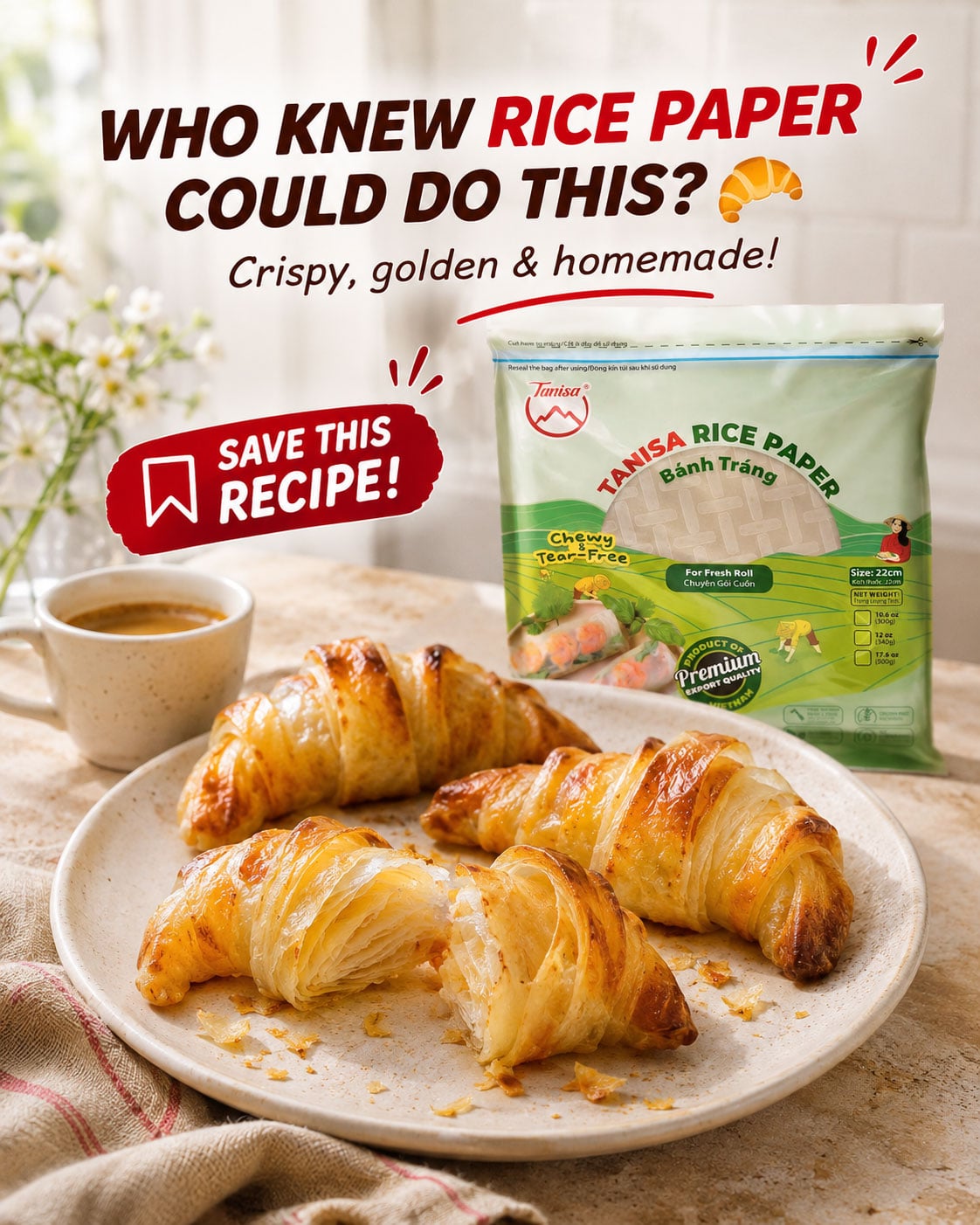
Serve them with coffee or tea while fresh to enjoy the texture of the individual rice paper layers.
TANISA FOODS JSC, a strong brand in the market for the production and distribution of specialty products (rice paper, rice noodles...) and spices (seasoning) which exported to some countries such as USA, France, South Korea, Japan, Russia, Brunei...
TANISA FOODS JSC
Factory add 1: 188 Lac Long Quan Street, Quarter 3, Tan Ninh Ward, Tay Ninh Province, Vietnam
Factory add 2: Phu Hoa Dong, Cu Chi, Ho Chi Minh City, Viet Nam
Office in HCMC: 18th Floor, Vincom Building, 72 Le Thanh Ton Street, District 1, Ho Chi Minh City, Vietnam
Warehouse in HCMC: 2/3 Binh Gia, Tan Binh District, Ho Chi Minh City, Vietnam
Hotline: +84 938 118 699 (WhatsApp/WeChat), +84 938 198 299 (Zalo)




Email: marketing@tanisagroup.com
Website: www.tanisagroup.com
Facebook: Tanisa Foods JSC
Instagram: @tanisa_foods
Youtube: Tanisa Kitchen

Xem thêm