



Rice Paper Chips: The Crispy, Guilt-Free Snack Trend
Rice paper chips are the viral, zero-oil snack taking over 2026. Learn what they are, how to make them crispy, and the best rice paper to use.
Two sheets of rice paper, five minutes in an air fryer, and almost no oil needed. That is the entire recipe behind one of the most shared snacks on TikTok right now. Rice paper chips are thin, translucent sheets that puff up into a light, crispy chip when heated, and their taste is closer to a cracker than to the rice paper rolls you're used to.
If you've only ever used rice paper to wrap fresh rolls, this dish is worth five more minutes of your attention. The same sheet, cooked a different way, turns into something closer to a snack aisle item than a dinner ingredient.
What Are Rice Paper Chips?
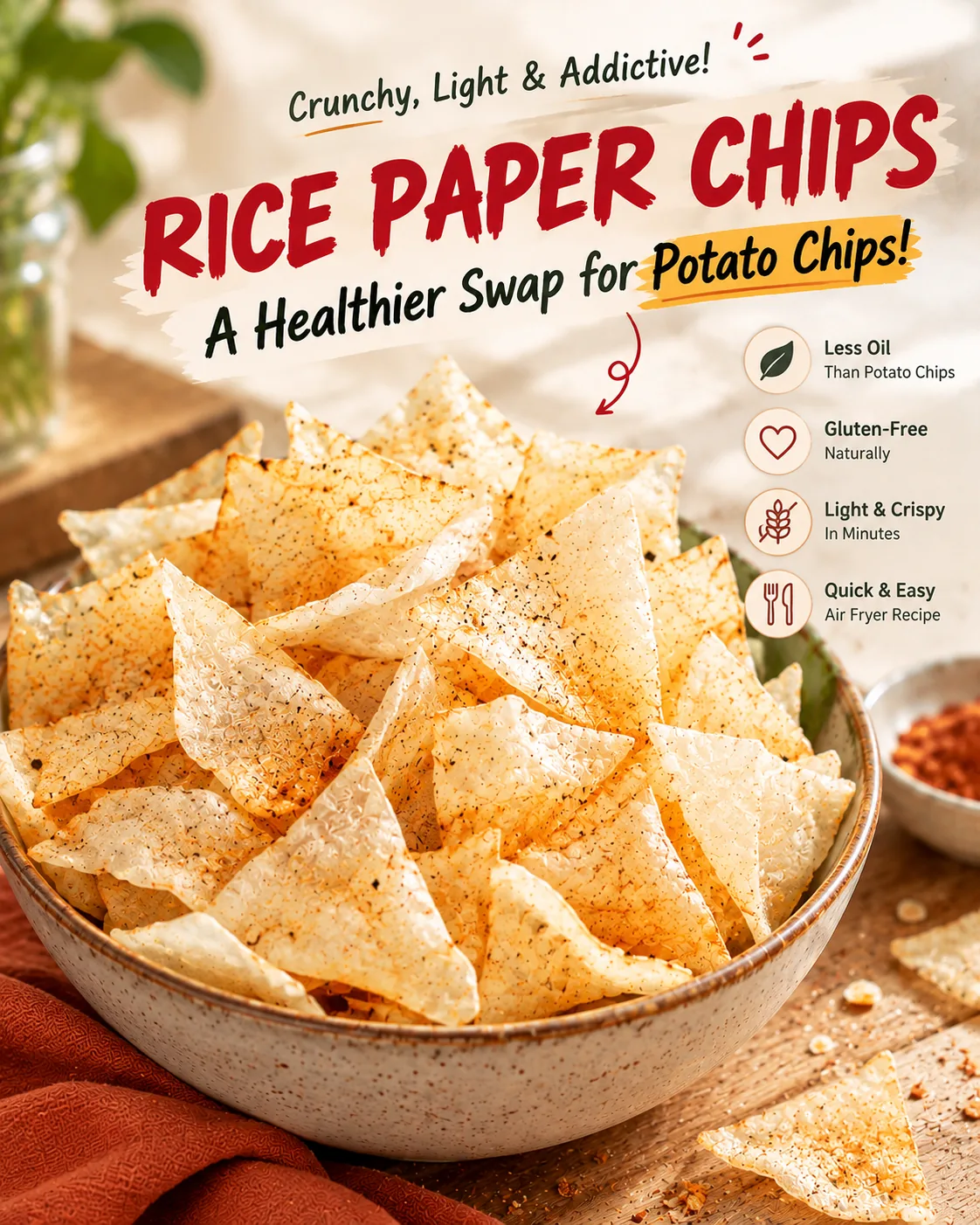
Rice paper chips start from the very same dried rice paper used to wrap Vietnamese gỏi cuốn and nem cuốn, usually made from rice flour and tapioca starch. Instead of being soaked in water and rolled around a filling, the sheet is lightly dampened, cut into pieces, then cooked dry (in an air fryer, oven, or even a microwave) until crispy.
Their texture sits somewhere between a shrimp chip and a thin tortilla chip. Because the base sheet carries almost no fat on its own, what you taste mostly comes from whatever seasoning you add afterward, and this is part of why the format "travels" so easily across different cuisines.
Why Rice Paper Chips Are Taking Over Social Media in 2026
The Numbers Behind the Trend
Rice crackers as a category saw a 25 to 26 percent increase in social media mentions year over year, according to Hootsuite's 2026 snacking consumer trends report, which also found that women account for 56.9 percent of posts in this product category, a fairly unusual ratio compared to most other snack trends. Market researchers at Future Market Insights project the global rice paper snacks market will grow from roughly 118.6 million USD in 2026 to 275.7 million USD by 2036, a figure that should be treated as a directional estimate rather than an exact forecast.
Zero Oil, Still Crispy: The Real Appeal
What keeps this format spreading across social platforms is the gap between the effort required and the payoff you get. A sheet that costs only a few cents and takes less than 15 minutes to prepare produces a chip-like crunch without deep frying, which fits perfectly into the broader shift toward snacks that feel indulgent but actually aren't. For anyone watching their oil intake or calories, this is a genuine point of difference from kettle chips or tortilla chips, not just a marketing angle.
Rice Paper Chips vs. Other Crispy Snacks
Compared to a bag of potato chips, rice paper chips use only a fraction of the oil, since most recipes call for just a light spray rather than deep frying. Compared to kale chips, they hold their crispness longer and don't turn bitter if slightly overcooked. Compared to standard rice crackers, the biggest difference is control: you decide the thickness, the cut size, and the seasoning yourself, rather than buying a fixed product off the shelf.
The tradeoff is shelf life. A bag of commercial rice crackers can last for weeks, while a batch of homemade rice paper chips is best eaten within a day, since they absorb moisture from the air and lose their crispness quickly.
How to Make Rice Paper Chips at Home
Air Fryer Method
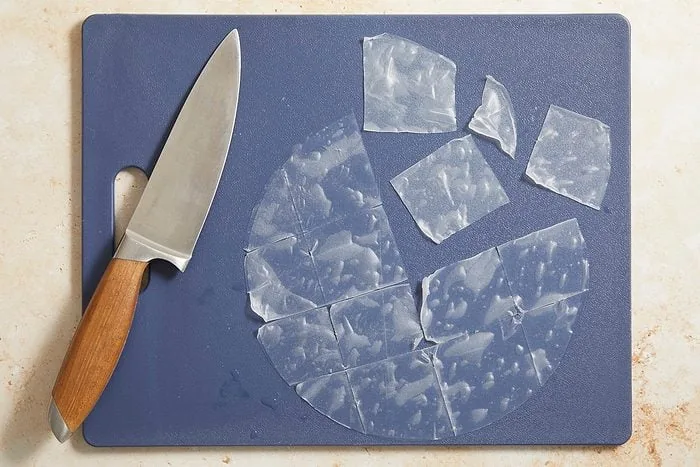
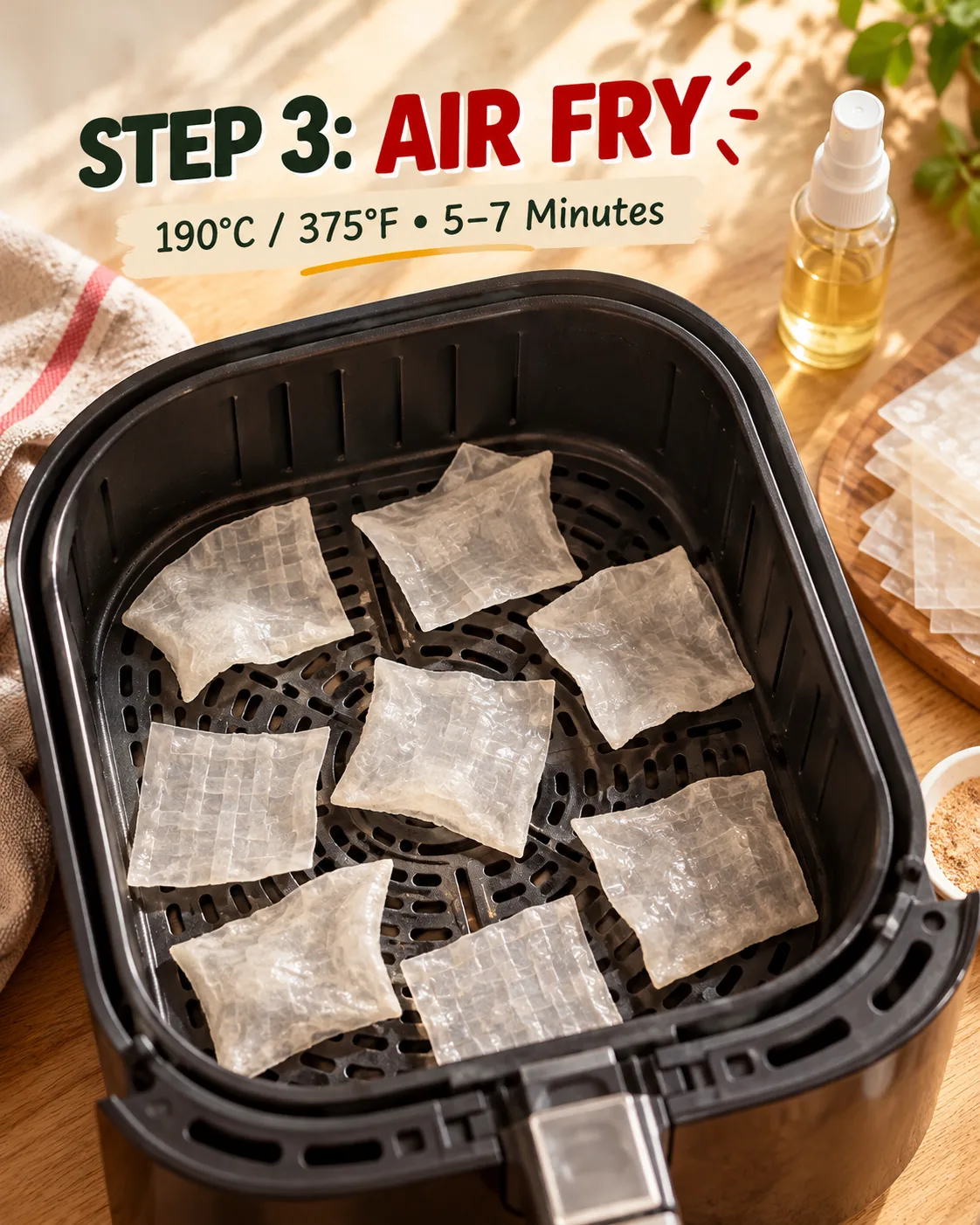
Dip each sheet of rice paper in water for about 10 to 15 seconds, just enough to make it pliable, not fully soft. Lay it flat, cut it into squares or triangles, then arrange the pieces in a single layer in the basket without letting the edges overlap. Cook at 350 to 400°F (175 to 200°C) for 5 to 6 minutes, checking at the 4-minute mark since air fryer power varies from one model to another.
Oven-Baked Method
Preheat the oven to 375°F (190°C). Lay the cut, dampened pieces on a parchment-lined tray, lightly brush or spray them with oil, then bake for 5 to 7 minutes until golden and firm to the touch. This method is slower but more forgiving for larger batches, since you're not limited by basket size.
Quick Microwave Option
For a single small portion, a dampened and pre-cut piece of rice paper can crisp up in a microwave in under a minute on high power, checked every 15 seconds. This is the fastest option but the hardest to get even, since microwaves don't cook evenly across the same plate.
Three Common Mistakes That Ruin Crispy Rice Paper Chips
Over-soaking is the most common one. Leaving the sheet in water too long makes it turn gummy instead of crispy, no matter how long you cook it afterward.
Second, letting the pieces overlap in the basket or on the tray traps steam between the layers, causing them to soften each other instead of crisping up.
Third, adding sauce or liquid seasoning before cooking almost guarantees a soggy result; sprinkle the seasoning while the chips are still warm, right out of the air fryer or oven, since a warm surface holds dry seasoning far better than a cooled one.
Flavor Variations Worth Trying
Savory and Spicy
Garlic powder, smoked paprika, chili powder, or a light satay-style seasoning after cooking. This savory-spicy direction is already dominating the category, with Future Market Insights reporting that spicy variants account for around 58 percent of rice paper snack sales in 2026, closely tracking traditional Vietnamese seasoning styles.
Sweet
Cinnamon and sugar, or a light dusting of matcha powder, turn the same sheet into something close to a dessert. Since the sheet itself is almost flavorless, it takes on sweet seasoning just as well as it does savory.
Naturally Colorful Chips
Vegetable-infused rice paper, made with turmeric, beetroot, or butterfly pea flower instead of plain rice flour, produces yellow, pink, or blue chips without adding any food coloring. This is less about flavor and more about creating a "cleaner-looking" snack for anyone trying to avoid artificial dyes.
Choosing the Right Rice Paper for Perfect Chips
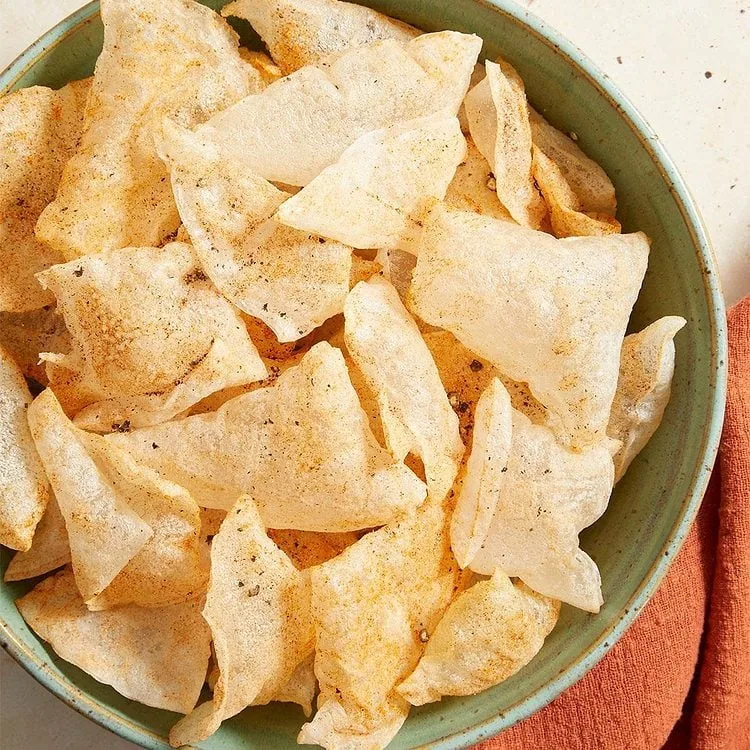
Not every sheet behaves the same way once it hits heat. A sheet that's too thin, especially one made from close to 100 percent tapioca starch, tends to tear the moment you lift it after soaking, which makes clean cuts and even cooking harder.
A sheet with a better balance of rice flour to tapioca starch holds its structure through soaking, cutting, and cooking, which matters more for chips than it does for a soft spring roll, since chips are handled dry and need to keep their shape under direct heat.
Are Rice Paper Chips Actually Healthy?
They're lower in fat and calories than deep-fried chips, mainly because the cooking method itself uses little to no oil, not because the base ingredient is unusually superior in nutrition.
Rice paper is naturally gluten-free, which matters for anyone avoiding wheat, but it's still a refined-starch base, so a handful of chips doesn't provide much fiber or protein.
The healthiest version of this snack has less to do with the rice paper itself and more to do with what you season it with: a dry spice rub keeps it light, while a thick layer of butter or cheese cancels out most of the calorie advantage.
Frequently Asked Questions About Rice Paper Chips
Can I use any type of rice paper, or does the brand matter? Most round or square dried rice paper will work, but thinner sheets that lean heavily on tapioca starch tear more easily during soaking and cutting.
How long do homemade rice paper chips stay crispy? Best eaten within a few hours of cooking. They absorb moisture from the air and lose their crispness within a day, even when stored in a sealed container.
Can I bake them instead of using an air fryer? Yes. The oven method takes a bit longer but gives more consistent results when making a larger batch.
Tanisa rice paper is built on a Chewy and Tear-Free standard: sheets that are thin yet strong, reducing waste and stretching your value further, easy to roll, and able to stay flexible after soaking. The factory holds FSSC 22000, ISO 22000, Halal, FDA, and KFDA certifications, and the product is now exported to more than 45 countries, including demanding markets such as the United States, Japan, and South Korea.
Tanisa Foods JSC is a leading Vietnamese manufacturer of rice paper, rice noodles, and rice vermicelli, exporting to over 45 countries worldwide. We comply with international food safety standards, including FSSC 22000, ISO 22000:2018, FDA, KFDA, and Halal.
TANISA FOODS JSC
Factory add 1: 188 Lac Long Quan Street, Quarter 3, Tan Ninh Ward, Tay Ninh Province, Vietnam
Factory add 2: Phu Hoa Dong, Cu Chi, Ho Chi Minh City, Viet Nam
Office in HCMC: 18th Floor, Vincom Building, 72 Le Thanh Ton Street, District 1, Ho Chi Minh City, Vietnam
Warehouse in HCMC: 2/3 Binh Gia, Tan Binh District, Ho Chi Minh City, Vietnam
Hotline: +84 938 118 699 (WhatsApp/WeChat), +84 938 198 299 (Zalo)




Email: marketing@tanisagroup.com
Website: www.tanisagroup.com
Facebook: Tanisa Foods JSC
Instagram: @tanisa_foods
Youtube: Tanisa Kitchen

Read more