


Why Rice Paper Is Becoming a Global Food Trend
Rice paper — the thin, translucent sheet familiar from Vietnamese fresh spring rolls — is now showing up in places no one would have expected: Korean BBQ tables, home kitchens in California, and fusion menus across Europe. Behind this spread is a shared demand: food that is lighter, more versatile, open to endless recipe creativity, and free of gluten. That combination is what's turning rice paper into one of the world's most popular "wrap-anything" ingredients.
What Is Rice Paper, and Why Is It Getting So Much Attention?
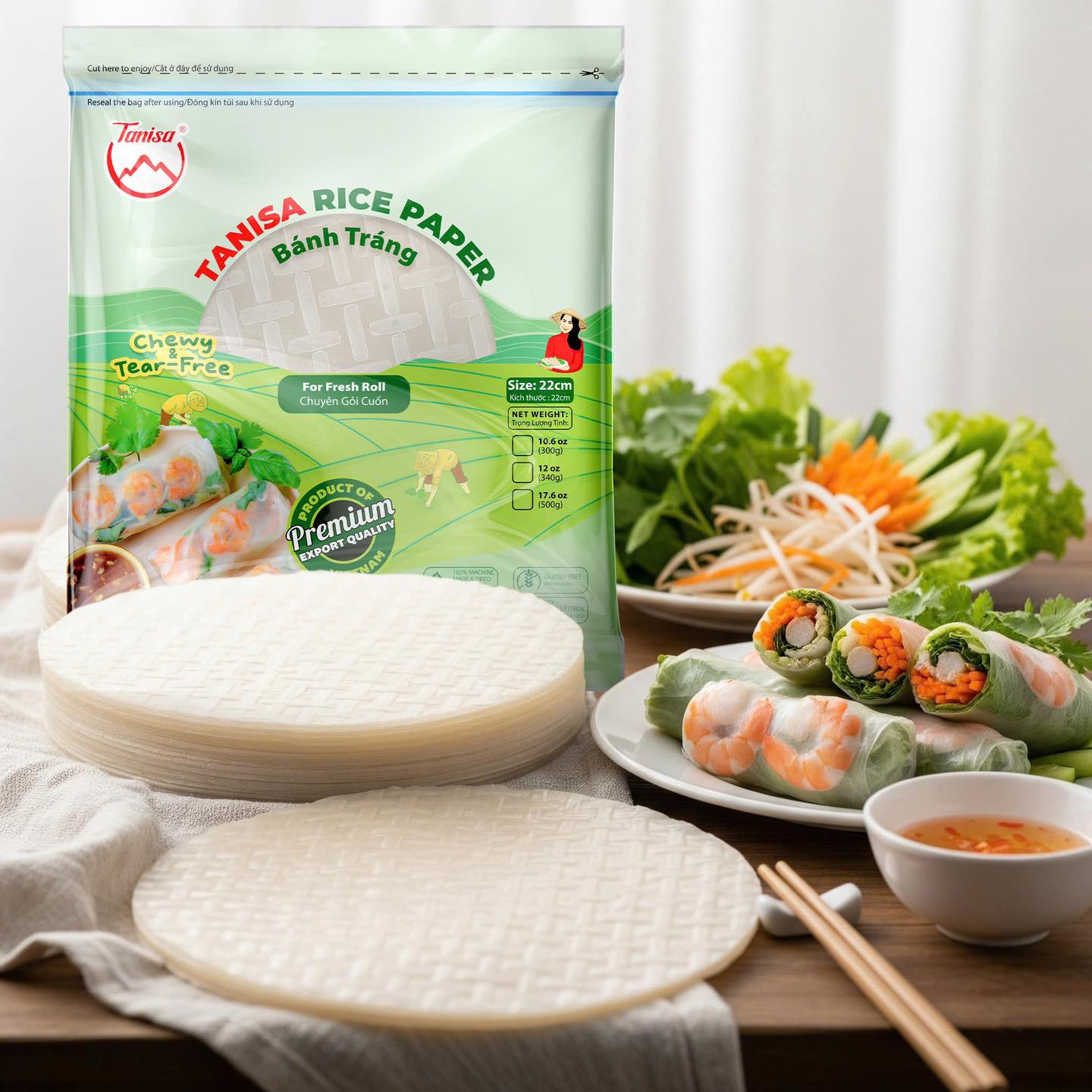
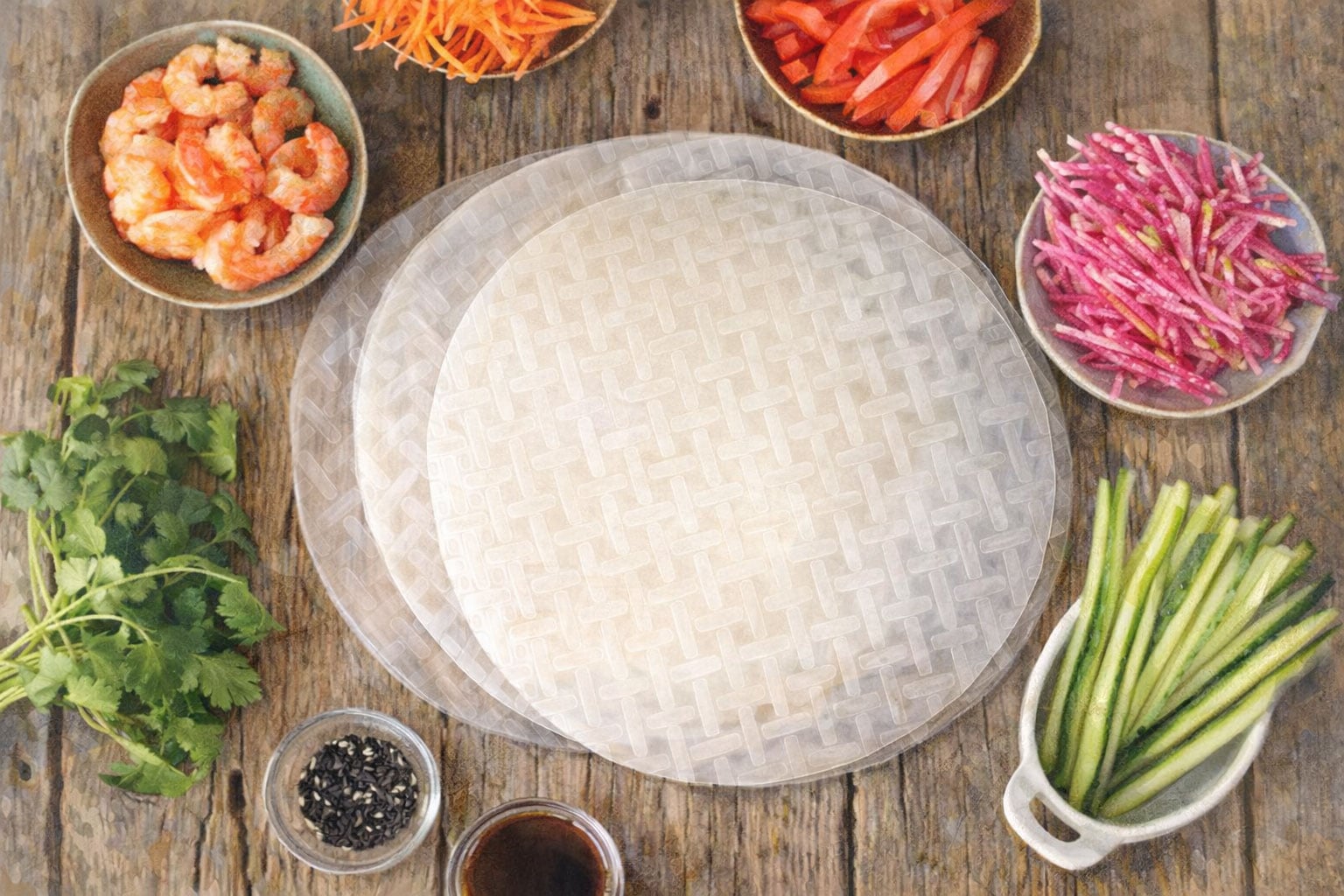
Rice paper is made from rice flour, water, and salt — ground into a liquid batter, steamed into a thin sheet, then dried in the sun. In Vietnam, and in Tanisa's rice paper in particular, it has been a familiar ingredient for generations, used mainly for fresh spring rolls and fried spring rolls. What has changed recently isn't the product itself — it's the growing number of kitchens outside Vietnam now reaching for it.
The volume of recipe content and interest around rice paper has grown steadily on social media, especially TikTok, where users constantly share new ways to use it: crispy fried rice paper, rice-paper-wrapped dumplings. This trend didn't start with a marketing campaign — it started with people experimenting in their own kitchens and sharing what they discovered.
A Global Shift in the Way People Want to Eat
Rice paper's rise is not a coincidence. It lines up with three things consumers are genuinely looking for right now.
Lighter, less processed food. Tortillas, bread, and many other traditional wraps are usually made from refined flour with added fat. Rice paper, by contrast, is just rice and water — no oil, no preservatives, significantly fewer calories per wrap, and thin enough to roll with ease. For anyone who wants to eat lighter without giving up the convenience of a wrap, it's an easy choice to make.
A wrap that adapts, rather than defines, the dish. Most wraps come with certain expectations attached — a tortilla suggests Mexican flavors, a slice of bread suggests a sandwich. Rice paper carries none of that baggage. It can wrap vegetables, seafood, fruit, or even leftover roast chicken just as well, which fits perfectly with a modern food culture that wants the freedom to create its own meals rather than follow a fixed recipe.
Naturally gluten-free and plant-based. Rice paper is naturally gluten-free and made from a single plant-based ingredient, with no need to be "reformulated" into an alternative version. For the growing number of consumers avoiding gluten or eating more plant-based meals, rice paper already fits the bill as it is — nothing needs to change.
How the World Is Already Using Rice Paper
The clearest evidence that rice paper is going global isn't a marketing claim — it's how differently it is already being used across countries.
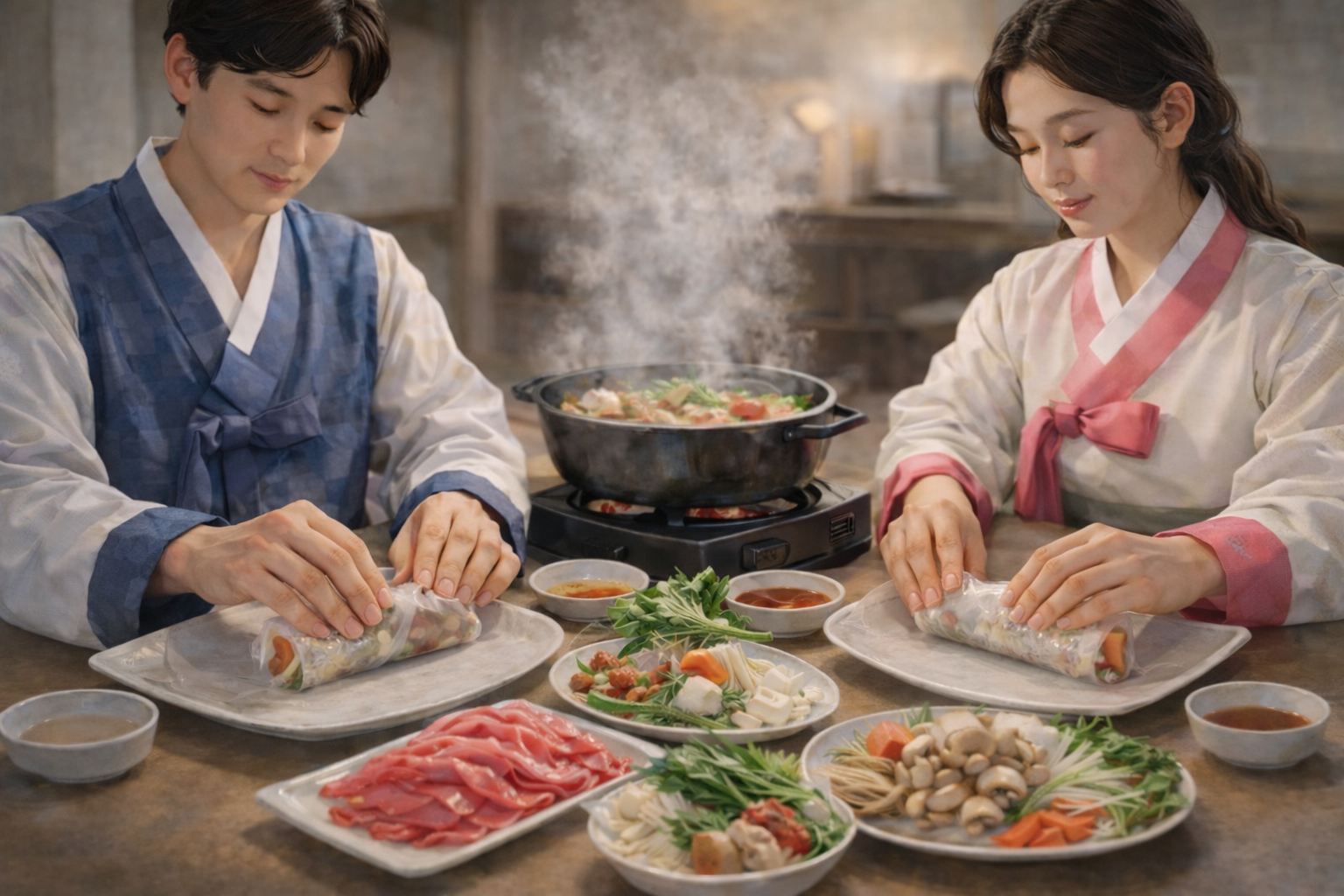
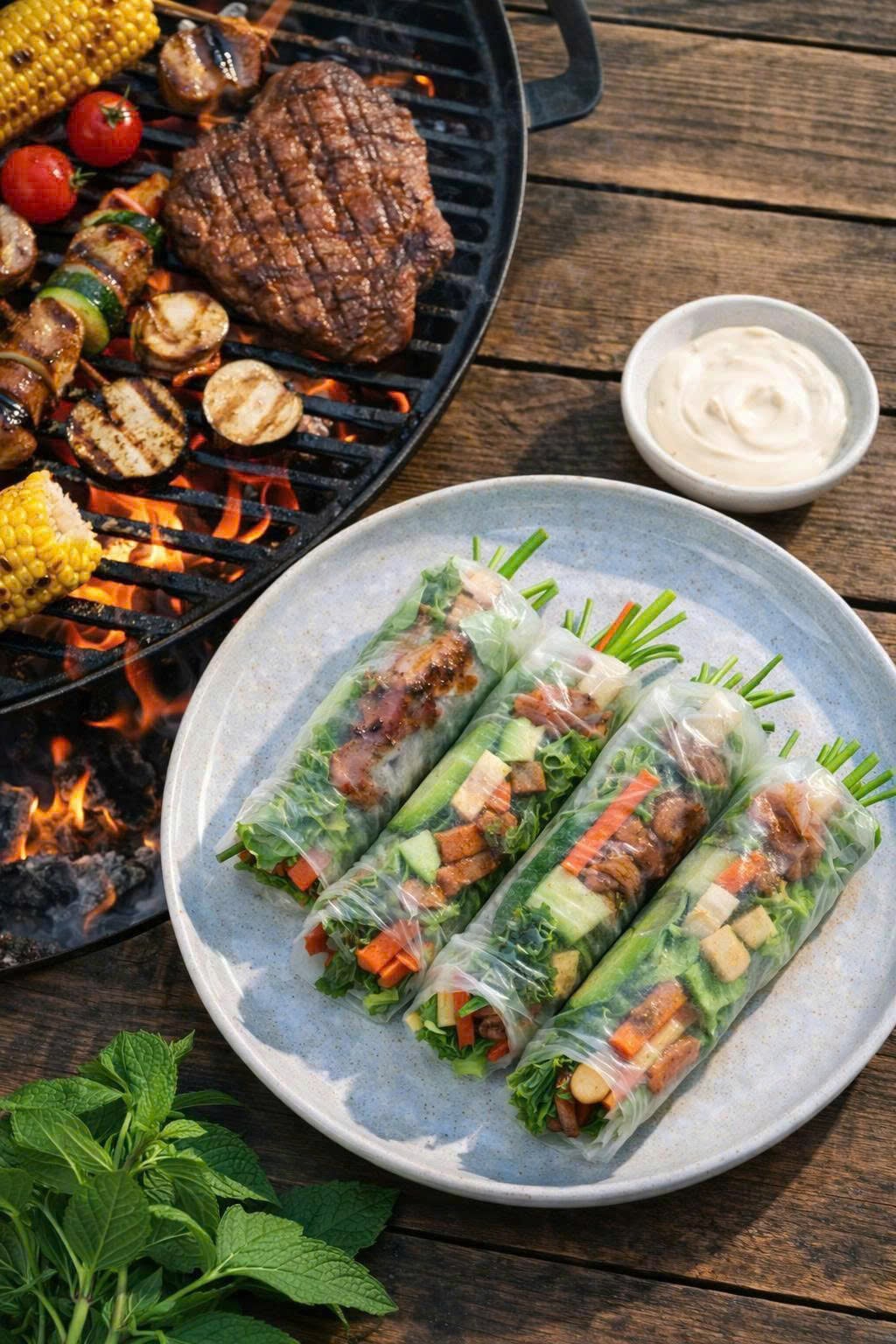
Korea: a familiar ingredient in BBQ and hot pot. In Korean BBQ and hot pot meals, rice paper is increasingly used in place of lettuce to wrap grilled meat, kimchi, and sauces. It holds more filling, feels lighter on the stomach, and doesn't wilt the way lettuce does when it comes into contact with heat.
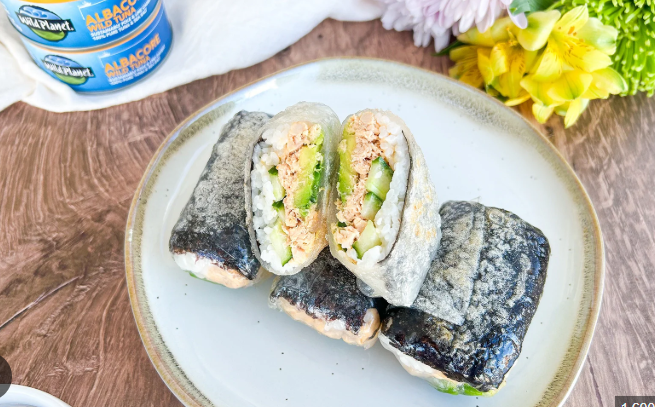
Japan: a new kind of sushi wrap. Some Japanese kitchens have started using rice paper instead of nori in sushi, creating a softer, slightly chewy texture that opens up new combinations while staying true to the core spirit of sushi.
Europe and the US: fusion dishes and a lower-carb alternative. In Europe, some chefs layer and bake rice paper to create a crisp, croissant-like texture. In the US, it shows up as a lower-carb alternative to tortillas, as a wrapper for fresh fruit rolls, and as a crispy fried or air-fried snack — none of it following one "official" recipe, which is exactly what makes it appealing.
Instagram and TikTok: the recipe engine behind the trend. Much of this experimentation is documented and shared on TikTok and Instagram, where rice paper recipes — fried rolls, dumplings, "candy," square sheets — consistently attract high engagement. It's a rare case of a traditional ingredient going global almost entirely through everyday users and content creators, rather than brand advertising.
Rice Paper vs. Tortilla: What Sets Them Apart
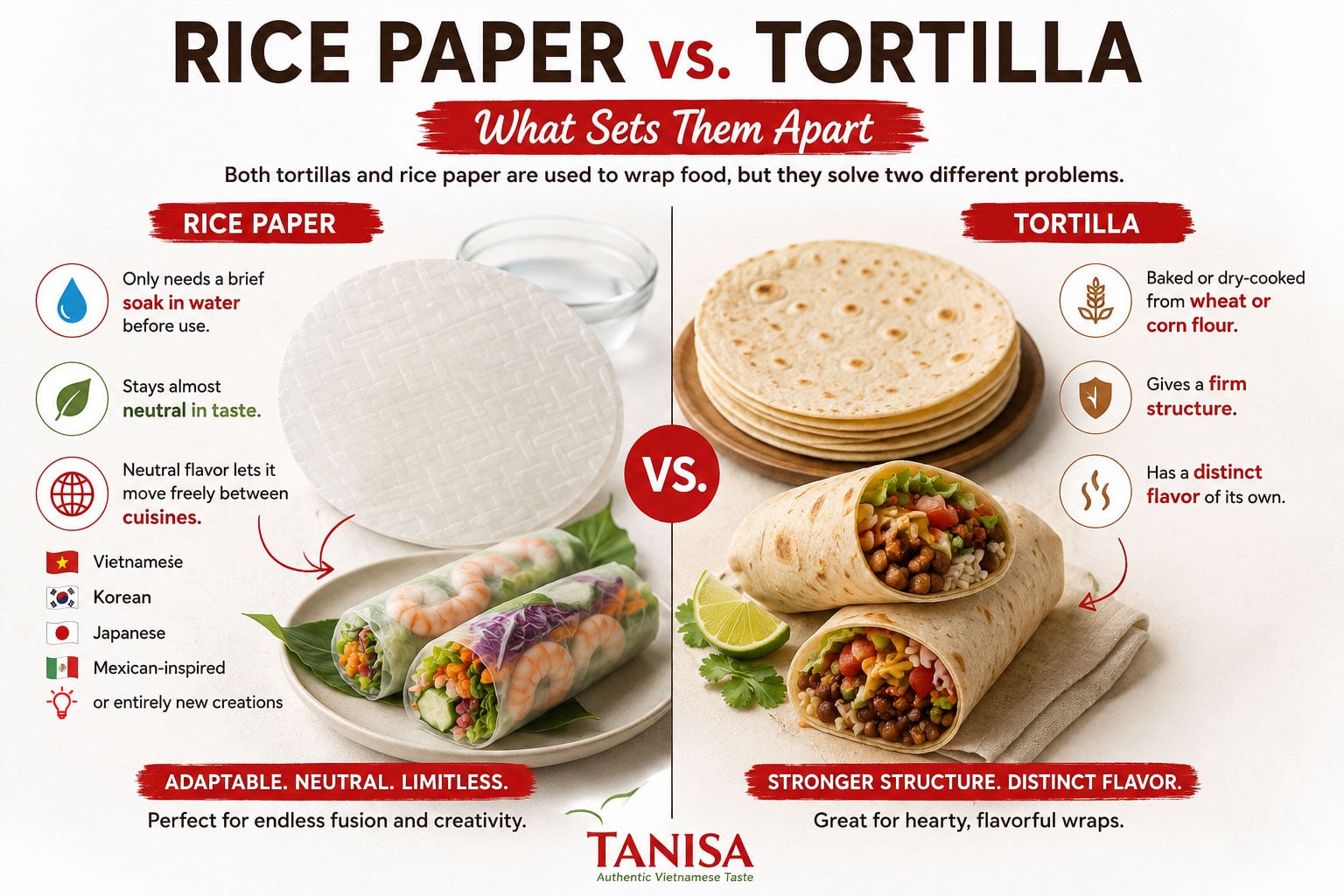
Both tortillas and rice paper are used to wrap food, but they solve two different problems. A tortilla is baked or dry-cooked from wheat or corn flour, giving it a firm structure and a distinct flavor of its own. Rice paper only needs a brief soak in water before use, staying almost neutral in taste. That neutrality is exactly why rice paper can move freely between cuisines — Vietnamese, Korean, Japanese, Mexican-inspired, or entirely new creations — without ever feeling out of place.
Why This Matters for the Food Industry, Not Just Home Cooks
Rising demand across foodservice and retail. Rice paper's use has expanded well beyond Vietnamese restaurants. It now appears on menus as a healthy wrap option, on the international aisles of grocery stores, and increasingly in the fusion and health-focused snack sections retailers are expanding. For importers and retailers, this is a signal worth paying attention to: demand is broadening beyond any single cuisine.
A genuine, traceable origin story. Part of what makes rice paper credible as a genuine trend, rather than a passing fad, is that it has a real, traceable origin — the rice-growing regions of Vietnam, particularly the Mekong Delta, and companies like Tanisa Foods, where the techniques of grinding rice, steaming it into sheets, and sun-drying it have been refined over generations. It's a story that buyers and consumers can verify for themselves, unlike ingredients that are simply "built" for marketing purposes.
Frequently Asked Questions About Rice Paper
Is rice paper healthy? Rice paper is naturally low in fat and calories, since it's made only from rice, water, and salt — lighter than wraps made with refined flour or added oil. That said, how healthy the final dish is will also depend on what's inside it.
Does rice paper contain gluten? No. Traditional rice paper is made from rice flour and contains no wheat, so it is naturally gluten-free — something Tanisa Foods' rice paper guarantees in particular.
Can rice paper replace tortillas? For many uses — fresh rolls, fried rolls, snacks — yes, absolutely. But rice paper isn't suited to every application a tortilla is used for (it's not ideal for a hot, folded burrito, for example); still, for fresh, light, or crispy dishes, it is increasingly used as a popular substitute.
Where does rice paper come from? Rice paper originates from Vietnam, shaped over generations by rice-farming communities, particularly in the Mekong Delta, rather than invented by any single person or company.
As demand for rice paper grows in markets like the US, Europe, and Korea, the next question for retailers and distributors is finding a stable source of supply. Tanisa Foods — a Vietnam-based manufacturer exporting to more than 30 countries — produces rice paper certified to FSSC 22000, FDA, and KFDA standards, built for partners who need consistent quality at export scale.
TANISA FOODS JSC, a strong brand in the market for the production and distribution of specialty products (rice paper, rice noodles...) and spices (seasoning) which exported to some countries such as USA, France, South Korea, Japan, Russia, Brunei...
TANISA FOODS JSC
Factory add 1: 188 Lac Long Quan Street, Quarter 3, Tan Ninh Ward, Tay Ninh Province, Vietnam
Factory add 2: Phu Hoa Dong, Cu Chi, Ho Chi Minh City, Viet Nam
Office in HCMC: 18th Floor, Vincom Building, 72 Le Thanh Ton Street, District 1, Ho Chi Minh City, Vietnam
Warehouse in HCMC: 2/3 Binh Gia, Tan Binh District, Ho Chi Minh City, Vietnam
Hotline: +84 938 118 699 (WhatsApp/WeChat), +84 938 198 299 (Zalo)




Email: marketing@tanisagroup.com
Website: www.tanisagroup.com
Facebook: Tanisa Foods JSC
Instagram: @tanisa_foods
Youtube: Tanisa Kitchen

Xem thêm