



Color Rice Paper: What It Is & Why It's Trending
Color rice paper uses natural plant powders, not dyes. See how it's made, if it's healthy, and how to pick quality sheets before you buy or cook.
Color rice paper is not a dyed version of ordinary rice paper. It is a different formula, built around a single plant powder, turmeric, beetroot, butterfly pea flower, or green tea, mixed directly into the rice flour and tapioca starch batter before the sheet is steamed and dried. The color comes from the plant ingredient itself, not from a bottle of food coloring added afterward. That one fact alone explains why this type of rice paper has moved from little-known shelves in Asian grocery stores onto recipe sites and cooking videos around the world, and it is also the first thing worth understanding before buying or cooking with it.
What Is Color Rice Paper, Exactly?
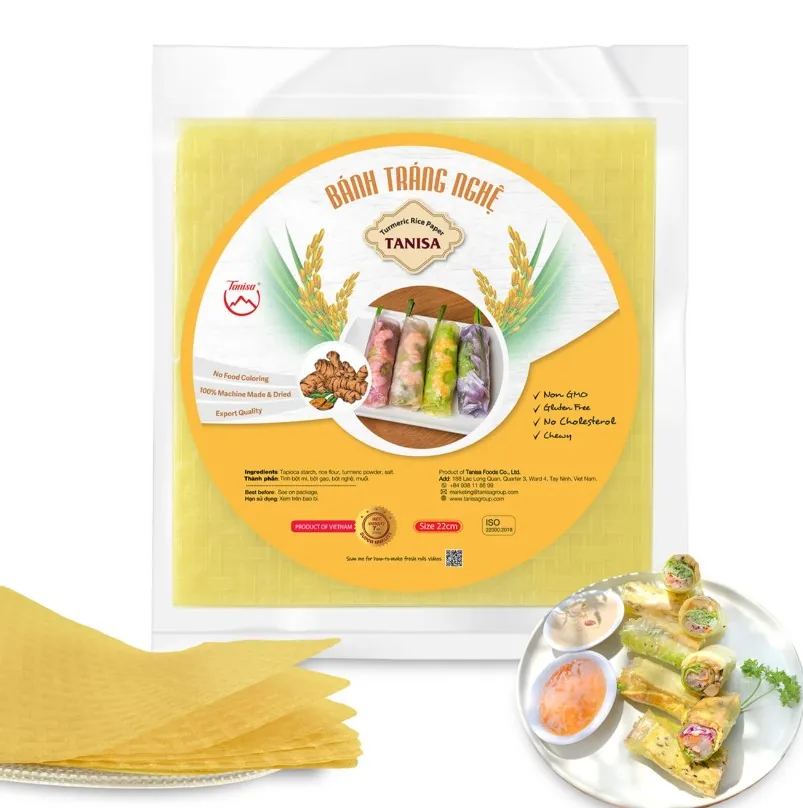
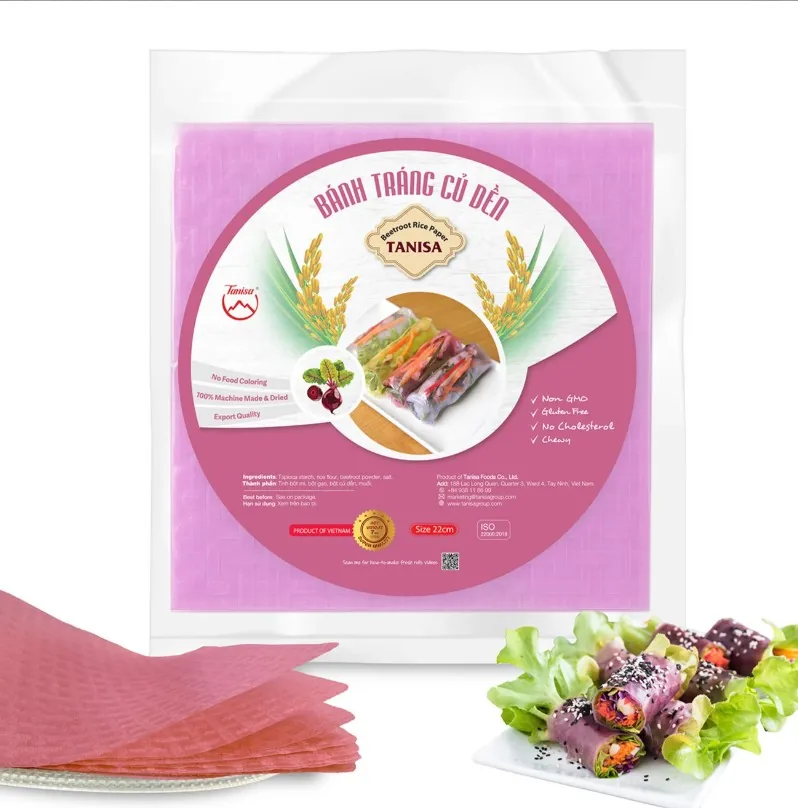
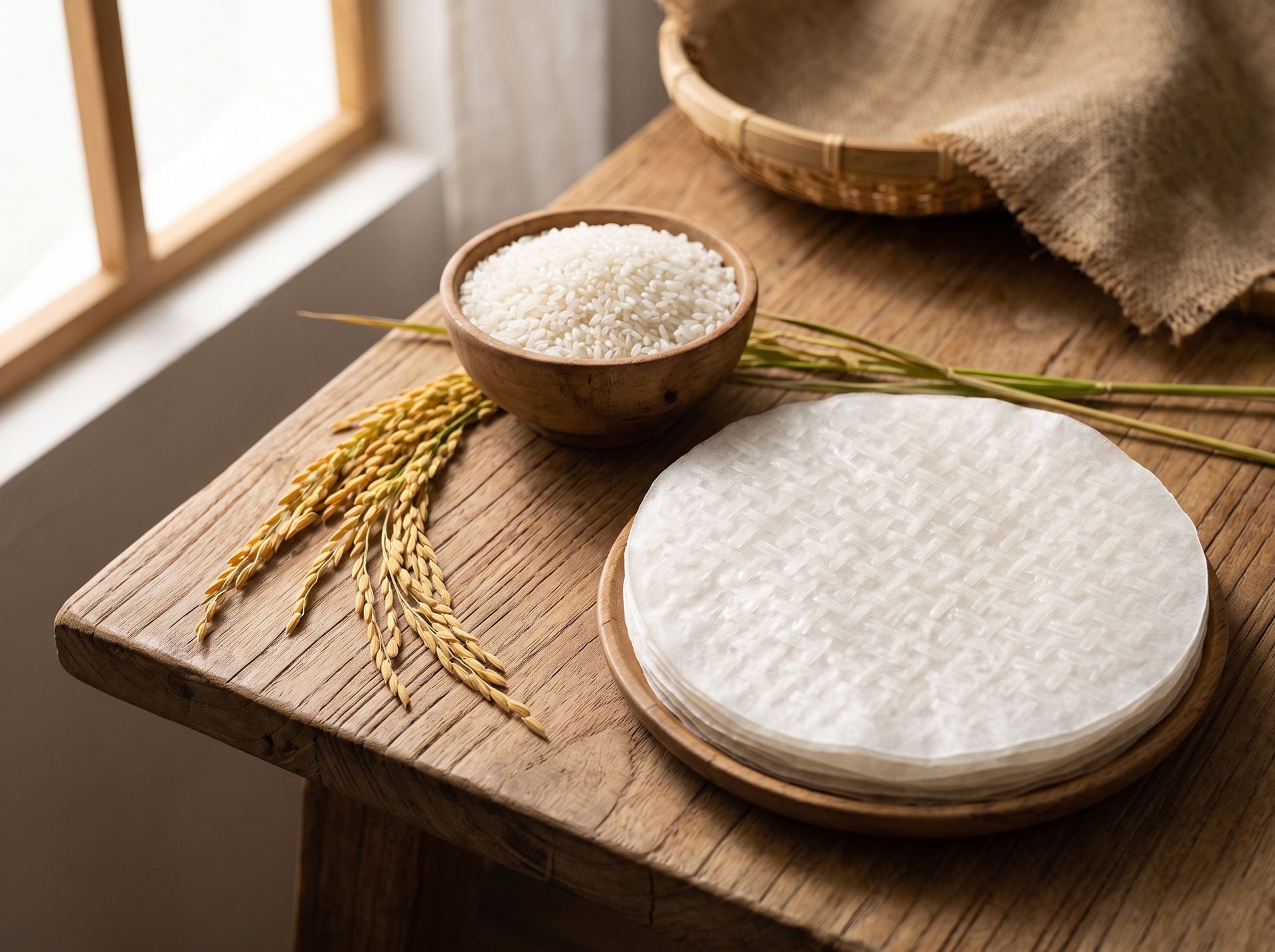
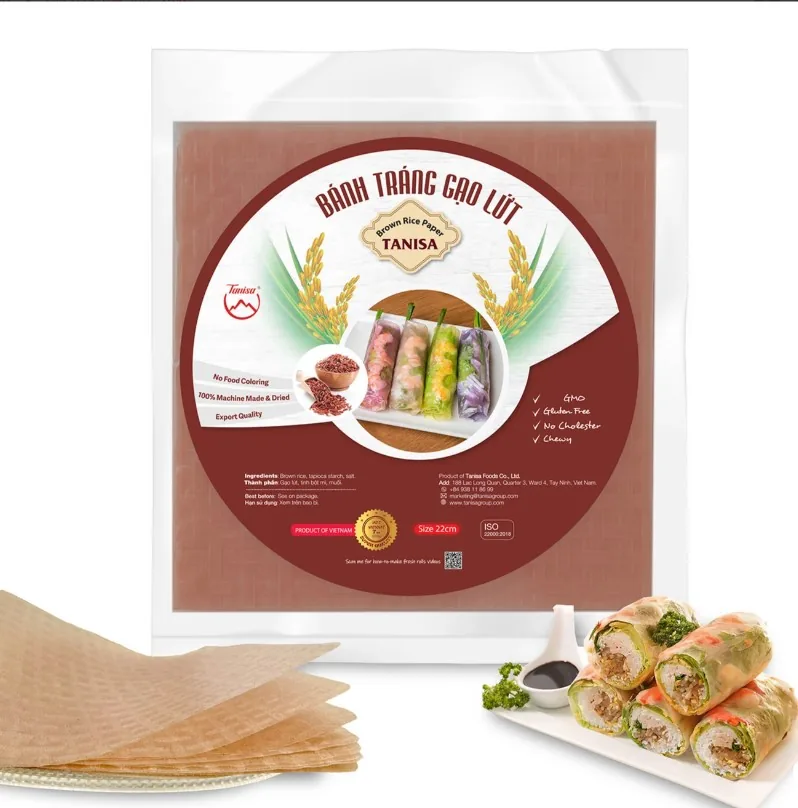
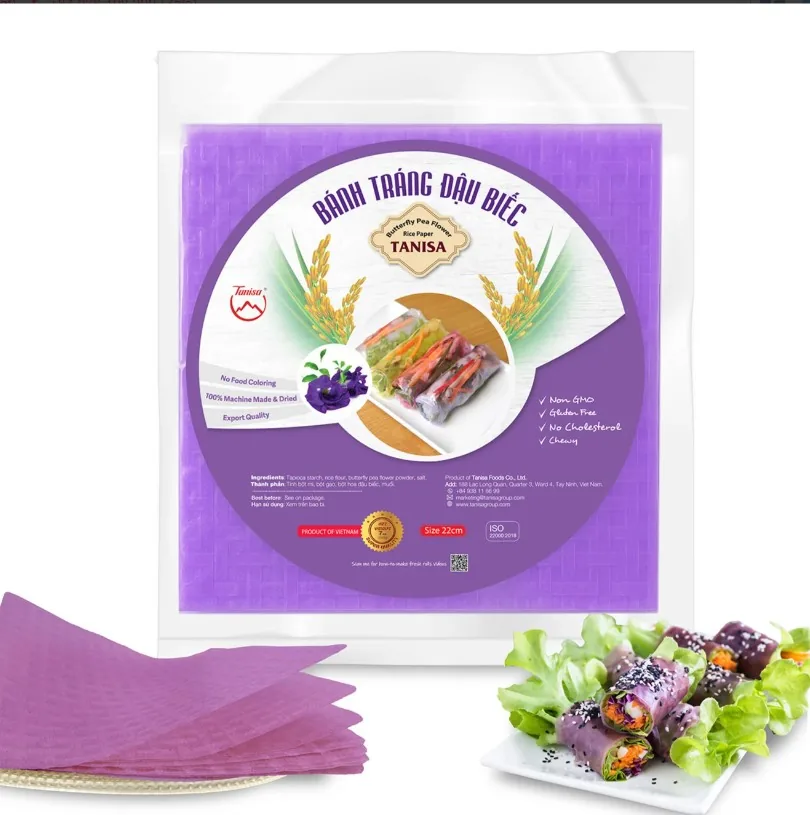
The base of color rice paper is the same as standard white rice paper: rice flour, tapioca starch, water, and salt. What changes is one added ingredient, a natural vegetable powder, mixed into that base before the sheet is formed. For example, Tanisa's vegetable rice paper line lists only rice flour, tapioca starch, natural vegetable powder, and salt as ingredients, with no additives or preservatives on the label. This product line draws on four plant sources: brown rice, turmeric, beetroot, and butterfly pea flower. A separate line, green tea rice paper, uses green tea powder in place of a vegetable powder.
Natural Plant Powder vs. Added Food Coloring
This distinction matters more than it appears. A plant powder is a clearly named, traceable ingredient, the same turmeric or beetroot you could find in a spice jar or a bottle of juice. An artificial dye is a synthesized compound added purely to create color, playing no other role in the recipe. In the European Union, products containing certain artificial colors must carry a warning label about a possible link to hyperactivity in children, a rule that has been in effect since 2010. This regulatory detail is one reason more buyers now check whether a colored food product uses a plant-based source or a synthetic one.
How It Differs From Standard White Rice Paper
Side by side, the two types of rice paper behave the same way when soaked and when rolled. The nutritional profile does not change either: Tanisa lists its vegetable rice paper as gluten-free, non-GMO, and plant-based, the same claims made for its white rice paper. The difference lies almost entirely in color and in a slight, subtle flavor note carried by the powder.
Why Is Colorful Rice Paper a Trend Right Now?
From Everyday Rolls to a Visual Food Trend
For a long time, rice paper served only one purpose: wrapping fresh rolls or fried rolls. Colored sheets have given it a second role, as a visual ingredient. Recipe sites and cooking videos now feature "rainbow-style" rolls built around the color of the wrapper itself rather than the filling, and short cooking videos that walk through each rolling step have become a familiar content format on platforms like TikTok. The wrapper has gone from a background component to the main visual element of the dish.
The "Clean Label" Wave Behind the Color
This visual trend lines up with another, longer-running shift: consumers reading ingredient labels more carefully and favoring recognizable plant-based names over additives marked only by code numbers. A sheet colored with turmeric or beetroot fits that preference directly, which is part of why color rice paper has moved from a niche product into mainstream recipe content, rather than remaining a one-off novelty.
Is Color Rice Paper Really Natural and Good for Health?
The honest answer is that color alone does not make a food healthier or less healthy. What matters is where that color comes from.
What Each Plant Powder Actually Contributes
Turmeric gets its yellow color from curcumin. Beetroot gets its red-pink color from betalain. Butterfly pea flower, scientifically Clitoria ternatea, gets its blue-purple color from anthocyanin, the same pigment group found in blueberries and purple cabbage. Green tea rice paper takes its color and flavor directly from green tea powder. These are the same compounds these plants are already known for, entirely apart from rice paper.
Why the Source of the Color Matters More Than the Color Itself
A sheet colored with one of these powders and a sheet colored with a synthetic dye may look the same on a plate, but they are not the same product. The plant-based version carries a clearly named, food-grade ingredient that already appears in everyday cooking. The synthetic version exists only to alter appearance. When comparing two color rice paper products, reading beyond the color on the label, to see what actually produced it, is the more useful check.
Does Color Change the Taste or Nutrition Facts?
Only slightly. The amount of plant powder used is small relative to the rice flour and tapioca starch that make up most of the sheet, so the core nutrition profile stays close to that of white rice paper. The flavor shift is subtle: turmeric adds a faint earthy note, butterfly pea flower adds a light floral hint, green tea adds a mild bitterness. None of them is strong enough to overpower a well-seasoned filling.
How to Use Color Rice Paper Without Losing the Color
Soaking Time and Water Temperature
Dip one sheet in warm water for about 5 to 10 seconds. The sheet keeps softening after it comes out of the water, so take it out before it feels fully soft, then let it finish softening on the work surface. Oversoaking is the most common reason a colored sheet turns dull or tears before the filling is even added.
Rolling Tips That Keep the Color Visible
Because the sheet is translucent, the color shows through best when the filling underneath is lighter in color, such as shrimp, rice noodles, or pale vegetables, rather than something dark that competes with it. Roll with light, even pressure. Pulling the sheet tight to close a gap stretches it thinner, which fades the color and is also the easiest way to tear it. For a full set of color-and-filling combinations, Tanisa's 12 Creative Roll Ideas guide pairs each of the four colors with specific fillings in detail.
How to Choose Quality Color Rice Paper
Reading the Ingredient Label
A short ingredient list is the simplest check: rice flour, tapioca starch, a clearly named vegetable or tea powder, and salt. If the label lists the color by a code number instead of a plant name, that is an artificial dye, not a genuine vegetable-colored sheet.
Size, Shape, and Pack Format
Sheets are commonly sold as 22 cm squares or rounds, with some lines also offering a 16 cm size. Square sheets tend to be easier and more predictable to roll for beginners; round sheets are the more traditional shape for Vietnamese-style rolls. Match the size to the dish: smaller sheets for bite-sized appetizers, larger ones for a full meal roll.
What Matters When Buying in Bulk
For restaurants, retailers, or importers buying beyond a single household pack, the ingredient label is only the starting point. Food safety certifications such as FSSC 22000, ISO 22000, FDA, KFDA, and Halal show that the factory has passed independent audits, which matters far more at volume than it does for a single home-cooked meal.
Storing Color Rice Paper So the Color Stays Vivid
Keep Dry Sheets Sealed and Away From Heat
Once opened, press the air out of the original packaging, reseal it completely, and store it in a cool, dry cupboard away from steam and direct sunlight. Refrigerating dry sheets is usually unnecessary and can cause condensation to form as the pack moves between cold and warm environments.
Frequently Asked Questions About Color Rice Paper
Does the color wash out when soaked in water? No. Because the color comes from powder mixed into the batter before drying, it is part of the sheet itself, not a surface coating, so it does not wash out during the short soak needed to soften the sheet.
Is color rice paper more expensive than white rice paper? Pricing varies by brand and retailer, but the added ingredient is a small amount of plant powder, not a special process, so any price difference from white rice paper is usually minor rather than a significant markup.
Can different colors be mixed in one pack? Some brands sell mixed packs combining several colors, useful for visual variety without buying separate single-color packs. Availability depends on the specific product line.
Does color rice paper have a different shelf life than white rice paper? There is no separate shelf life rule because of color. Storage conditions, sealed, dry, away from heat and moisture, determine shelf life for both, and the date printed on the package is the accurate reference in every case.
Where can a restaurant or retailer buy it in bulk? Bulk purchasing usually goes through a manufacturer or an export-certified supplier rather than retail packs, since factory certifications and consistent production batches matter more at that scale. Tanisa's vegetable-colored rice paper product page lists the formats available for this purpose.
For buyers who want that reliability built into the sheet itself, Tanisa offers its own line of color rice paper with the following standard: Tanisa rice paper is built around a Chewy & Tear-free standard: thin yet strong sheets that reduce waste and stretch your value further, easy to roll, and able to stay flexible after soaking while resisting cracking and tearing, even for recipes like this one that involve an egg dip and a tight roll. The factory holds FSSC 22000, ISO 22000, Halal, FDA, and KFDA certifications, and the product is now exported to more than 45 countries, including demanding markets such as the United States, Japan, and South Korea.
Tanisa Foods JSC is a leading Vietnamese manufacturer of rice paper, rice noodles, and rice vermicelli, exporting to over 45 countries worldwide. We comply with international food safety standards, including FSSC 22000, ISO 22000:2018, FDA, KFDA, and Halal.
TANISA FOODS JSC
Factory add 1: 188 Lac Long Quan Street, Quarter 3, Tan Ninh Ward, Tay Ninh Province, Vietnam
Factory add 2: Phu Hoa Dong, Cu Chi, Ho Chi Minh City, Viet Nam
Office in HCMC: 18th Floor, Vincom Building, 72 Le Thanh Ton Street, District 1, Ho Chi Minh City, Vietnam
Warehouse in HCMC: 2/3 Binh Gia, Tan Binh District, Ho Chi Minh City, Vietnam
Hotline: +84 938 118 699 (WhatsApp/WeChat), +84 938 198 299 (Zalo)




Email: marketing@tanisagroup.com
Website: www.tanisagroup.com
Facebook: Tanisa Foods JSC
Instagram: @tanisa_foods
Youtube: Tanisa Kitchen

Read more